
Trending
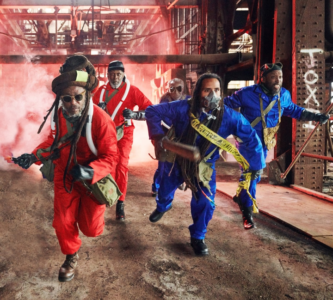
One of the world's most popular reggae bands, Steel Pulse initially honed their infectious roots sound before wild crowds of punks in their British homeland. Formed in 1975 in the industrial hub of Birmingham, Steel Pulse's militant music brought them to the forefront of Britain's Rock against Racism movement, opening for bands such as the Clash and the Police.
Steel Pulse felt a kinship with some of these rock bands because they were exploring similar issues. Rather than singing about traditional Rasta issues, they turned the spotlight on problems in the U.K. "The influence rubbed off when it came to subject matters," recalled Steel Pulse co-founder David Hinds in a Maui News interview. "A general reggae subject matter is usually 'Jah Rastafari,' or 'let's chant down Babylon,' and if it was a love song, 'baby I love you,' in so many different ways. The Police were writing songs like 'Message in a Bottle.' They were very interesting lyrics."
Since the release of their groundbreaking debut, "Handsworth Revolution," they have railed against racism, colonialism, social injustice and environmental destruction on classic songs such as "Earth Crises, " Ku Klux Klan," "Tribute To The Martyrs," "Ravers, " and "Bodyguard."
On their most recent album, "Mass Manipulation," the legendary roots reggae band addresses a range of critical issues including the horror of human trafficking, the police shooting of unarmed African-Americans ("Don't Shoot"), the exploitation of Africa's resources ("No Satan Side), the New World Order (the title track), global warming ("World Gone Mad"), and racism in Louisiana ("Justice in Jena").
Four decades after their debut, the band sounded as strong as ever on a powerful collection of potent songs. The Guardian praised: "the singer's (David Hinds) songwriting and Bob Marleyesque vocals have lost none of their plaintively galvanizing qualities as he addresses social justice."
Like one of his early influences, reggae legend Bob Marley, Hinds has a knack for fusing intense lyrics with catchy melodies. "Despite the fact that the lyrics maybe politically heavy handed the catchy melodies and grooves and the Steel Pulse signature, how it feels and swings, it all helps to accent the subject matter and make them more palatable," he noted.
The one cover on the album was a reggae version of Steve Winwood's hit "Higher Love" (subtitled "Rasta Love"). "I could have written my own version of 'Rasta Love,' but the song was out there and I couldn't think of anything that I could have written that could have beaten the quality of the chorus line and the sentiment of positivity," he said. "We needed something that lifts us on a positive note and leaves us with hope."
Dub versions of the album's songs have been created for future release, through a connection Maui's Marty Dread made with Italian-born remixer Gaudi. "I met Marty Dread," said Hinds. "He mentioned Gaudi, and said, 'nobody does dub mixes better than this guy.'
Returning to the Hawaii on a bill with Slightly Stooped and Makua Rothman, Hinds has expressed appreciation for our islands. "I always look forward to coming back to Hawaii. It's a completely different ball game than what's going on on the Mainland. I feel more at ease."
Known for their high energy shows, Steel Pulse recently ignited San Francisco in a concert opening for Chaka Khan. "Steel Pulse proved that they're still one of the top-tier legacy reggae bands in the world," praised SFGate. And another reviewer noted, "I experienced a high-energy, ferocious, emotional rollercoaster of a set closer to The Clash and The Specials."
Steel Pulse performs along with Slightly Stoopid and Makua Rothman at the Maui Arts & Cultural Center's Alexander & Baldwin Amphitheater on Sept. 15. Gates open at 5 p.m., the show begins at 6. Tickets available online are $49.50 for general admission and $99.50 for VIP, plus applicable fees.