
Trending
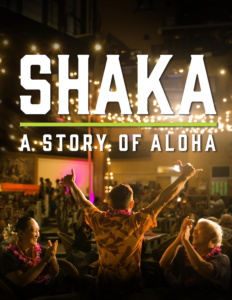
Along with leading the successful campaign to make the shaka Hawaii's official state gesture, Steve Sue produced the fascinating documentary "Shaka, A Story of Aloha," which will screen on Oct. 20 at the MACC as part of the 44th annual Hawai'i International Film Festival presented by Halekulani.
The feature-length doc delves into the origins, meanings, and mysteries of the iconic Shaka gesture, tracing its evolution across time, from its appearance in the 1997 Miss Universe contest with Brook Lee, to its use by General Kenneth Hara's Shaka Battalion in Iraq, the Hang Loose brand in Brazil, and its presence in surfing and entertainment. The journey also explores how the sign connects to sugarcane plantation workers, train jumpers, a Waikiki used car salesman, and Honolulu Mayor Frank Fasi.
Featuring original songs by Henry Kapono, other musicians involved with the project include Tavana, Kimie Miner, Ana Vee, Na Leo's Angela Escontrias, Kealoha, and Erin Smith Verrier's Kailua Music School Student Choir.
"Henry ended up writing four original songs for the picture, and he did a rendition of the 'Hukilau Song'," says Sue. "His song 'Shaka Man,' is about kids train jumping and Hamana Kalili, who lost fingers."
Sue's shaka odyssey began with Aunty Kela Miller of La'ie, who was a hula dancer at the opening of the Polynesian Cultural Center. She suggested he tell the origin story for future generations. "She said, 'Steve, I really want you to help me tell this story because all the kupuna are getting old and they're going to lose the story for the keiki.' I interviewed about 10 people there that all knew the story of Hamana Kalili, which is really the controlling story in the end of the movie."
With initial funding by Kamehameha Schools, Sue had planned a 20 minute short on the subject, which gradually evolved as he uncovered more intriguing details. "I started in La'ie and the next thing I know, I'm all over the island interviewing 60 people and the story got longer and more in depth. It covers a 110 year period."
He discovered "there are multiple angles to the story. It's a melting pot story with Japanese plantation workers involved in bringing the concept here from Japan. The surfers were involved with exporting it to the world and making it popular in all extreme sports. All the entertainers and comedians were involved, Rap Reiplinger, Andy Bumatai, and Frank DeLima. And Elvis had a big part because he had his first satellite broadcast ever from Honolulu around the world to a billion people."
When Elvis Presley performed his legendary "Aloha from Hawaii via Satellite" concert in 1973, beamed around the planet, as he walked off stage, he gave a shaka.
Sue says he understands the late promoter Tom Moffatt suggested Elvis sign off with the shaka. "I was told it was Tom Moffatt's idea for Elvis to shaka at the end to be really connected with the people," he notes. "Elvis was in La'ie in 1966 doing 'Paradise Hawaii Style.' Elvis was very close to the people here."
Among folks interviewed in the doc, Maui's Uncle George Kahumoku Jr. talks about "working for Lippy Espinda in Honolulu as a car washer." David "Lippy" Espinda Espinda was a used car salesman who frequently appeared as an extra in "Hawaii Five-O" and used the shaka in his TV ads in the '60s.
Along the way, Sue even explores the shaka's connection to Japanese Buddhism. "In Japan, the first Buddha is Shakyamuni Buddha," he says. "The Buddha's hand signs, the mudra, the right hand is up with an open palm, which means fear not. So it's no fear, and the other hand symbol is you'll be safe."
Exploring the lineage of the shaka, "I think you learn a lot about aloha spirit," he concludes. "You learn how to share it, what is actually sharing, what's appropriate in our culture. Isaiah Walker's in our film. He's the foremost surfing historian and commentator and he starts his interview saying the shaka has aloha and that's true, but it's not quite correct. There's also a warrior spirit to it. It's also about achievement and risk reward and living large, going for the best parts of life, but also doing it in a hang loose kind of way. So hang loose is also related. It's quite complex, and the only way to know it for sure is you have to just kind of get the PhD in the shaka."
"Shaka, A Story of Aloha," screens on Oct. 20 at 1 p.m. at the MACC as part of the 44th annual Hawai'i International Film Festival presented by Halekulani. Producer Steve Sue will attend.