
Protecting ohia: Fencing for the trees
KIA'I MOKU
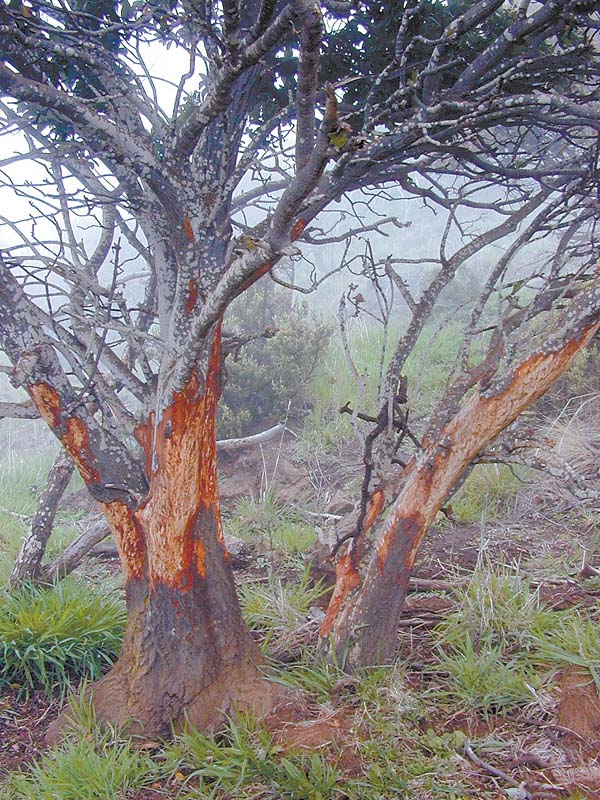
Ungulate rubbings or browsing on Haleakala sandalwood tree are seen in Polipoli. — FOREST AND KIM STARR photo
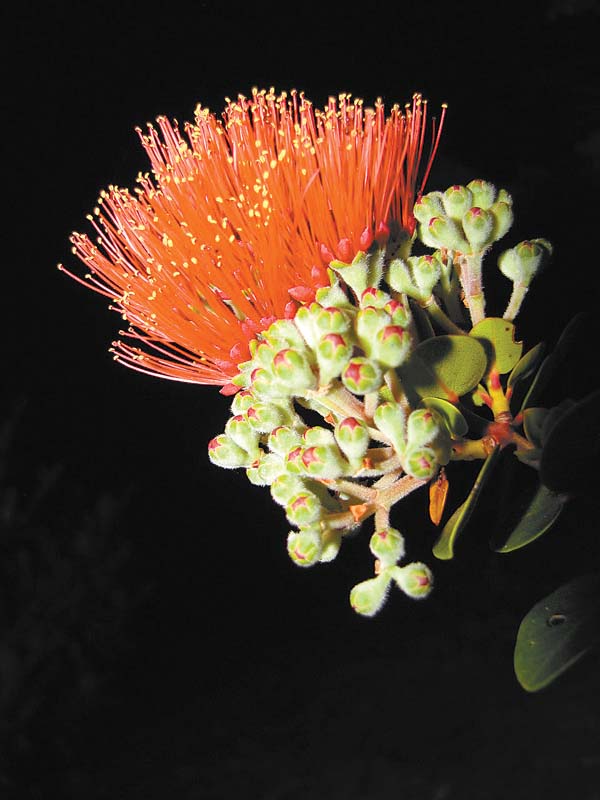
Ohia lehua (Metrosideros polymorpha) flower and buds are shown. — FOREST AND KIM STARR photo
Ungulate rubbings or browsing on Haleakala sandalwood tree are seen in Polipoli. — FOREST AND KIM STARR photo
Ohia lehua (Metrosideros polymorpha) flower and buds are shown. — FOREST AND KIM STARR photo
Trending
"The fungus needs an entry point," says Marc Hughes, a research plant pathologist with the U.S. Forest Service in Hilo. He's talking about the disease that is decimating ohia lehua in parts of Hawaii. An untreated scrape on a person's skin can lead to a staph infection; a similar but more drastic result is true for ohia. When some external force breaks through a tree's bark, invading pathogens can gain access to exposed tissues, and damage or kill the tree.
Ceratocystis lukuohia and Ceratocystis huliohia are fungal pathogens that cause the disease called rapid ohia death, or ROD, so named because the trees appear to die within days or weeks. Both pathogens will kill ohia trees, but lukuohia is more aggressive. Once infected, the tree responds, trying to slow the disease.
"It's like a speed race," explains Hughes, "but the fungus is faster."
The crowns turn yellowish, then brown. The tree looks frozen, dead leaves still attached. By the time an ohia tree shows symptoms, its days are numbered. Since it was first identified in 2014, rapid ohia death has killed over a million trees, mostly on Hawaii island, but trees on Oahu and Kauai have also succumbed. A single infected tree was discovered and removed in East Maui in 2019 and, to date, is the only known occurrence in Maui Nui.
Wounding is a prerequisite. Plants with intact bark don't become infected, even when directly exposed to the fungi. How does wounding happen? Wind is one way, says Hughes, who describes Tropical Storm Iselle as a "mass wounding event." The 2014 storm battered portions of Hawaii island, breaking ohia branches and toppling trees. Researchers observed a spike in ohia mortality after the storm and linked the spread to increased windborne spores and tree damage. Ambrosia beetles, which may burrow into trees killed by rapid ohia death, also play a role. Fungus-contaminated frass -- the sawdust produced when beetles bore into wood -- gets picked up by wind, animals and hikers' boots, or falls into the soil. Studies indicate a strong tie between the presence of ungulates, such as pigs, cattle and goats, and rapid ohia death. The large numbers of axis deer on Maui, Molokai and Lanai likely mean ohia trees in Maui Nui could be especially vulnerable if rapid ohia death were to become established here.
The study on Hawaii island found that unfenced areas, where ungulates were present, had two to 69 times more evidence of rapid ohia death-impacted ohia than neighboring, fenced areas that were ungulate-free. Researchers are also looking into the relationship between ungulates and the presence of the fungi in soil samples. Initial results indicate a similar link: the presence of ungulates means a higher likelihood the destructive fungus will be detected. Flint Hughes, a research ecologist also with the U.S. Forest Service (and unrelated to Marc), thinks pigs may spread the fungus through ohia roots when they dig up the ground searching for food.
While the potential scale of impacts to ohia might seem overwhelming, there is hope. In 2022, students on Oahu helped convinced the Legislature to designate ohia lehua as the Hawaii State Endemic Tree, honoring its importance to the aina and Hawaiian culture. Protecting forests through fencing, ungulate removal and ongoing maintenance, is a straightforward strategy, and one that watershed partnerships across the state are already working to implement.
This strategy has public support. A recent survey conducted for the Coordinating Group on Alien Pest Species, found that 89 percent of respondents know about ohia, and 80 percent had heard of rapid ohia death. An impressive 93 percent supported fencing of high-value forests and removing ungulates to protect ohia from rapid ohia death. Support may also be coming from federal coffers. This March, the Hawaii congressional delegation announced efforts to secure $55 million over a 10-year period for rapid ohia death-related research and management.
In closing comments during a 2022 presentation, Flint Hughes offered a reminder: "We tend to think of ohia as forests. Every ohia tree is an important individual. Some of these trees are 300 or 400 years old. We should respect that and them, and do what we can to protect them."
To learn more about how to support efforts to protect ohia, visit www.rapidohia death.org.
* Teya Penniman is the interim manager with the Maui Invasive Species Committee. She has 30 years' experience in natural resource management and advanced degrees in law and management. "Kia'i Moku, Guarding the Island" is written by the Maui Invasive Species Committee to provide information on protecting the island from invasive plants and animals that threaten our islands' environment, economy and quality of life.