
Reptiles and amphibians successful invaders of new territory
KIA‘I MOKU
Scaly reptiles and their skin-breathing cousins, amphibians, have spread throughout the world, first as pets, then as escapees. Since the mid-1970s, interest in exotic pets like snakes and lizards has exploded. So too has the number of renegade pets finding new homes in unlikely places.
In Hawaii, brown anoles skitter like tiny dinosaurs across the ground. These nonnative lizards are increasingly widespread on Maui; they are efficient and effective hunters, gobbling ants and other insects. Anoles live amongst people in the islands, limited for the most part to landscapes that are already dramatically modified. Their ecological impact here is fairly negligible. But that isn’t always the case with such slinky newcomers.
Reptiles and amphibians are highly successful invaders of new territory. Worldwide, 48 percent of the reptile and amphibian species released from captivity end up becoming successfully established in a new area. That’s particularly concerning in Hawaii, home to only two reptiles, sea turtles and sea snakes, neither of which live on land. Yet with a climate acceptable to most reptiles and amphibians, it follows that Hawaii is a haven for many scaled and skin-breathing beasts; 31 nonnative reptiles and amphibians are now established in the Islands.
However, Florida ranks No. 1 for reptilian and amphibious introductions. Why Florida? It’s warm. These critters need heat — an iguana won’t winter well in Wisconsin. Kenneth Krysko, Ph.D., with the Florida Museum of Natural History explains it this way: “If all things are equal, then in northern areas most introductions will likely fail. In contrast, if those same species are introduced in southern areas they might be more likely to survive. I think that’s why Florida has the worst problem of all.”
Adding to the problem are the restrictions, or lack thereof, on pets. Take for example the notorious invader of the Everglades, the Burmese python. Prior to 2010, if you wanted a Burmese python in Florida, you could own one or two or however many you wanted, like cats or dogs. You could sell them or give them away. Though it was, and is, illegal to release pythons and other nonnative species, officials couldn’t enforce the law. “To date, no one has been prosecuted for the establishment of a nonnative animal in Florida. In order to enforce it, an official must observe a person committing this act, which apparently has never been done,” says Krysko.
In Florida, home to many native lizards, the brown anole threatens populations of the native green anole, effectively outcompeting the lizard for resources. Brown anole could have hitchhiked in cargo, but it’s also very likely the reptiles became established after someone released a pet. When caged reptiles end up in the wild, either intentionally or accidentally, the outcome is the same. Worldwide, the pet trade is responsible for almost half of the 322 species of established nonnative reptiles and amphibians. Florida holds the geographic record as home to 63 introduced, cold-blooded creatures slithering and clawing their way through the state.
Consequently, parts of southern Florida are riddled with giant, 10-foot-long serpents; the record-breaking snake, captured last spring, was 18 feet 3 inches long and weighed 133 pounds. The worst invasive “pet” in the state, the Burmese python eats huge numbers of animals, including rats, raccoons, feral pigs and white-tailed deer. Sadly, these animals should serve as food for the dwindling population of the endangered Florida panther; the Burmese python may be tipping the balance toward extinction.
Like in Florida, many invasive species arrive in the Hawaiian Islands via the pet trade, often illegally. Today, Jackson’s chameleons, gold dust day geckos, iguanas, green anoles, brown anoles and red-eared sliders have escaped or been released to wander freely from backyards to forests.
But in Hawaii, there are heavy fines for owning snakes and many other reptiles. Getting caught with one comes with a stiff penalty: up to $200,000 and three years in prison. These regulations, capacity to respond to feral pets and general awareness about the threat snakes pose may have prevented Kipahulu from becoming the Everglades of the Pacific.
If you have a pet you can no longer care for, please turn it in to the Humane Society. Animals possessed illegally can be turned over to the Hawaii Department of Agriculture through its amnesty program, no questions asked.
* Lissa Fox Strohecker is the public relations and education specialist for the Maui Invasive Species Committee. She holds a biological sciences degree from Montana State University. “Kia’i Moku,” “Guarding the Island,” is prepared by the Maui Invasive Species Committee to provide information on protecting the island from invasive plants and animals that can threaten the island’s environment, economy and quality of life.
-
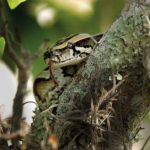
- Throughout the world, trade in exotic pets is responsible for a huge number of introduced reptiles and amphibians. Burmese pythons made it to Florida through the pet trade and now the Everglades is riddled with these huge serpents, typically 10 feet long but potentially 18-20 feet long. Florida is home to 63 species of introduced reptiles and amphibians; Hawaii trails in second place with 31 species. National Park Service photo
-
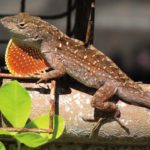
- Brown anole are among the 31 species of renegade reptiles and alien amphibians now established in Hawaii. They probably arrived in Hawaii through the pet trade, often illegally. FOREST and KIM STARR photo
Local News
Photo of the Day: Micro Succulents

West Maui Sports announces June 27 grand reopening at Lahaina Cannery
Waikiki monk seal pup relocated to quieter beach

Jill Engledow documented Maui life for more than four decades
Hawaii attorney general provides update on public corruption investigation
Hawaii Attorney General Anne Lopez on Friday said the state’s ongoing public corruption investigation remains ...
Maui County Council committee to discuss Caires’ lawsuit, fraud risk report and ethics proposals
The Maui County Council’s Government Relations, Ethics and Transparency Committee will meet at 9 a.m. Monday to ...