
Volunteers sought to rescue wetland from invasive species
Trending
MAALAEA -- The Pacific Whale Foundation is seeking volunteers over the next two years to help restore an ancient wetland overtaken by invasive plants and predators of native animals at Makena State Park.
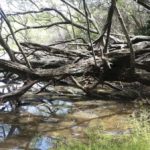
The Paniaka Wetland, one of three wetlands in the state park, is located near the southern end of Big Beach. The 0.75-acre area is the smallest of the three wetlands and is home to a handful of federally endangered species.
"We want to be able to do some surveys because there is almost zero native plants," restoration coordinator Elizabeth Speith told a gathering of more than 20 people at the whale foundation's classroom at Ma'alaea Harbor Shops. "I've only found a couple hiding in a bush."
The foundation is coordinating the project for the Oneloa Coalition, which includes the Aha Moku Council Honua'ula, area community associations, Maui Tomorrow, Discovery Lands Makena and the county.
The other wetlands in the park are the 3-acre Maluaka and 4-acre Oneloa wetlands.
Plans to restore the Paniaka Wetland call for reintroducing endemic and indigenous plants, improving the habitat for native animals and installing a custom "multi-species exclusion fence" around the perimeter, Speith said. A survey is currently in progress to determine the length of the fence.
Speith did not know how long the survey or permitting process will take before volunteers can begin work on the fence.
Restoration efforts center around the wetland's five native species: Hawaiian stilt, coot and wandering tattler birds; hoary bat; and damselfly.
"We tried to really focus on benefitting specific species, so it's not a matter of just cutting down trees," she said. "We want to make sure our decision-making benefits those species, so it gave us a road map to make decisions."
The custom fence would help protect the animals from predators, such as deer, cats, mongoose, bullfrogs, toads, pigs, goats, dogs and rats. Speith said a "fairly large" feral cat colony and 60,000 axis deer inhabit in the state park.
"Axis deer cover most of Haleakala and the valley," she said. "They can get in incredibly high densities. I have whole herds of them in my front yard."
The benefits of fencing off the deer would be "incredible," considering the animals eat all vegetation and destroy the ground with their hooves, Speith added. For years, deer have caused millions of dollars in damage to farms, ranches and resorts.
The fence would stand 6 to 10 feet high to prevent the deer from jumping over it and be built along the edge of the wetland. A "floppy-top" overhang structure about 2 feet long would be added to the top to prevent cats from climbing over.
A sturdy skirt secured or buried about 18 inches underground would prevent predators, like pigs, from digging underneath, Speith said. The fence draws from designs utilized by New Zealand and other reserves around the island.
"We're going to do something similar to the Maluaka fence, which is holding up pretty well considering the harsh environment," she said of the neighboring wetland that was restored in 2004. "It's been there for years."
Restoration of native plants will involve the "Bradley Method" of bush regeneration, Speith said. This method focuses on establishing areas of the highest densities of native plants before moving outward and clearing a new area.
Kanaha Beach and Waihee coastal dunes and wetlands utilize the strategy, Speith said. She said the method fundamentally changes the vegetation in the area and is a better long-term solution to keeping invasive plants out.
Invasive plants, including kiawe trees, pickleweed and sourbush, would be replaced with native vegetation, such as makaloa grass, lo'ulu, ma'o, naio, 'uhaloa, 'akulikuli and 'ilima.
"It's a little different than gardening," she said. "You go slowly and establish plants and then move out from there."
Gates will allow access into the wetland for locals and visitors, Speith said. There also are discussions of providing interpretive services to educate visitors about the area and restoration work.
Speith hopes the project finds funding in perpetuity to support the creation and maintenance of the wetland and a strong volunteer base to care for the area.
"All of what we're doing is volunteer driven, from putting up the fence to predator removal," she said.
To volunteer on the project, visit www.pacificwhale.org/you-can-help/volunteer, call (808) 856-8320, or email espeith@pacificwhale.org.
* Chris Sugidono can be reached at csugidono@mauinews.com.