Baking days may be over for Portuguese oven
After 60 years of making loaves of Portuguese bread, federal mandate has determined the oven must go
KAHULUI — As loaves of Portuguese bread slid out of a traditional stone oven for the last time Saturday, Maui Portuguese Cultural Club members reminisced about the ending of a tradition.
“It’s kind of sad,” said Greg Perreira, who had arrived the night before to start the fire that would keep the oven going through four batches of bread-baking beginning at 6:30 a.m. Saturday.
After being used to bake Portuguese bread for nearly 60 years, previously at the old Kahului Fairgrounds, the oven is being put out of commission by a federal mandate at its Hale Mahaolu Akahi location, said club President Sandi Furtado Guadagni.
A recent federal Department of Housing and Urban Development inspection of the property found that certain structures, including the oven, weren’t in compliance with standards for the subsidized housing program, said Grant Chun, executive director of Hale Mahaolu.
Guadagni said the nonprofit club is looking for another location to continue the bread-making that is the main fundraiser for scholarships, as well as part of members’ cultural heritage.
“This is part of our DNA,” Guadagni said.
Club members said the oven, capable of holding 30 2-pound loaves at a time, is the largest Portuguese stone oven in use for baking bread on Maui.
“Our bread, being stone oven bread, is normally punched down twice so that makes it doubly dense,” Guadagni said. “It’s amazing. I’m so sad we’re not going to be able to make this anymore.”
The oven was 30 years old in November 1990 when its last bake was done at the Kahului Fairgrounds. It took three days to move the oven to its current location off Elmer F. Cravalho Drive, named after the former mayor who had been a leader in the club founded in 1937, Guadagni said.
Although a crack in the oven is being cited as part of the reason it can no longer be used, the crack has been there for 27 years, Guadagni said. The crack is visible in a Maui News photo of the last bake at the fairgrounds.
“I’m disappointed in the decisions of the bureaucracy to have this happen,” she said. “In all my 70 years, I’ve never heard of a Portuguese oven blowing up because it was cracked.”
Perreira, the club secretary who has kept the oven firing for monthly bakes for the past six years, called the cracks “cosmetic.”
“Even though there’s cracks in it, I could squeeze at least another five years out of it,” he said.
On Friday, he arrived at 11 p.m. to get the fire started in the oven. After about an hour of sleep in a tent he set up nearby, Perreira awoke to check the fire and add coals, then tried to grab a couple more hours of sleep before the baking started.
Perreira is also in charge of gathering and cutting the kiawe wood that is burned in the part of the oven where the bread bakes. He scrapes out coals that fall into the bottom of the oven, using a specially designed tool, before mopping the area.
Then he throws flour into the bottom to help gauge the temperature. “If the flour turns black, you know it’s too hot,” said Perreira, who will mop the oven again to lower the temperature.
With no temperature gauges on the oven, Perreira also relies on touch. “I can tell by how long I can leave my hands on it,” he said. “It’s more of a feeling.
“Ideally, what I try to do is heat it up and do all the bakes before the oven gets cold.”
He was helped by Ricardo Ralha, who moved to Maui from Connecticut six years ago and joined the club to help maintain the culture. “At the very least, I just want to do my part without getting in the way,” he said.
In the nearby kitchen, other club members mixed and shaped the dough into loaves to create bolhinhos, the traditional round Portuguese white bread, and cinnamon loaf bread.
Yvonne Aoki is the first in the kitchen at 5:30 a.m. to make the dough and let it rise before others arrive.
After learning from her father and others, Aoki has been making the dough for eight years.
“Dad did the last bake at the fairgrounds,” she said. “I’m at the last bake over here.
“Our club members look forward to this outing,” she said. “We all get together. We have fun. We talk. We tease each other.”
“It’s something we look forward to doing together,” said Virgie Delapinia.
She was joined by grandaughters 8-year-old Razalle Gonsalves and 11-year-old Andraya Park, who is the youngest club member.
“We need the young ones to see how things are done, learn the culture,” Delapinia said.
Irene Fevella, the oldest club member at “96 and a half,” remembered when the club used to meet at the Paia Community Center.
On Saturday, she joined others around a table shaping the dough into loaves.
“At my age, all of my friends and my family are gone, so I enjoy these young people,” she said.
While the usual round bread consists of seven balls of dough for the seven days of the week, she shaped some loaves with more balls for special orders. Other customers asked for extra raisins or cinnamon in the cinnamon bread.
Past president Laura Paresa created the cinnamon bread, teaching other club members how to pull and roll the dough, Aoki said. “It’s become so popular,” she said.
Years ago, she said the bread-baking was done twice a month.
“The plantation workers would take a whole bake,” Aoki said. “The Waihee School teachers, they would take a whole bake. They used to make so much bread. They used to have Saturday bakers and Monday bakers. At the time, it was only white bread.”
Although the ingredients are the same, each loaf is handmade and shaped slightly differently, Perreira said. He remembered how 8-year-old Razalle took her time to form a loaf for the first time. “Her first loaf was the most perfect loaf,” he said.
Because there are no preservatives, the bread is best eaten within a day or two, Perreira said.
The club has been doing the bread-baking on the first Saturday of the month, usually making 60 to 90 loaves. “And they get sold in a hurry,” Guadagni said.
“Everybody works together,” Guadagni said. “We’ve got a pretty dedicated little group.”
On Saturday, with more requests from members and others, the club increased the number of loaves to 120.
Nearby resident Vance Yatsushiro said he has shown up “like clockwork” to buy bread for about four years. “Can’t beat it,” he said. “Too bad we can’t get it anymore.”
* Lila Fujimoto can be reached at lfujimoto@mauinews.com.
-
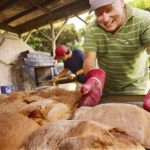
- Maui Portuguese Cultural Club members Greg Perreira (right) and Ricardo Ralha remove some of the last loaves of cinnamon bread ever to be baked in the traditional Portuguese oven at Hale Mahaolu Akahi in Kahului on Saturday morning. Due to concerns about cracks in the oven and its structural integrity, the oven is scheduled to be removed. — The Maui News / MATTHEW THAYER photo
-
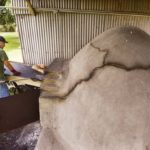
- Cracks are shown along the Portuguese oven’s exterior as Perreira and Ralha bake bread Saturday. While club members say the cracks are superficial, landowner Hale Mahaolu said an inspection by the federal Department of Housing and Urban Development determined they pose a risk and said the oven has to go. — The Maui News / MATTHEW THAYER photo
-
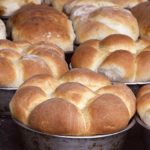
- Loaves of freshly baked Portuguese bread and cinnamon bread cool Saturday. — The Maui News / MATTHEW THAYER photo
Local News
Kaiser healthcare workers call for employer to return to bargaining table
LOS ANGELES, CA — As health care workers continued to hold the line in the fourth week of striking, 31,000 nurses ...
Matson expands support for Hawai‘i Foodbank and local families
HONOLULU (February 19, 2026) – To help Hawaiʻi Foodbank meet rising demand across the islands, Matson has ...
Gas prices inch up, but stay near lowest point in four years
According to the AAA Hawaii Weekend Gas Watch, the statewide average for regular unleaded stands at $4.40 per ...
Funds will rebuild senior center, affordable housing

ProArts Playhouse presents their Curtain Up fundraiser on Saturday