
Construction of roundabout at Maui Lani delayed
County, state ensuring historic preservation rules are addressed
Trending
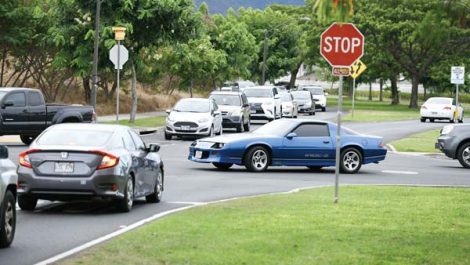
Construction on the long-awaited roundabout at the Maui Lani Parkway-Kamehameha Avenue intersection has been delayed as Maui County and other entities ensure compliance with historic preservation rules before work begins.
In February, the Public Works Department anticipated construction to begin before summer with a target completion date of October. Motorists and residents in the area have been seeking solutions to help ease the backup of vehicles at the four-way stop intersection -- especially during morning and afternoon rush hours and school commuting times.
Blue Zones Maui, a supporter of the roundabout, says that a roundabout at that intersection could reduce traffic during peak hours from the current 20 to 30 car backup to six cars.
In a roundabout, or traffic circle, there are no stop signs. Motorists yield to oncoming traffic while entering, continue around the circle and get off at the intended road.
"The project is moving forward, but because of the recent court cases regarding archaeology issues within the Maui Lani Project District, the project team consulted with the Wailuku Aha Moku to discuss issues and concerns," said Public Works Director Rowena Dagdag-Andaya this week.
Bones or iwi kupuna have been found during housing construction in areas near to the intersection recently and have triggered lawsuits by Native Hawaiians and caused increased scrutiny of construction in the area.
Dagdag-Andaya said the department is working with an archaeologist and with the state Historic Preservation Division to ensure compliance with all historic preservation rules prior to construction.
No funding has lapsed and no additional funds are needed for the project at this time, she said. Last year, the County Council passed a budget that included $3.4 million for the roundabout, requested by former Mayor Alan Arakawa's administration.
Nolly Yagin, public works head traffic engineer, said this week that the county does not know when construction would begin. A timetable might be available in the next few weeks.
"The goal has always been to schedule the bulk of the work when school is not in session," he added.
The intersection is the gateway to nearby Pomaikai Elementary School, which began its school year at the beginning of August.
No digging, trenching or any ground disturbance for the project has occurred, Yagin said. The county is taking care of some archaeological related work.
Officials at the Blue Zones Project are supportive of the Public Works Department's decision to complete the archaeological study before proceeding to construction.
Blue Zones continues to back the idea of the roundabout, which is supported by its volunteer Built Environment Committee comprised of community stakeholders and experts. The panel identified the roundabout as an essential solution for the intersection, said Laksmi Abraham, Blue Zones community program manager-Central Maui.
Improving active transportation options, such as walking, biking and transit-use, are effective tools to use to create a healthier, more livable community, she said.
For schoolchildren and pedestrians, Yagin said there will be rectangular rapid flashing beacons at the roundabout, similar to the ones at the Kihei roundabout at Piikea Avenue and Liloa Drive, to warn drivers. Pedestrians will cross at designated crosswalks set back about one vehicle length from the entry points into the roundabout.
Abraham said Blue Zones will continue its public outreach efforts to educate the community about the safety and health benefits and use of roundabouts. Blue Zones will partner with the county's Planning Department to host a community planning event on Oct. 4 at the Wailuku First Friday Party and with the Maui Metropolitan Planning Organization to host a Complete Streets Demonstration on Oct. 26 on Onehee Street next to Kahului Community Center.
Abraham cited data that show roundabouts can improve pedestrian and driver safety. Roundabouts offer a 90 percent reduction in fatality collisions and a 40 percent reduction in pedestrian collisions.
A traffic signal will not stop a vehicle from entering an intersection at 40 mph or higher. But roundabouts raise the level of consciousness for drivers, averaging vehicle speeds of 15 to 25 mph.
"This is significant because speed dictates pedestrian survival rates if struck in an intersection," she said.
* Melissa Tanji can be reached at mtanji@mauinews.com.