
No County furloughs at this time
Revenue sources differ from state, which is considering cutbacks as taxes drop
Trending
Maui County said Thursday that it does not plan to furlough workers, even as the state mulls possible cutbacks to offset major losses in tax collections.
"The county does not have immediate plans to furlough workers," Maui County Mayor Michael Victorino said in an email Thursday. "We continue to monitor revenues and our operational capacity. It is important to consider that our revenue sources differ from the state."
Maui County employs about 2,500 people, and "essentially all county employees have been determined essential," Victorino said. About two-thirds are reporting to work as usual, including most of the employees in the Office of the Mayor.
About one-third of county employees are working from home, and less than 1 percent are neither reporting to work nor working from home, as they have taken vacation or sick leave.
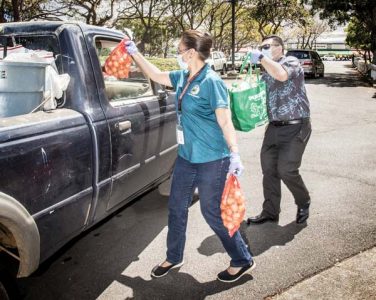
Victorino added that a number of employees have been reassigned within their departments and to other departments, and some have pitched in with COVID-19 efforts. For example, workers have handed out more than 2,000 bags of food at distributions across the county over the past month.
Meanwhile, the Department of Parks and Recreation built quarantine units for the first positive cases, Public Works helped prepare drive-thru testing sites, Water Supply workers have picked up supplies for the community and installed potable water for homeless people at Kanaha, Environmental Management built drop boxes and other departments provided workers to aid with loan and relief programs.
Maui police also have gone "above and beyond," Victorino said.
Concerns over cutbacks to government workers surfaced this week after labor unions learned that Gov. David Ige was proposing a 20 percent pay cut for teachers and other public employees. Ige has said that the issue is still under discussion and that no final decision has been made.
He said that the state should have a clearer picture of its fiscal situation in May but is anticipating a $1.5 billion budget shortfall due to "a drastic decrease in tax collections."
"My fiscal strategy team has been working to identify the impact this pandemic will have on our state and are exploring all options to deal with the anticipated shortfall," Ige said during a news conference Thursday. "Salary reductions or furloughs are the last thing anyone wants to see happen. I want to assure everyone that we will explore all options before making any decisions about salary reductions for government employees."
While the amount of money the state is shelling out in unemployment benefits has skyrocketed, these claims are not draining money from the state budget, according to Department of Labor and Industrial Relations Director Scott Murakami.
Murakami explained that this fund comes from taxes paid by Hawaii businesses that are matched by the federal government and managed by the U.S. Treasury.
In the first two weeks of April, the state has disbursed $21.6 million in benefits, which is $4.7 million more than the entire month of March, Murakami said Wednesday. He said this is about a 230 percent increase over what the state usually pays out every week. Since March 1, the state has fielded more than 237,000 unemployment claims.
At this rate, it appears the state's unemployment benefits fund will run out of money on May 10, Murakami said. Once it's exhausted, the state would have to notify the U.S. Department of Labor to access an interest-free federal loan.
While unemployment benefits aren't impacting the state budget, tax collections are. Ige said Wednesday that with more than 100 hotels across the state completely shut down, the state is facing the loss of its two largest portions of revenue -- the transient accommodations tax imposed on visitor lodging and the general excise tax levied on businesses.
The governor also said that while Hawaii is set to receive $867 million from the federal government under the CARES Act, "not a single penny can be used to support existing state programs or any of the employees currently employed by the state government."
Ige said the state is "already looking at cost controls on the expense side" and is trying to see what can be done to access its rainy day fund, which would require action by the state Legislature.
"But $1.5 billion is a lot to make up, and we must look at everything, including personnel costs, which is by far the largest share of our budget," he said. "I have said repeatedly that I must lead by example. If there are salary cuts to be made, they will start with me and my Cabinet members."
On the county level, spokesman Chris Sugidono explained that revenue sources are different because the county relies mostly on real property taxes and user fees, such as water, sewer and refuse, which are "not as subject to immediate declines, like state revenue."
The Finance Department plans to send the latest real property tax revenue projections to the council today.
When asked by Maui Now about the county's budget shortfall during a news conference Thursday, Victorino said that "we're not sure of the shortfall at this time."
"The council now has the budget," he said. "I am requesting all our departments to look at an overall 10 percent cutback and to make sure that all their priorities and necessary services are funded properly. So we're not going to sacrifice our services to cut our budget."
Victorino said that the county is "in a good fiscal position" and believed it would "come back strong" next year.
* Colleen Uechi can be reached at cuechi@mauinews.com.