
Ige: State planning a cautious reopening
Maui County continues to feel the pinch with the state’s highest unemployment rates
Trending
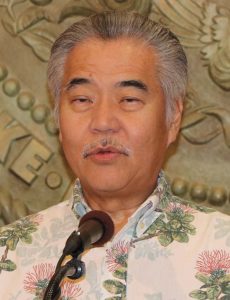
As Maui County grapples with the highest unemployment in the state and reopening of the tourism industry stalls, Gov. David Ige cautioned that he and the county mayors are taking a "conservative" approach to reopening because of Hawaii's isolation and inability to get help quickly if needed.
Ige said during a Zoom interview with The Maui News on Thursday morning that it's hard to tell whether the state will fully open to tourism on Sept. 1 -- which is when the state is planning to roll out its pretravel testing plan for arriving passengers -- as it will also depend on the rise of COVID-19 cases outside the state by that time.
"The part that is most challenging is the fact the virus is out of control on the Mainland," Ige said. "We thought we were isolated from that."
Ige said that before the testing program can be deployed, allowing travelers to bypass the 14-day quarantine if they can show proof of a negative COVID-19 test, the state must first work on its current quarantine program, improving it to ensure enforcement and compliance by both residents and visitors alike.
He confirmed that the state is continuing to work with companies on the Mainland where tests could be administered for travel to Hawaii.
"I told the team we may have delayed the dates (to Sept. 1) but we really got to work toward the August 1st date," he said. "I want to get everything in place so we can continually improve it as we approach that date."
Another reason that the governor postponed the launch of the program was because of the upcoming start of the school year.
Ige said he's confident that Maui County public schools will reopen Aug. 4 without major health impacts. While cases on Oahu have shot up, Maui County has seen fewer than 20 new cases since the beginning of June.
"Mayor Victorino and his team in Maui County have done a good job in relation to and managing the few clusters we had, and so clearly on the Neighbor Islands, I'm very confident we are not going to see a real bad outbreak," Ige said.
But he added, "it's very important for everyone to understand everyone has a role to play (when) reopening our schools."
He reminded people to stay home when sick and to wear masks.
Also on Thursday, Hana and Piilani highways reopened to nonessential traffic and outside residents after four months of closure to allow for emergency road repairs and to prevent the spread of COVID-19.
Ige acknowledged that residents want the isolation during this time, but he added that Hana Highway, which receives federal funds and is overseen by the state, can't be closed off indefinitely. However, he said that he is willing to seek solutions to the matter.
Ige had been in contact with Mayor Michael Victorino, state Sen. J. Kalani English and state Rep. Lynn DeCoite, whose districts include East Maui.
"We are willing to listen and see if there is something that makes sense," he said.
During online meetings held by English, the governor, lawmakers and community members have explored ideas to help manage tourism better and benefit residents.
One idea that's been floated is a reservation system for East Maui, similar to Ha'ena State Park on Kauai. While there are no plans yet to create a blanket system, the state Board of Land and Natural Resources recently approved a reservation system for Waianapanapa State Park just outside Hana town.
Ige also addressed Neighbor Island concerns with shipping company Young Brothers, which has been struggling financially and seeking bailout funds from the state. The company has said it is forecast to lose $25 million this year, citing a decline in cargo volumes and higher operating expenses that have been worsened by the pandemic.
Ige said there is not enough volume for small ports such as Molokai and Lanai to make shipping viable on their own but that the state is working on ways to support it.
"I can assure you we can figure out some way to get the goods that need to be distributed to the Neighbor Islands out," he said. "It won't be a situation where no service is available."
Since businesses began reopening at the start of June, Ige and other officials have pinned their hopes on the kamaaina economy, encouraging people to shop locally and do staycations instead of taking trips out of state.
But the kamaaina dollar cannot buoy all businesses, and Ige said "that is part of the challenge we see here."
He and other governors are advocating for more federal aid. Ige pointed out that around 20,000 businesses in Hawaii got loans from the federal Paycheck Protection Program, which amounted to more than $2.5 billion.
However, he believed that there should be more flexibility for the program's low-interest private loans, which cover payroll and other costs but come with specific requirements.
"The state just doesn't have that kind of resources to help," Ige said. "The challenge is that every single business, every single organization has been impacted by this virus. That's something that is just bigger than the state can provide."
But what the state can do is help residents with food distributions and rental assistance.
"Just trying to provide that kind of food, shelter assistance in the most direct way we can, is what we have been focusing on," Ige said.
He added that the state has sought help from the federal government to ensure that unemployment benefits can continually be paid in Hawaii. The state Department of Labor and Industrial Relations said Thursday that it plans to ask the federal government today for more funding to help cover those benefits.
Earlier this month, the U.S. Bureau of Labor reported that the Kahului-Wailuku-Lahaina metropolitan area logged the highest unemployment rate in the nation at 33.4 percent for May. This was a 31 percentage point increase over May 2019.
Unemployment across the state did improve somewhat from May to June, falling from 23.5 percent to 13.9 percent.
Maui County's unemployment rate dropped from 34 percent in May to 22.6 percent in June, though both were still the highest in the state. (The latest county data has not yet been seasonally adjusted for summer and holiday hiring.)
While the state has put out a phased reopening plan based on case levels and other conditions, the ultimate plan for economic recovery is still in the works. Ige said discussions have already begun between stakeholders, businesses and organizations to share what measures are being done during COVID-19 and how best to focus the state's limited resources to help.
Ige acknowledged the challenge with opening the economy, but not too quickly, in order to keep case numbers down.
"The challenge for us, it's not about driving to get access to a hospital. In Hawaii we are kind of on our own," he said.
"So the mayors and I are definitely more conservative when we look at these things. It's because we know that once we overrun our system, it will be a long, long, long, time before we can get it back under control."
* Melissa Tanji can be reached at mtanji@mauinews.com.