
Winner of primary contest will take District 8 seat
Incumbent state Rep. Troy Hashimoto faces Ka‘apuni Aiwohi and Robert Hill III
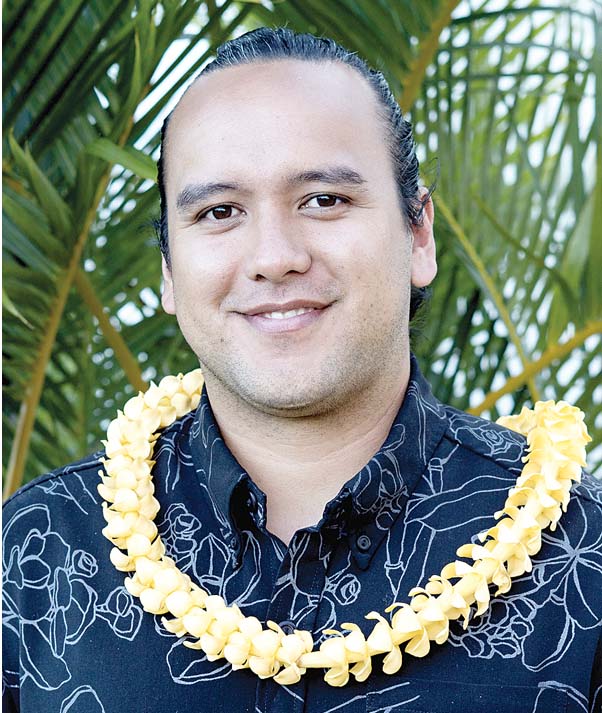
Ka‘apuniali‘ionalaniki‘eki‘e Kanaloa Aiwohi: Age: 30 / Residence: Waiehu Kou Hawaiian Homestead / Party: Democratic / Current occupation: Education design specialist / Volunteer or community organization experience: Board member of the nonprofit Hui o Na Wai ‘Eha, middle school tutoring, youth basketball/soccer coach, organizer for various Hawaiian rights issues, organizer for taro restoration activities, graduate of Kuleana Academy, commissioner on the Cultural Resource Commission / Military service: No / Political Experience: Hawaii Democratic Party precinct treasurer and state precinct delegate, campaign assistant for OHA trustee candidate Ke‘eaumoku Kapu / Family: Married with kids
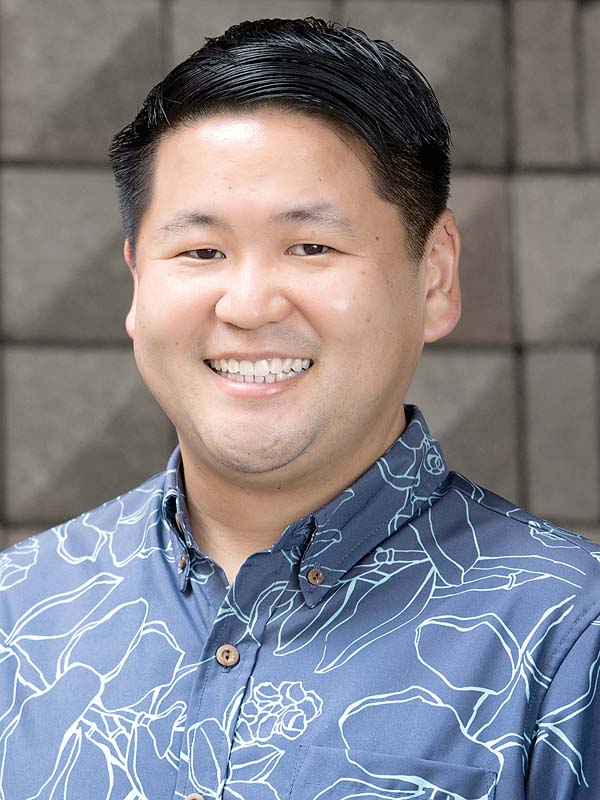
Troy Hashimoto: Age: 32 / Residence: Wailuku / Party: Democrat / Current occupation: State legislator / Volunteer or community organization experience: Currently on Ka Ipu Kukui Fellows Board of Directors, formerly Hawaii State Board of Education, Maui County Democratic Party Chair, Hawaii State Central Committee — Democratic Party of Hawaii / Military service: No / Family: Single
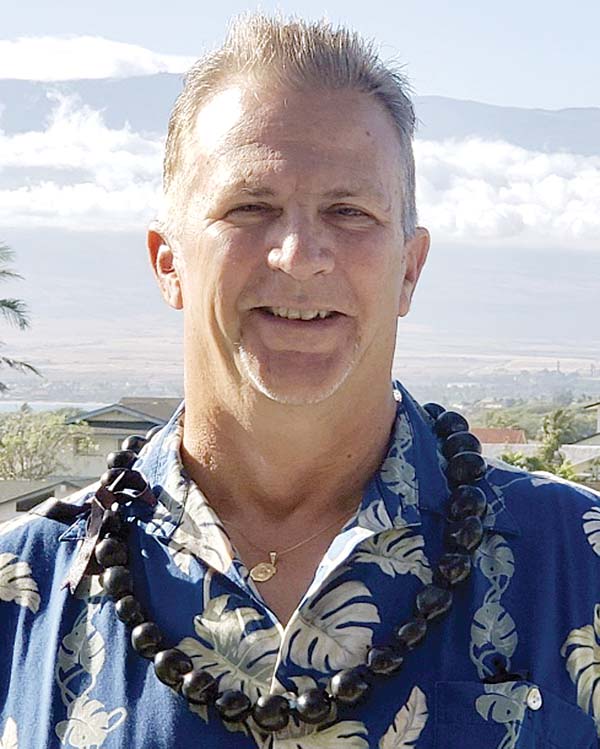
Robert G. “Bobby” Hill III: Age: 59 / Residence: Wailuku (Wai‘ehu Heights) / Party: Democrat / Current occupation: Flight attendant, retired Maui police lieutenant / Volunteer or community organization experience: Board member for Alu Like, U.S. Coast Guard Auxiliary, Angel Flight West / Military service: Colonel in the U.S. Army Reserve, also served in Hawaii Army National Guard / Family: Married, two adult children
Ka‘apuniali‘ionalaniki‘eki‘e Kanaloa Aiwohi: Age: 30 / Residence: Waiehu Kou Hawaiian Homestead / Party: Democratic / Current occupation: Education design specialist / Volunteer or community organization experience: Board member of the nonprofit Hui o Na Wai ‘Eha, middle school tutoring, youth basketball/soccer coach, organizer for various Hawaiian rights issues, organizer for taro restoration activities, graduate of Kuleana Academy, commissioner on the Cultural Resource Commission / Military service: No / Political Experience: Hawaii Democratic Party precinct treasurer and state precinct delegate, campaign assistant for OHA trustee candidate Ke‘eaumoku Kapu / Family: Married with kids
Troy Hashimoto: Age: 32 / Residence: Wailuku / Party: Democrat / Current occupation: State legislator / Volunteer or community organization experience: Currently on Ka Ipu Kukui Fellows Board of Directors, formerly Hawaii State Board of Education, Maui County Democratic Party Chair, Hawaii State Central Committee — Democratic Party of Hawaii / Military service: No / Family: Single
Robert G. “Bobby” Hill III: Age: 59 / Residence: Wailuku (Wai‘ehu Heights) / Party: Democrat / Current occupation: Flight attendant, retired Maui police lieutenant / Volunteer or community organization experience: Board member for Alu Like, U.S. Coast Guard Auxiliary, Angel Flight West / Military service: Colonel in the U.S. Army Reserve, also served in Hawaii Army National Guard / Family: Married, two adult children
Trending
The two candidates challenging incumbent Rep. Troy Hashimoto for the House District 8 seat say they plan to give a voice to those needing representation in the state Legislature.
Educator and Hawaiian rights organizer Ka'apuni Aiwohi wants to bring the concerns of Native Hawaiians to the forefront, while retired Maui police lieutenant Robert "Bobby" Hill III is looking to represent "the silent majority." Both are taking on Hashimoto, who points to his record as proof that he tries to work with everybody.
The race for District 8, which stretches from Waikapu to Kahakuloa, is one of two Maui House races that will be decided in the primary; all three candidates are Democrats with no challengers from other parties, making Aug. 8 all the more important.
KA'APUNI AIWOHI
Ka'apuni Aiwohi is proud to say he's the only candidate who was born and raised in the district.
"I drove these streets since I could start to drive. I got stuck in traffic . . . from Sack N Save to Takamiya," he said with a laugh. "I feel like I have a good sense of this community."
Aiwohi feels "his heart is in it the most." He's raising three daughters in Waiehu, with no plans of moving, and also feels a strong connection to the Native Hawaiian community there.
"For me personally, I notice that nobody is really representing the causes that are really true to my heart," he said. "I feel like nobody's representing the 'aina, no one is representing the water, nobody is representing kalo farmers. I don't think that all of the issues that are going on are taken as serious as they deserve."
The 30-year-old believes he's prepared to serve as an elected official. He holds a Bachelor of Science in aeronautics at Embry-Riddle Aeronautical University, along with minors in business administration and applied climatology.
He's participated in community and county boards, such as Hui o Na Wai 'Eha and the county's Cultural Resources Commission.
Aiowhi believes the best way to help Maui County get back on the road to recovery after COVID-19 "is to invest in its people."
"I think we really need to double down and make sure our investment in the county is kept in our county," he said. "Agriculture or even tourism -- is our money being used, being kept within our county? Or is it going to shareholders around the globe?"
Aiwohi said he would invest in technology and pointed to efforts at the Maui Research & Technology Park in Kihei. He likes industries and companies that keep jobs and money on Maui.
But, as an educator, he also feels the number one issue in his district is how poorly schools are doing.
"I really don't think people realize how bad it is, because we haven't had it any better," said Aiwohi, an education design specialist at Kamehameha Schools, who previously taught at Iao Intermediate School.
He doesn't blame the state Department of Education, as they can only work with what they have.
"I know that we can do so much more," Aiwohi said. "I really feel this year is going to be very bad for education. It's going to be a big mess. I feel you really need to overhaul the system."
There are plans for a new middle school in Central Maui, but Aiwohi said that even if it's built, that won't change student performance.
He said improvements can be made by hiring teachers that understand local students, or even having Maui County residents be trained as qualified teachers and remain on island.
He also wants to better help vulnerable students.
"When a student falls behind, there are not a lot of options for them," Aiwohi said. "Schools don't do enough to intervene for students that are falling behind because the one grade level counselor has to share 300 students."
There's even less support for low-income families.
"These students who are struggling at home are falling through the cracks and do not have enough support," he continued. "Native Hawaiian students are continually at the highest risk of suspension, in-school suspension, truancy and report the lowest test scores."
Aiwohi said there's "no hard plan to address this issue." However, he believed more power could be given to local communities to direct their state standards and testing and how schools structure their learning. He also suggested providing the community with tools to make it on their own, such as computers and access to the internet.
Aiwohi knew he would face an uphill battle against the well-funded Hashimoto, who had more than $49,000 in campaign funds as of June 30, more than any other candidate. Aiwohi had raised $6,592.04 as of June 30.
Former District 8 Rep. Joseph Souki held the seat for years. Thinking Hashimoto might stay awhile, Aiwohi said he wanted to unseat the incumbent early on.
Hawaii legislators do not have term limits, but Aiwohi thinks they should, saying that different viewpoints are needed. If term limits are not imposed, political officials' cash chest will continue to grow.
"I would like to see a more balance approach so that more people can get into politics," he said.
TROY HASHIMOTO
With two years as a lawmaker under his belt, Troy Hashimoto hopes he's just getting started.
The 32-year-old Wailuku resident said that if he is reelected, he will "really work hard" to see things through that he's pushed for these past two years, including a new jail facility in Puunene to ease overcrowding at the Maui Community Correctional Center in his district.
In April 2018, Hashimoto was appointed by Gov. David Ige to fill the remainder of former Rep. Joseph Souki's term after Souki resigned over harassment complaints. Hashi-moto went on to win the district seat in a four-way race in the August 2018 primary.
While at the Legislature, he said he works with the Maui delegation to see how they can best support their districts from their key positions within various committees.
One of the more "rewarding things" of late was the blessing this month of the vacant University of Hawaii-Maui College dorms, which are being turned into emergency housing for the homeless by the county. Hashimoto said he worked with fellow Maui legislators Sen. Gil Keith-Agaran and Rep. Kyle Yamashita to help Maui County get access to about $5 million from the state Dwelling Unit Revolving Funds for the project.
In other areas of his district, Hashimoto said Maui legislators were able to obtain $4 million for air conditioning for Wailuku Elementary as well as $9 million for a locker room at Baldwin High School, which is now limited to using nearby county facilities.
Hashimoto wants to continue working with Maui County and getting it funding to help deal with the COVID-19 pandemic. He pointed to the $66.6 million in CARES Act funds that the state Legislature allocated to the county during the session that ended in June.
Lawmakers also put another round of funding into a bill for statewide programs to help those in need, such as renter's and homeowner's assistance and funding for protective equipment and food assistance. The measure is awaiting Ige's signature.
"In the short term, we should be able to help most folks with whatever circumstances they are facing," he said.
Hashimoto hopes that the federal government will allow for more flexibility in using the CARES funds -- which cannot be used to balance operating budgets -- or provide additional aid, which he feels is unlikely.
Without this, Hashimoto said the state will be in a "very difficult position" and will likely consider furloughs of state employees, though the ultimate decision lies with the governor.
However, the Legislature did provide the governor with a "variety of tools" to balance the budget without furloughs, including tapping into the hurricane relief fund and borrowing up to $2.3 billion from the federal government.
Within his district, Hashimoto feels the number one issue in the short term is getting residents back to work.
Over the long term, he said he's looking to relieve school overcrowding. With Maui Waena and Iao intermediate schools "bursting at the seams," he's pushing for a new middle school in Central Maui. The Legislature recently put in $3 million for the project.
Puu Kukui Elementary in Wailuku is also full, and Hashimoto said there is open land next to the school that could allow for expansion.
While he has one of the top grossing campaigns among Maui politicians in the primary, Hashimoto said he always spends frugally and runs a streamlined campaign. People can donate to him, but Hashimoto said "it will never impact my decision."
In response to Aiwohi's concerns about representing Native Hawaiians, Hashimoto said he hopes "my actions speak to my commitment" to the Native Hawaiian community.
For example, he's pushed for allowing the state Department of Hawaiian Home Lands to continue giving out housing credits to allow for movement on the Pu'unani Homestead Subdivision near Waikapu, which will include 137 turnkey homes and 24 vacant lots.
He also co-introduced a bill in 2019 that would establish $35 million as Office of Hawaiian Affairs' pro rata share of the public land trust and would have transferred a lump sum of $139 million to OHA for underpayment of the public land trust funds. The bill made it to conference committee but did not pass.
"I try to sit down with every person who has an idea, and we try and push that forward, and I have a commitment to everyone throughout the district that wants to see things through," he said.
ROBERT "BOBBY" HILL III
As a longtime first responder, Bobby Hill believes he can handle a crisis.
The former Maui police lieutenant and current U.S. Army Reserve colonel has been trained in incident command and feels he would be effective as a legislator when it comes to funding first responders as well as planning for and handling emergencies.
With Maui County facing one of its worst crises yet -- a worldwide pandemic -- the 59-year-old Waiehu resident said the way to get the county back on its feet is to not punish the working people as state funding runs short. For Hill, this means no new taxes or fees.
"I don't really like punishing the working people. I'm looking at creative solutions," he said.
One of those creative solutions Hill sees is a state lottery, an idea proposed in the past by lawmakers but never gaining enough support to pass. Hill said the lottery wouldn't come about quick, but it would be a start.
In the meantime, Hill believes "we still need" the main economic driver of tourism.
"We need to bring it back, (but) we need to bring it back slowly and safely of course," he said.
However, he added that "we need to look at it in a whole different perspective." This includes looking for alternatives rather than maximizing spaces to make profits. Hill, a Delta flight attendant who is currently on extended leave, said this includes airlines not using every seat on the plane.
Hill said everyone will agree the big issues in his district are cost of living, homelessness and drugs, and that he doesn't think anyone else's solutions will be better than another's. However, in addition to addressing those, he also wants to hone in on other topics.
One issue he hopes to address if elected is illegal fireworks.
"I never seen it go away. I never seen it get any better or any less," Hill said. "Why not capitalize on it?"
Hill said permits could be issued for fireworks and taxes could be collected by the state and the county, which could go toward enforcement. A GPS system could be used to map the areas where permits have been sold. If a problem is reported in an area where there is no permit, then law enforcement can concentrate their efforts there. Drones could also be used.
Hill would also advocate for stricter penalties for violators.
In the spring of 2018, Hill was one of eight Democrats who applied to fill the District 8 seat that Hashimoto eventually landed. Now he's back to try to win the seat.
"I believe Maui needs a creative, courageous and competent leader that will speak for all the people," Hill said. "Many in office only cater to the loudest voices. I believe in and support the silent majority."
As of June 30, Hill had $531 in campaign funds, and like Aiwohi, knows he faces a well-funded opponent. However, Hill said he's not running against a candidate.
"I'm running for the people," he said. "None of my campaign strategies include attacking or even worrying about the others running for the same office. I wish them well."
Hill said he personally chose to run his campaign on what he could finance himself and that most of his donors are longtime friends or family members.
He added he does not have any endorsements of large unions or organizations and that if a candidate relies on taking photos with prominent figures or on getting endorsements from seated politicians, it gives an appearance of weakness.
"That's just the impression I get looking at it from a voter's perspective," Hill said. "It is worth more to me to have the support and backing of the everyday citizen."
* Melissa Tanji can be reached at mtanji@mauinews.com.