
Marine institute aims to save damaged corals
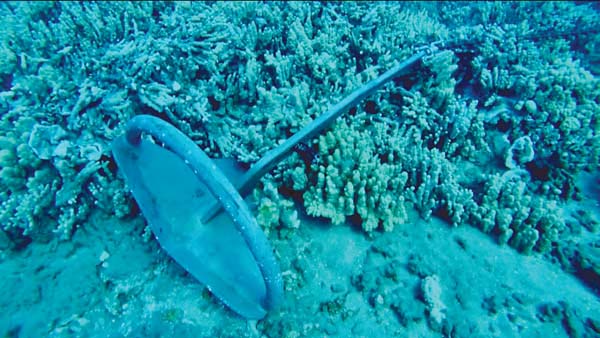
A boat anchor is lodged in a coral reef in Lahaina. The Maui Ocean Center Marine Institute coordinated an emergency response and restoration project to save damaged corals at seven sites. Photos courtesy of Maui Ocean Center Marine Institute

Once at a coral lab, fragments are photographed, assigned a number, treated for pests and placed in a quarantine tank.
A boat anchor is lodged in a coral reef in Lahaina. The Maui Ocean Center Marine Institute coordinated an emergency response and restoration project to save damaged corals at seven sites. Photos courtesy of Maui Ocean Center Marine Institute
Once at a coral lab, fragments are photographed, assigned a number, treated for pests and placed in a quarantine tank.
Trending
The Maui News
The Maui Ocean Center Marine Institute's coral restoration team has launched a project to save coral reefs at seven sites in Lahaina that were recently damaged by commercial boat anchors.
"The most significant threats to coral reefs in Hawaii are from human activities, including physical damage from boat anchors," Dustin Paradis, the marine institute's conservation coordinator, said in a news release Tuesday. "When we learned of the damage, we knew that we had to take immediate action."
Coral reefs are vital to Maui's island community, providing food, storm protection, habitat for nearshore fisheries and supporting opportunities for recreation, such as snorkeling or surfing, the news release said.
At each restoration location, the marine institute performs an initial assessment to photo-document the damage, determine which corals are best suited for immediate reattachment and which corals will be transferred back to the institute's lab in Maalaea.
Once at the coral lab, coral fragments are photographed, assigned a unique identification number, treated for pests and placed in a quarantine tank. Staff will return some of the healthier corals to the damage sites in the next few months. The remaining corals will be fast-grown in the institute's lab over the next year and transplanted at the restoration site as larger colonies.
"Physical damage to coral reefs from boating is completely preventable," said Tommy Cutt, the institute's executive director. "Our team is working on community-based initiatives focused on responsible boating practices to help prevent future harm to our reefs."
Boaters can help make a difference by:
• Wearing polarized glasses to scout for shallow reefs and marine animals.
• Getting familiar with reef locations.
• Tying up to mooring balls instead of anchoring.
• Confirming that the boat is over sand if they must anchor.
• Checking tides and weather before boating.
The Maui Ocean Center Marine Institute works in close partnership with the state Department of Land and Natural Resources' Division of Aquatic Resources. All coral restoration activities are authorized under the institute's special activity permit from the state.