
Judge cuts water ‘take’ from E. Maui streams
Trending
An Environmental Court judge has sliced the total amount of water East Maui Irrigation is allowed to divert from East Maui streams.
First Circuit Judge Jeffrey P. Crabtree last week modified EMI's water "take" from 45 million gallons a day to 25 mgd, effective immediately. The 74-mile-long EMI water delivery system, which was constructed in phases starting in the late 1800s, is co-owned by Alexander & Baldwin and Mahi Pono.
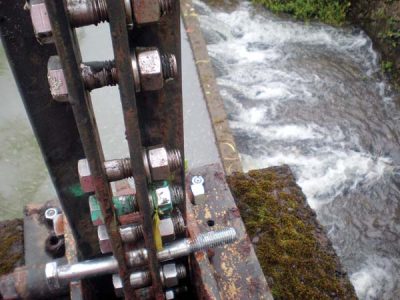
Diverted East Maui stream water flows to Mahi Pono farming, Upcountry Maui County water customers (about 35,000 residents), Kula Agricultural Park and other entities. Much of the diverted water is lost due to seepage and evaporation, according to water use reports.
The latest order follows Crabtree's May decision on legal action initiated by a Sierra Club of Hawai'i case. He ruled that the Board of Land and Natural Resources, which oversees the state's issuance of short-term water permits, violated Sierra Club's "due process rights" by refusing the organization's request for a contested case hearing in November 2020. At that meeting, the Sierra Club had requested a contested case hearing before the board granted one-year water permits to EMI. The board refused and approved the permits.
Crabtree said he didn't want to vacate the permits altogether, as he wouldn't "risk a vacuum which causes hardship to those on Maui who rely on the water at issue."
His May order asked for input from all parties on an appropriate diversion amount.
However, the judge noted in his July 30 order that BLNR "offered nothing in the way of any options, plans or specifics for how the permits can safely be modified to ensure the people of Maui continue to get the water they need pending the outcome of BLNR's contested case hearing (whether compelled by court order or on BLNR's own initiative." Nor did EMI or the County of Maui, who joined in several legal pleadings as the case progressed, he added later in the order.
Crabtree said in his order that Sierra Club was the only group that offered the court "concrete and specific options and support for how to modify the defective permits and not leave a vacuum until BLNR conducts a contested case hearing."
EMI monthly water use reports indicate that over the past 18 months Mahi Pono used 2.4 mgd to 4.48 mgd on its fields; Maui County's Upcountry water use took 0.61 mgd to 2.65 mgd; Kula ag park used 0.35 mgd to 1.01 mgd; and industrial and other miscellaneous uses recorded 1.1 mgd.
At the highest, a total of 30.10 mgd (January 2020) came from East Maui streams. At the lowest, 11.51 came from the streams (October 2020).
The modification will leave enough water for users while BLNR carries out a court order to finally hold the contested case, Crabtree said in the order.
Sierra Club in a news release hailed the decision as a "really big deal" victory. A state spokesman on Friday said, per policy, BLNR has no comment on a pending board decision. Mahi Pono and County of Maui. A&B could not be immediately reached for comment.
The state's revocable permits have long been a flashpoint for some Native Hawaiians and environmentalists. They see the approvals as a blank check for big companies to take water without environmental or cultural accountability.
For some time, A&B didn't have a water limit on revocable permits, which were annually granted by BLNR for more than a decade.
A&B for more than 150 years diverted the main flows of East Maui streams through a series of ditches, siphons and tunnels for sugar operations in Central Maui and Upcountry. The company closed its sugar business in 2016 and sold its ag lands and water ditches to Mahi Pono in late 2018. EMI remains jointly owned by A&B and Mahi Pono until a long-term lease is granted.
Additionally in 2016, an Oahu Circuit Court judge ruled in a lawsuit filed by the Native Hawaiian Legal Corp. on behalf of East Maui taro farmers and practitioners against BLNR, A&B and the County of Maui. The court declared that the annual rollover of permits was not "temporary" and violated the law regulating one-year revocable permits.
As a result of the ruling, A&B would not have been allowed to apply for short-term permits beyond 2019. However, the decision was overturned in the Court of Appeals in 2019.
A&B and EMI is in the process of seeking a longterm lease for Mahi Pono farming, county water and other uses. A required Environmental Impact Statement was recently released in a bid to acquire a 30-year lease, but the FEIS was withdrawn Thursday.
The state Department of Land and Natural Resources said the reason provided for the withdrawal was that certain production-related (printing) errors and typographical errors occurred during finalization of the document. Upon completion of the appropriate revisions, the corrected study will be refiled, the news release said.
* Kehaulani Cerizo can be reached at kcerizo@mauinews.com.