
After 9/11, Maui saw outpouring of grief, aloha
Residents held vigils and fundraisers, helped stranded travelers
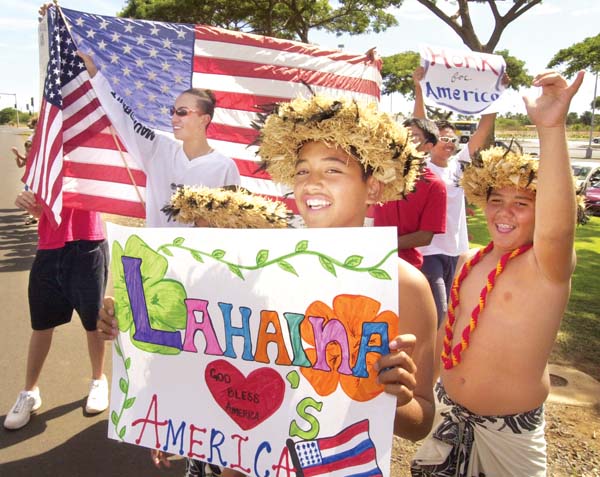
Following 9/11 attacks, Lahaina students wave signs of support along Honoapiilani Highway on Sept. 19, 2001. — The Maui News / MATTHEW THAYER photo
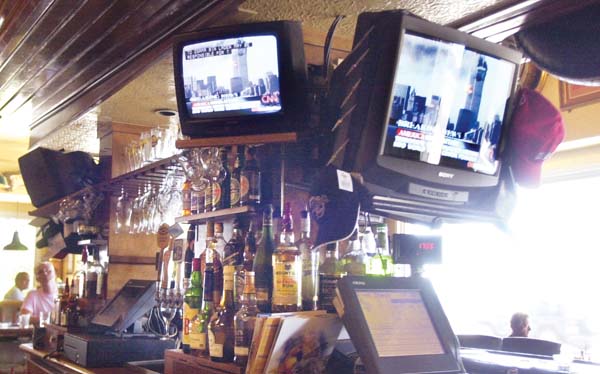
Coverage of the attacks is shown on televisions playing at Lahaina’s Hard Rock Cafe on Sept. 11, 2001. — The Maui News / MATTHEW THAYER photo
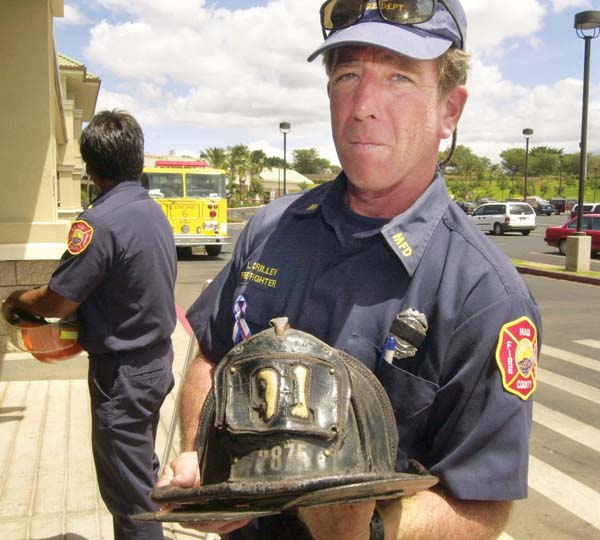
Maui firefighter Larry Crilley holds a battered helmet from his days with the New York Fire Department while part of a crew collecting donations in Kihei for families of fallen NYFD and NYPD personnel on Sept. 20, 2001. — The Maui News / MATTHEW THAYER photo
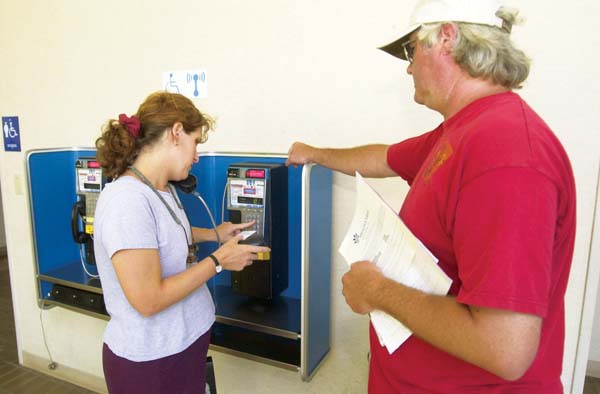
Stranded travelers burn the pay phone lines looking for lodgings on Sept. 11, 2001. — The Maui News / MATTHEW THAYER photo
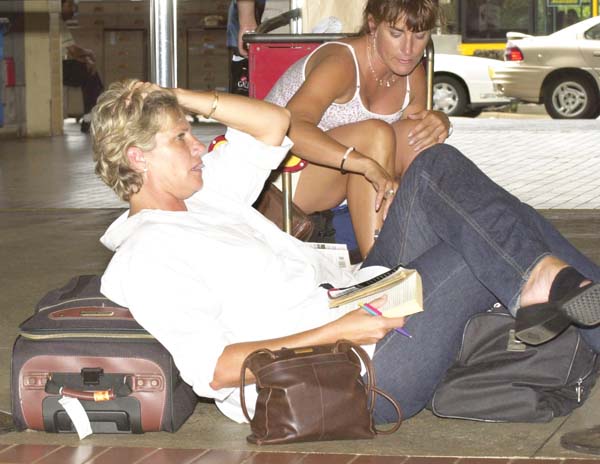
Travelers hope to get an early jump on rebooking flights on Sept. 13, 2001. — The Maui News / MATTHEW THAYER photo
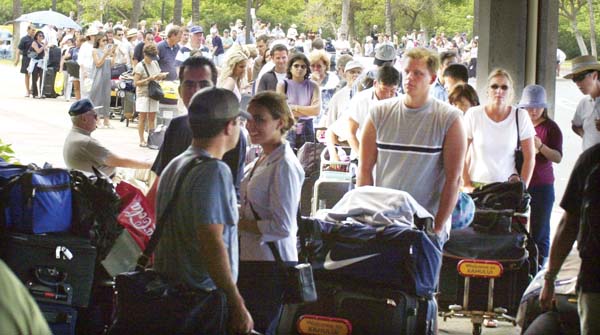
Long lines of stranded travelers stretch far outside Kahului Airport on Sept. 14, 2001. — The Maui News / MATTHEW THAYER photo
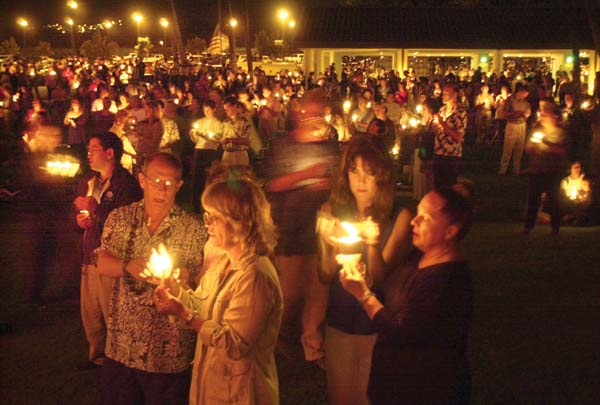
A candlelight vigil is held at the Maui Arts & Cultural Center on Sept. 13, 2001. — The Maui News / MATTHEW THAYER photo
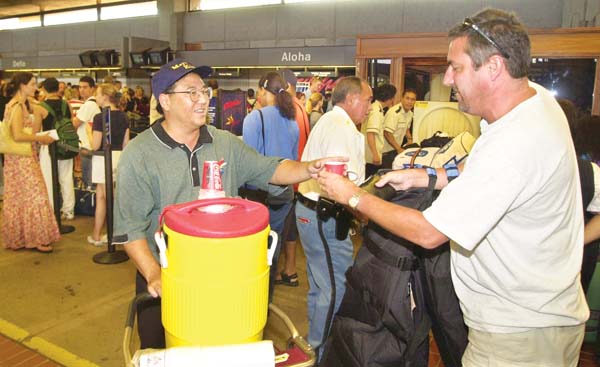
Then-Maui County Mayor James “Kimo” Apana hands out water at the airport on Sept. 14, 2001. — The Maui News / MATTHEW THAYER photo
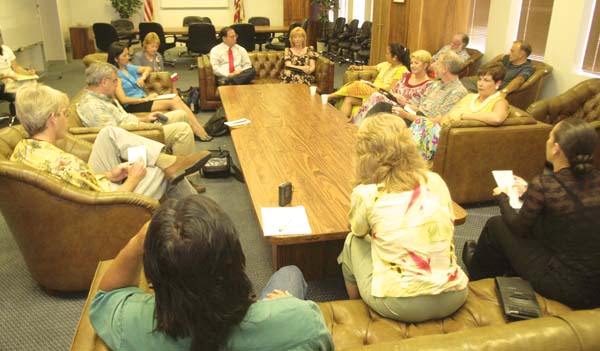
Apana holds a meeting with leaders Sept 21, 2001. — The Maui News / MATTHEW THAYER photo
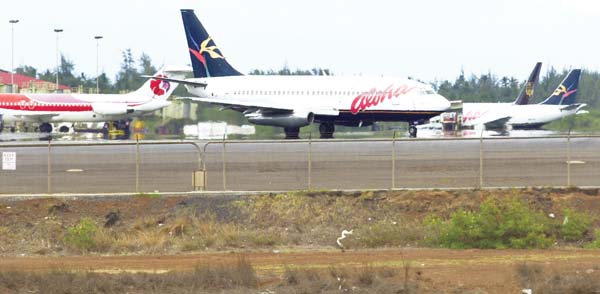
The Kahului Airport reopens on Sept. 13, 2001. — The Maui News / MATTHEW THAYER photo
Following 9/11 attacks, Lahaina students wave signs of support along Honoapiilani Highway on Sept. 19, 2001. — The Maui News / MATTHEW THAYER photo
Coverage of the attacks is shown on televisions playing at Lahaina’s Hard Rock Cafe on Sept. 11, 2001. — The Maui News / MATTHEW THAYER photo
Maui firefighter Larry Crilley holds a battered helmet from his days with the New York Fire Department while part of a crew collecting donations in Kihei for families of fallen NYFD and NYPD personnel on Sept. 20, 2001. — The Maui News / MATTHEW THAYER photo
Stranded travelers burn the pay phone lines looking for lodgings on Sept. 11, 2001. — The Maui News / MATTHEW THAYER photo
Travelers hope to get an early jump on rebooking flights on Sept. 13, 2001. — The Maui News / MATTHEW THAYER photo
Long lines of stranded travelers stretch far outside Kahului Airport on Sept. 14, 2001. — The Maui News / MATTHEW THAYER photo
A candlelight vigil is held at the Maui Arts & Cultural Center on Sept. 13, 2001. — The Maui News / MATTHEW THAYER photo
Then-Maui County Mayor James “Kimo” Apana hands out water at the airport on Sept. 14, 2001. — The Maui News / MATTHEW THAYER photo
Apana holds a meeting with leaders Sept 21, 2001. — The Maui News / MATTHEW THAYER photo
The Kahului Airport reopens on Sept. 13, 2001. — The Maui News / MATTHEW THAYER photo
Trending
With commercial air travel shut down for two days after the attacks on Sept. 11, 2001, Maui's skies were silent. Stranded travelers used pay phones to hunt for lodgings and check in with relatives back home.
High school sporting events and other activities were paused, partly out of respect, but at first out of fear that another surprise terrorist attack could occur. There were so many unknowns at the time, which matched the general unease felt around the country.
Kahului Airport reopened on Sept. 13 as no-fly restrictions were lifted and the reeling airline industry began resuming flights. Delayed passengers sat on the floor of the departures terminal hoping to get a jump on securing flights home. The next day brought a deluge to Kahului Airport. Long lines of frustrated travelers extended out toward the parking lots. County employees, including Maui County Mayor James Kimo Apana, were on the scene to hand out cups of water.
For many folks, once the passenger jets began flying again, it was difficult to see one coming in for a landing and not envision those two hijacked jets zeroing in on the World Trade Center's towers. The images had been shown so many times on television they were burned into the collective consciousness.
There was also a collective need to do something, to share the grief and try to make sense of the attacks together. A candlelight vigil was held at the Maui Arts & Cultural Center on Sept. 13. It was one of several prayer services held in the aftermath. A week later, Lahaina students lined Honoapiilani Highway to wave signs that proclaimed their support and love for America. Similar sign- and flag-waving events were held across the island.
Maui firefighters used helmets to collect cash donations for New York Fire Department and New York Police Department families outside the Kihei Safeway store on Sept. 20. Firefighter Larry Crilley held a battered helmet from his days with the NYFD. Maui's first responders found themselves on the receiving end of island aloha as residents looked for ways to express their concern and appreciation of those who were lost. The attacks and aftermath gave everyone a better understanding of the risks and sacrifices that all first responders may face in the line of duty.
Mayor Apana held a meeting with island social and economic leaders in his offices on Sept. 21. The disruptions to travel caused by the attacks showed once again how dependent Maui was on tourism. The travel industry bounced back, but flying was never the same again. There would be no more waiting at the gate to present lei to arriving family, or showing up 15 minutes before a flight and boarding with an Aloha Airlines coupon.
The attacks on Sept. 11 reminded Hawaii residents how remote their island home is. Without planes it is a long voyage to the Mainland. But it also brought a closeness and empathy for the victims and their families that was a uniting force.
* Matthew Thayer can be reached at thayer@maui.net.
The Maui News 2001 file photos by MATTHEW THAYER