
Hours after Sept. 11 were ‘eerie’ at Kahului Airport
Trending
Wailuku resident William Pursley was the manager of Delta Airlines when the attacks of Sept. 11, 2001 brought airports to a halt and completely altered the world of travel.
That fateful morning, Pursley got a call from co-workers about the incident and turned on the television like most Americans. Around 6 a.m. he was at the Kahului Airport, talking to a manager on Oahu and later calling all his employees to tell them not to come in as flights were grounded.
"I think after a certain period of time that you work in the aviation industry, nothing surprises you," Pursley said. "So when something like this happens, we know that there is a security issue that is at hand and how is the best way that the airline industry collectively was going to handle it."
The events of Sept. 11 and a mission of getting "safety and security" in our skies is what spoke to Pursley and drove him to leave his longtime job with Delta for a position with the Federal Aviation Administration in 2002.
"This is where you get up and be counted," Pursley said. "Whatever it is we can do, we need to do it better and keep terrorists out of the skies, and that was foremost on my mind."
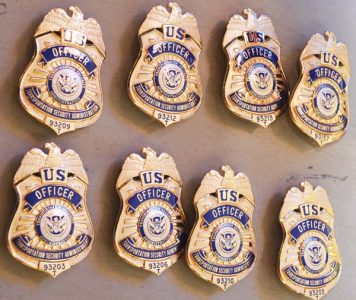
Eventually the federal government would form the Transportation Security Administration, or TSA, to handle security at airports. Purlsey, who joined the force and went on to manage TSA for the Kahului, Kapalua, Molokai and Lanai airports, recalled how the federal government began making changes to beef up security. They transitioned to more advanced technology rather than just the regular pat-downs and X-Rays and also conducted more reviews of airport workers.
"We went away from the contractor type of security to governmental security," Pursley said. "We hired our own people, trained our own people and continued the security work required to keep our skies safe."
Pursley, who retired as the head of Maui's TSA in 2013, said "I'm proud of the progress we have made."
In addition to forming their own security team, Pursley pointed to the collaboration with Maui District Airports Manager Marvin Moniz. Together they expanded the security checkpoint lines and made other changes and improvements.
"They are very dedicated individuals," Pursley said of Maui's TSA. "I fly, I still fly. I'm comfortable with the security we have. I go through it. I have no problem going through the same thing everyone else does. They are very serious about the work that they do. We have incredibly patriotic and marvelous persons working at the TSA."
Marvin Moniz: Everything stopped
"Eerie" and "chicken skin" was the feeling longtime Kahului Airport employee, Marvin Moniz, felt in the hours and days after the Sept. 11 attacks 20 years ago.
The once-bustling airport, like others across the nation, came to a standstill after the attacks as the FAA grounded aircraft in the U.S. for several days.
"It was very eerie, it was chicken skin. When we went out, there was no airplanes around. It was quiet those few days. No airplanes came in, no airplanes left," recalled Moniz, who worked at Hawaiian Airlines 20 years ago and is now the Maui District Airports manager.
That day, Moniz reported to work early in the morning as usual.
"We took the first call from air traffic control that was telling us they're diverting all planes to Honolulu," he said, adding that the tower said air traffic would "be shut down for a while."
Moniz and his fellow employees quickly turned on the television; by that time two commercial jetliners had crashed into the World Trade Center in New York.
"(It) was like everyone was in shock," Moniz recalled. "It was an eerie feeling."
Even though Hawaii is thousands of miles away from the East Coast, Moniz said employees were still fearful of what could happen in the Pacific, mentioning the bombing of Pearl Harbor.
"What makes you think they cannot do that here? They did Pearl Harbor," Moniz said people were telling him.
In the days following the incident, weary tourists showed up at the airport asking when they could get the next flight out.
Moniz recalled a woman with a young child, who wanted to get back to the East Coast. While it meant going above and beyond their duties at Hawaiian Airlines, staff were able to get the woman back her old hotel room at Ka'anapali Beach Hotel to wait it out.
"We felt for her," Moniz said.
Initial changes at the airport included barricades to keep cars farther from the terminal, extra scrutiny for unattended bags and checking on luggage one by one, Moniz said. Also, cars on the curbside could not be left unoccupied.
Eugene Perry: Ready to serve
Eugene Perry, the lieutenant at Kahului Airport's aircraft rescue and fire crew at the time, was off on Sept. 11. But his wife who worked at Pukalani Superette in the early morning hours called to wake him.
"You got to turn on the TV. Something happened," she told him.
When Perry turned it on, the second jet hadn't hit the World Trade Center yet. But when it did, he was ready to work.
"I called down the station if they needed us to report to work," said Perry, who was told to just report on his regular schedule.
"Even then it was nuts. It was just like people were still in shock."
Perry added that crews were on alert and felt that attacks could happen anywhere. He also remembers that soon after the attacks, he couldn't head into work as easily, since the crews could no longer drive straight up to their station at the airport and needed security passes.
Perry, who retired as Maui District Airports fire chief, said that after the attacks, even the airport's perimeters were more secured as new fencing was put in.
His heart also went out to fellow firefighters. He served in the military with several New York firefighters who ended up dying on 9/11.
"You always think about those guys, what were their last thoughts," he said.
* Melissa Tanji can be reached at mtanji@mauinews.com.