
Ige’s budget seeks to restore some pandemic cuts
Governor’s proposal includes funding for airport, jail projects
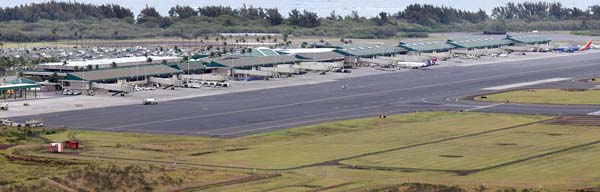
Gov. David Ige’s latest budget proposal includes $45 million in revenue bond funds for airport improvements at Kahului Airport, pictured here in March 2020 shortly after pandemic travel shutdowns began. The governor is proposing increases to the budget with the state’s recovering economy faring better than expected. The Maui News / MATTHEW THAYER photos
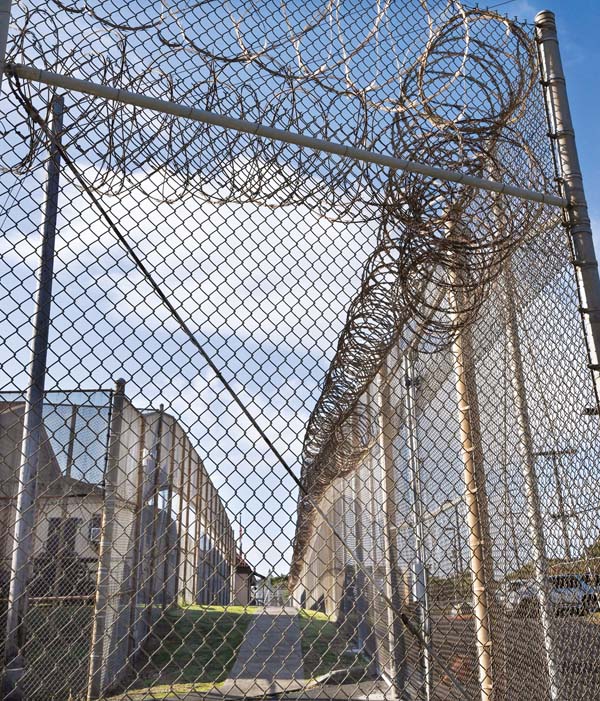
The governor’s budget proposal also includes funds for more staffing at jails statewide, as well as about $8 million for the new housing at the Hawaii Community Correctional Center, Maui Community Correctional Center and Women’s Community Correctional Center.
Gov. David Ige’s latest budget proposal includes $45 million in revenue bond funds for airport improvements at Kahului Airport, pictured here in March 2020 shortly after pandemic travel shutdowns began. The governor is proposing increases to the budget with the state’s recovering economy faring better than expected. The Maui News / MATTHEW THAYER photos
The governor’s budget proposal also includes funds for more staffing at jails statewide, as well as about $8 million for the new housing at the Hawaii Community Correctional Center, Maui Community Correctional Center and Women’s Community Correctional Center.
Trending
Saying the economy has grown quicker than anticipated, Gov. David Ige on Monday unveiled his latest budget in which he is proposing funding increases to help launch initiatives to respond to the pandemic and to restore cuts that had to be made to offset shortfalls.
This includes proposing an operating budget of $16.9 billion for fiscal year 2023, or 10.2 percent more than the current appropriation of about $15.3 billion.
The general fund budget would increase to $8.7 billion, or 12.2 percent more than the current appropriation level of about $7.7 billion.
The proposed capital improvements program would also increase in fiscal 2023 to about $1.1 billion.
"This budget request is very different from our budgets of the last two years, in which we had to cut over a billion dollars and all agencies had to slash spending," he said during a news conference Monday afternoon. "This year the economy has improved more quickly than anticipated."
He said the general fund tax revenue growth through the first five months of fiscal 2022 has been an "astounding" 27.3 percent. This is due to various factors, including increased consumer spending, operation of the Safe Travels program and the "rapid recovery of the visitor arrivals," as well as "healthy" general excise and income tax collection, Ige said.
This allows the state to respond to the continuing pandemic and restore some critical services, though Ige said there could be other changes and unpredictability as the pandemic goes on.
Ige's executive supplemental budget proposal for 2021-23 includes restoring and investing more than $689 million for public education, in part to make up for the impacts of the pandemic.
He said the state Department of Education and the University of Hawaii system suffered from "definitely painful restrictions and cuts" that were implemented over the last two years.
The governor also signaled that some of the funding would go toward future growth and lessons learned from the pandemic, including the need for more health care workers.
In the university system, this includes the addition of 20 permanent positions and approximately $2 million for the expansion of the graduate medical education residency program, according to budget documents. Ige said the funds will go toward the UH John A. Burns School of Medicine's residency program expansion to the Neighbor Islands in order to get more doctors in these areas.
JABSOM Dean Jerris Hedges said in an email Monday that this initiative and others are under development and funding is being sought so the school can do more education and clinical training on Neighbor Islands.
"Doing so will increase the probability of our trainees practicing on the Neighbor Islands in the future," Hedges said.
Ige on Monday said he is also adding approximately $843,000 for nursing clinical instructors at UH's community colleges in order to get more nurses in the state.
While Ige said it is important to get every child back in the classroom, he is also putting $4.3 million toward virtual and distance learning, which was a tool early on in the pandemic.
"We see the value that distance learning can bring our state," he said.
The proposal also includes $100.2 million for various DOE programs to restore funding due to reductions during the pandemic along with $32.5 million for extra compensation for classroom teacher differentials.
Ige released his budget ahead of the state legislative session, which gets underway on Jan. 19.
Maui County-related budget items listed in Ige's proposal include $45 million in revenue bond funds for airport improvements at Kahului Airport and $9.3 million for various projects to close landfills, provide improvements and remove underground storage tanks at Kalaupapa on Molokai.
For the Public Safety Department, Ige is also adding 193 permanent positions, 151 adult corrections offers, 29 health care positions and 13 other support positions, as well as about $8 million for the new housing at the Hawaii Community Correctional Center, Maui Community Correctional Center and Women's Community Correctional Center.
While the state is "cautiously optimistic" about the economy, Ige said they continue to prepare for unseen events and a sustainable future in Hawaii.
This includes his proposal to replenish the budget reserves by depositing $1 billion into the Emergency and Budget Reserve Fund for fiscal 2023 -- a separate legislative proposal that will be submitted by the administration.
Ige is also putting more money toward the COVID-19 response, including adding $61.8 million for the Safe Travels program, National Guard costs and other COVID-19 expenditures, along with more than $30 million in state and federal funds to provide contingency funding for statewide COVID-19 operations.
"My primary concern has been and will always be the health and welfare of Hawaii's people," he said in a news release. "Over the past seven years, we've worked to put the state on solid financial footing and set Hawaii on a better trajectory. This budget continues to invest in Hawaii's future. It allows us to continue on a path where Hawaii's children have all the opportunities they deserve. And it will allow them to choose and want to choose to call Hawaii home."
* Melissa Tanji can be reached at mtanji@mauinews.com.