
Maui County electric bills expected to rise 20 percent
Higher gas prices amid Russia’s war with Ukraine driving the spike, utility says

Jimmy James Thennes of Paia charges up his Kia Soul outside the Hawaiian Electric building in Kahului. Thennes said he got an electric vehicle in hopes of saving money but now fears he’ll pay more with Hawaiian Electric predicting that residential bills in Maui County will increase about 20 percent due to rising gas prices. The Maui News / COLLEEN UECHI photos
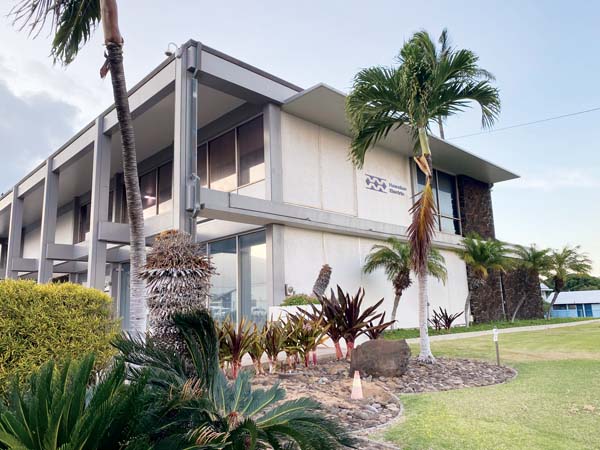
Hawaiian Electric said Thursday that it expects Maui County customers’ bills to increase about 20 percent as gas prices rise amid Russia’s war with Ukraine.
Jimmy James Thennes of Paia charges up his Kia Soul outside the Hawaiian Electric building in Kahului. Thennes said he got an electric vehicle in hopes of saving money but now fears he’ll pay more with Hawaiian Electric predicting that residential bills in Maui County will increase about 20 percent due to rising gas prices. The Maui News / COLLEEN UECHI photos
Hawaiian Electric said Thursday that it expects Maui County customers’ bills to increase about 20 percent as gas prices rise amid Russia’s war with Ukraine.
Trending
Electric bills for customers in Maui County are expected to increase about 20 percent due to rising gas prices as the U.S. refuses to buy Russian oil and imposes sanctions on the country for its recent invasion of Ukraine.
Hawaiian Electric is forecasting that residential bills for Maui County and Hawaii island will increase about 20 percent, while bills for Oahu customers will rise about 10 percent over the next several months.
"The increases we're anticipating are more abrupt than we've seen before and, on top of the inflation we've all experienced in recent months, I know they will impact the budgets of many households," Joe Viola, senior vice president of customer, legal and regulatory affairs, said in a news release Thursday. "We hope that by letting customers know what's coming this helps households and businesses plan budgets and reduce energy use."
Gas prices have been climbing across the country as Russia's war with Ukraine presses on and other nations scramble to cut ties with Moscow. Last week Par Pacific Holdings, Hawaii's only oil refinery, announced that it would suspend all purchases of Russian crude oil, which has accounted for up to a third of Hawaii's supply in recent years, mostly for jet fuel, the Honolulu Star-Advertiser reported.
Hawaii is currently averaging $4.81 per gallon, above the national average of nearly $4.32 per gallon as of Thursday, according to AAA's gas price tracking. Kahului is currently averaging $4.98 per gallon for regular gasoline, 40 cents more than the average a month ago and nearly $1.36 more than the rates a year ago.
Given the instability of the world energy market, Hawaiian Electric said it has reduced the use of imported oil by 25 percent since 2008 and is working to bring more than 20 new, fixed-price renewable projects online in the next several years.
By the end of the decade, Hawaiian Electric expects the level of renewable resources on its grids to reach at least 70 percent, which it said would better insulate customers from the kind of oil price spikes caused by international events like the Russian-Ukrainian war.
Hawaii has long had some of the highest electricity prices in the nation, with Molokai and Lanai often paying the highest rates in the state. According to Hawaiian Electric, Lanai residential customers averaged 36.41 cents per kilowatt-hour in 2020, followed by Molokai at 35.43 cents and Maui at 33.32 cents. Hawaii island's residential rates averaged 35.17 cents per kilowatt-hour, while Oahu residents averaged 28.74 cents.
"We recognize for our customers Electric on Molokai, the impacts can be quite pronounced, so we will be meeting with community leaders and resource organizations on Molokai to find ways to offer support for residents and businesses to increase conservation and energy saving actions immediately," Mahina Martin, director of government and community affairs at Hawaiian Electric on Maui, said during the county's news conference Thursday afternoon.
Hawaiian Electric's formula for rates is regulated by the state Public Utilities Commission and include fuel costs that fluctuate with world markets, the company said, adding that it makes no profit on the fuel used to generate electricity. Under a fuel-cost risk-sharing regulatory mechanism, the company's shareholders are required to pay some of the cost when oil prices rise too high, resulting in a slightly lower rate for customers.
"We hope this is the peak and that by summer we could see some relief," Viola said. "There's a lot of uncertainty and if the international situation remains in turmoil, the price could surge higher."
Jimmy James Thennes, who was charging up his electric vehicle outside the Hawaiian Electric building in Kahului on Thursday afternoon, said he purchased his Kia Soul nearly two years ago hoping to be more energy efficient.
"I got an electric car so I can save money, and now it's gonna go up where I won't be saving any money," Thennes said in response to the news of rising electric bills. "It's a continuum. ... It's sucking on the nonprivileged."
For Thennes, it's just one more thing on top of the high price of goods that have been spiking with inflation.
"It's ridiculous," Thennes said. "Because we're already paying top buck for everything coming in on the boat, and we're surviving. We're just making it. You know what I mean? There's not enough."
Hawaiian Electric said there are options available to help customers manage their energy bills and encouraged residents to take steps to save energy, including:
• Reducing the use of anything that generates heat, such as a water heater, oven, clothes dryer or stove. Customers could consider a heat pump water heater, which is now available with a $500 rebate from Hawaii Energy and could cut electric bills by up to 40 percent.
• Turning off the air conditioning, setting it at 78 degrees or turning it off for an hour.
• Using smart plugs or unplugging electronics when not in use, including computers, printers, cable boxes, game devices and chargers.
• Considering rooftop solar. In addition to tax incentives, Hawaiian Electric is offering cash incentives through its Battery Bonus program to customers who install battery storage. Shared solar will soon be available for customers who can't put panels on their own roof.
• Using electric vehicles when gas prices are high. This can help reduce a household's overall energy spending, especially if drivers take advantage of special rates that provide incentives to charge at certain times of the day with lower rates, Hawaiian Electric said.
• Signing up for "power partnerships" with independent companies known as "grid-service aggregators" who are under contract with the utility. These companies recruit customers with solar, batteries, electric vehicles and other load flexibility devices to combine or "aggregate" their services to support the grid. Customers are rewarded, generally with credits that reduce their monthly bills.
For more information on the impact of oil prices on bills, as well as links to resources to help pay bills and reduce electricity use, visit hawaiianelectric.com.
Customers having trouble paying their bills can visit hawaiianelectric.com/paymentarrangement to review payment plan options.
For more information on available financial assistance, see hawaiianelectric.com/COVID19.
* Colleen Uechi can be reached at cuechi@mauinews.com. Staff Writer Melissa Tanji contributed to this report.