
Youth take DOT to task over climate change
14 youth, including two from Maui and one from Molokai file lawsuit
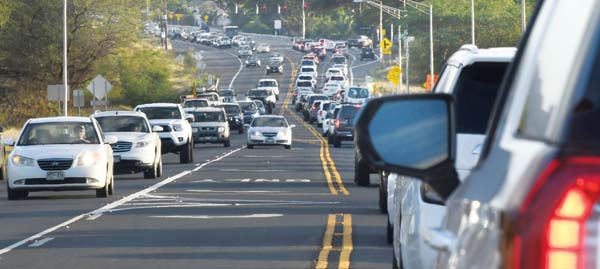
Traffic backs up along Piilani Highway in Kihei in December, shortly after a major storm damaged the coastal South Kihei Road. Voicing concern over the state’s transportation system and resulting greenhouse gas emissions, as well as other climate impacts like severe storms and drought, 14 youth are filing a lawsuit against the State of Hawaii, the Department of Transportation, its director and the governor. The Maui News / MATTHEW THAYER photo

Kaliko T. of Honokohau is one of 14 youth plaintiffs who have filed a lawsuit with the help of Earthjustice against the state over its transportation system and its impacts on climate change. Photo courtesy of Earthjustice
Traffic backs up along Piilani Highway in Kihei in December, shortly after a major storm damaged the coastal South Kihei Road. Voicing concern over the state’s transportation system and resulting greenhouse gas emissions, as well as other climate impacts like severe storms and drought, 14 youth are filing a lawsuit against the State of Hawaii, the Department of Transportation, its director and the governor. The Maui News / MATTHEW THAYER photo
Kaliko T. of Honokohau is one of 14 youth plaintiffs who have filed a lawsuit with the help of Earthjustice against the state over its transportation system and its impacts on climate change. Photo courtesy of Earthjustice
Trending
In September 2018, Kaliko T. and her family packed up their belongings and evacuated to a friend's house just as Tropical Storm Olivia was bearing down on Maui.
The intense rain and flooding completely destroyed the family's home and washed part of it down Honokohau Stream, forcing them to relocate to a new place.
More frequent and severe storms that have impacted families like Kaliko's are part of the driving factors leading 14 youth to file a constitutional climate lawsuit against the state Department of Transportation, claiming that the state's transportation system and resulting greenhouse gas pollution are harming the environment and undermining their ability to "live healthful lives in Hawaii now and into the future," according to the lawsuit filed Wednesday in 1st Circuit Court on Oahu.
"Climate change really impacted my life because I lost my house in a flood," said the 11-year-old Kaliko, whose last name like others in the lawsuit was withheld to protect their privacy. "Luckily I was not in my house at the time because I would probably have lost my life. Climate change is drastically changing lives around the world and we need our governments to take it and us seriously."
Compared to people born in 1960, children born in 2020 are expected to face a two- to seven-fold increase in extreme climate events such as heat waves, wildfires, crop failures, droughts and floods, said Earthjustice, citing a 2021 study on the increased exposure to climate extremes for younger generations.
Emissions from the state's transportation sector are increasing and expected to comprise nearly 60 percent of the state's total greenhouse gas emissions by 2030, Earthjustice added.
The youth are asking the court to issue a declaration that DOT is violating the state constitutional right to a clean and healthful environment and the state's public trust doctrine to "conserve and protect Hawaii's natural beauty and all natural resources."
"The Hawaii Department of Transportation has been a flat tire in our transition to a decarbonized future for too long," said Leina'ala Ley, an attorney in Earthjustice's Mid-Pacific Office and co-counsel for the youth plaintiffs. "With this lawsuit, these young people are helping steer the agency towards genuine climate justice in the Hawaiian Islands."
Our Children's Trust is also co-counsel for the youth.
The State of Hawaii, Gov. David Ige and DOT Director Jade Butay are also named as defendants.
A DOT spokesperson said Wednesday that "we've been advised not to comment on pending litigation."
The 14 youth plaintiffs, who range in age from 9-18, come from Maui, Molokai, Oahu, Kauai and Hawaii island. They say they have watched erosion, sea level rise, flooding and drought take a toll on their homes and the places they grew up fishing and swimming in.
Generations of Kawahine'ilikea N.'s family have relied on fish populations off the coast of Molokai for generations, according to the lawsuit. The 12-year-old from Kumimi often goes out fishing with her dad, looking for manini and nenue along the shoreline. But as higher ocean temperatures and rising acidity cause fish populations to decline, it's harder to spot the once numerous schools of fish, which is necessary when fishing using Native Hawaiian throw net techniques.
"If high levels of greenhouse gas emissions continue, fishery productivity in Hawaii will decline dramatically within 'Ilikea's lifetime, threatening this subsistence food source, and related traditional and customary Native Hawaiian fishing practices," the lawsuit says.
Fourteen-year-old Brianna K., also known as Ku, lives with her family in Kaulu Valley and depends on Kanaha Stream. Due to climate change, the water level in the stream is inconsistent, the lawsuit says, interfering with daily activities like cooking, cleaning and working in their kalo patches.
The family also operates a commercial farm that serves as their primary source of income. However, climate change has made farming more difficult, from the invasive pests that thrive in warmer temperatures to the extreme weather events. In 2018, Hurricane Lane destroyed their greenhouse, crops and large fruit-bearing trees and triggered wildfires that destroyed homes and other structures in their community.
Like Ku, Kaliko's family has had to contend with extreme weather and water shortages. During prolonged droughts, their water can be cut off for days at a time, "during which Kaliko bathes in the river and uses small amounts of bottled water to wash their dishes," the lawsuit says. It also impedes the family's ability to grow subsistence crops, forcing them to switch to dryland kalo to continue their tradition of making poi.
Watching the impacts of climate change on their communities, the youth said it was important to show that the next generation cares about what comes next.
"At my school (Kamehameha), a big value that they teach is aloha aina," 14-year-old Taliya N. of Kamuela told The Maui News on Wednesday evening. "So when my mom introduced this case to me, I thought that it affected me personally and culturally because I could actually do something to help my aina."
Taliya's family lives off the grid and relies on a rainwater catchment system. But the drought forced Taliya and her family to shorten their showers, flush the toilet using buckets of water collected in town and ration their laundry until it finally rained in January. On the flip side, when it rains too hard, flash flooding and fallen trees can block the road, damage their vehicles or keep them from traveling to school and other places.
"I think it's important because it goes to show not just adults are concerned about this, but also kids are concerned about climate change, and we do have a say in it," the incoming freshman said. "We are personally affected and we also want to help climate change so we can have a better future."
* Colleen Uechi can be reached at cuechi@mauinews.com.