
First-time council candidate challenges political veteran
Ahia faces Lee for Maui County Council’s Wailuku-Waihee-Waikapu residency seat

Ahia
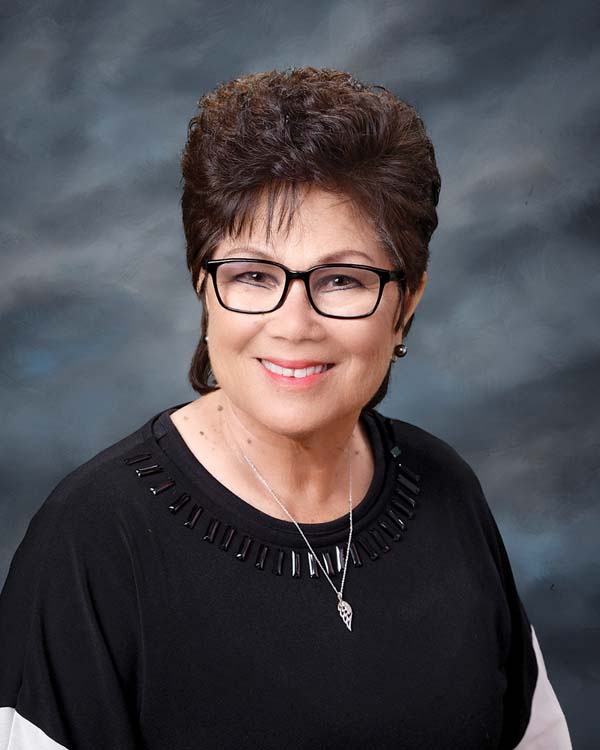
Lee
Ahia
Lee
Trending
EDITOR'S NOTE: This is another in a series on Maui County Council races leading up to the Nov. 8 general election.
Today's story focuses on the race for the Wailuku-Waihee-Waikapu residency seat. Stories on other candidates will be published in the coming days.
In the race for the Maui County Council's Wailuku-Waihee-Waikapu residency seat, incumbent Alice Lee will face off against challenger and first-time candidate Noelani Ahia.
NOELANI AHIA
As a healthcare worker, Noelani Ahia knows how to treat all sorts of physical ailments. "I always look at the root of the problem," she said. "I look at the big picture and try to see what's out of balance and what we need to adjust, so that things can flow the way they need to."
Ahia, 47, says this is analogous to her work as a community advocate--and how she would approach issues as a newly elected council member.
She may be a first-time candidate, but Ahia is no stranger to the challenges facing the place her family has called home for more than 50 generations. She has gained an intimate familiarity with many of those challenges through her years of advocacy work, which includes advocating for Maui's unsheltered communities and protecting Native Hawaiian burial sites.
"The more I advocate, the more I can see the holes in the county government and where things get held up and what the politics are," she said.
Ahia says that's one of the reasons why she decided to run for the council's Wailuku-Waihee-Waikapu residency seat. "I felt called to step up," she said.
If she is elected, the Wailuku resident said she's ready to hit the ground running on day one. She has a lengthy to-do list, but one of her top priorities is securing resources for a managed encampment for Maui's unsheltered community. Noting the success of Oahu's Pu'uhonua O Wai'anae camp, which she visited last year, Ahia aims to create a similarly structured encampment in Central Maui.
"There's no reason why we can't do that here," she said. "There's resources out there, there's funding out there--we just haven't had the political will to make it happen." Additionally, Ahia said she would work to provide more basic interim services like mobile hygiene units, trash removal and a street medic program, among other things.
Ahia says self-sustainability is another top priority. As a council member, she would work to support the new Department of Agriculture so it can improve the county's food sustainability and create more employment opportunities for residents. She would also push for the county to research and invest in production facilities so goods could be manufactured locally.
Additionally, she would like to see more waste reduction and reuse facilities. Another policy priority, she said, "Is making sure that Hawaiians are no longer dispossessed from ancestral lands, finding legal remedies for kuleana landowners and providing institutional support for that, as well as working with the Department of Hawaiian Homelands to get Hawaiian homes built and Hawaiians in housing."
On the broader topic of affordable housing, Ahia says the solution is not to simply "build, build, build."
By continuing to build new homes for out-of-state buyers, she said, "We're just going to have to keep building--and it will go on exponentially. We live on an island and we have finite space to build, so we have to look at ways to de-incentivize people from moving here and buying up large swaths of land."
If elected, she said, "I would continue along the lines of what this current council has started by reevaluating the tax structures and making it very, very affordable for local people and very, very expensive for investors and off-island speculators--to the point that it's not worth it for them."
Noting that there are many homes sitting vacant countywide, she said, "We need to get them back in our inventory for local people." The same goes for the thousands of short-term rentals across Maui. "Those units need to be occupied by residents. We don't have to 'build, build, build' if we can add to our existing inventory from what's already been built," she said. For new homes, Ahia says the county should consider more non-traditional or experimental housing projects, such as tiny homes or kauhale-style villages, which consist of tiny home clusters and communal bathrooms, kitchens and gathering/social areas.
Ahia said she supports all 13 of the proposed charter amendments that will appear on the general election ballot. Of them, she is particularly supportive of Amendment 12, the proposal to create a community water authority.
She says it's long past time for equitable water distribution, and for that to happen, control must be put back in the hands of the people. Water for agriculture is a greater priority than water for golf courses or non-food-producing yards, she said. Therefore, "We need to make sure water needs are met before water wants."
Regardless of the outcome on Nov. 8, Ahia says her advocacy work will continue. "Win or lose, I'm still going to advocate for our 'aina, our wai, our people, our resources--everything that I care about. I'm either going to do it on this side or the other side of the table."
To those who may not know her, Ahia said, "I am deeply connected to this place--my genealogy goes back 52 generations. It's a calling for me to serve ... I am willing and prepared for it and my heart is here for it."
ALICE LEE
Now eyeing an eighth term as council member and a third as council chairwoman, Alice Lee has a list of priorities for the next two years. At the top of the list: Economic diversification and strengthening the county's revenue base.
Lee, 74, says she's laser-focused on accomplishing those two goals. By doing so, "Then we can continue to pay for all the various demands the public has and what we need in the community."
As a reminder, she said, "Our budget is finite (and) over 75 percent of it is already spoken for." Noting the many programs that compete for leftover discretionary funds, she said, "It's not that I'm not concerned about issues like climate change, cultural preservation, food sustainability, infrastructure--all of those things are very important. My concern is that we have the money to pay for them."
Lee's public service career spans more than three decades. As a first-time political candidate in 1988, the then-Upcountry resident won the race for the council's Upcountry residency seat and went on to serve five consecutive terms. In 1999, Lee became the director of the county's Department of Housing and Human Concerns, a position she held until 2006. In the years that followed, a "semi-retired" Lee had a consulting business and served on several nonprofit boards. In 2018, she says she decided to return to politics at the urging of many friends. Lee, who had since become a Wailuku resident, ran against and ultimately defeated incumbent Council Member Alika Atay.
If reelected, Lee said she will continue to focus on fiscal responsibility and bring a steady hand to the council. In her role as chairwoman, she said, "I encourage teamwork ... and I acknowledge that everyone has value. Regardless if we differ on the details, generally we agree on the overall goal and the overall objectives and the overall vision for Maui County. I encourage respect among the members for each other's different points of view because I strongly believe there is strength in diversity." Under her leadership, Lee said, "I've helped navigate our council ... to produce outstanding legislation and to do it in a collaborative way."
Of the 13 proposed charter amendments on the general election ballot, Lee says the proposal to bifurcate the Department of Housing and Human Concerns is one of the most important. "The county should take the reins of housing development in Maui County," she said. "(Housing) needs its own status as a department with its own designated and allocated budget, its own staff, and its own capacity to identify and develop county lands that are close to infrastructure. When it comes to the construction part of it, they can bid it out. There's no sense in us becoming a construction company."
As a result of the county taking control of housing development, she said, "We can keep prices down... and if the policymakers are willing, we can retain the ownership of the land, so that when we sell the houses, people will be buying only the houses and leasing the land, further being able to control housing prices." Lee is also in favor of a mixture of housing--to include tiny homes, live-work homes and duplexes--and says the recently green-lit Kuikahi Village project, which includes a mix of housing types, may serve as a model for future projects. As for the proposal to establish a community water authority, Lee says a feasibility study must be completed first. "It's not a new position--it's one I've held all along," she said. "How much is it going to cost? We need to find out."
Of her accomplishments over the years, Lee says playing a role in the development of the Waikapu Gardens community and helping expand Ka Hale A Ke Ola Homeless Resource Centers' two facilities are among her proudest. Additionally, while Lee was on hiatus from the council, she and her family started New Leaf Ranch, a transitional residential program that helps parolees transition out of incarceration. Lee said she plans to help establish more programs for people, particularly women, who are reintegrating into the community after incarceration. "When you help people get on their feet and start to change the course of their lives in the right direction, then chances are, they won't relapse or reoffend," she said. "That's an investment not only incumbent upon us because we should help our fellow human beings, but from a logical point of view, it also makes economic sense."
Lee said she is proud of the work she's done for her community and if she is reelected on Nov. 8, she will keep the momentum going. Over the course of her political career, "I have worked very closely with all the (county) departments, I've worked with the legislative branch and the executive branch, and I've worked with the community at large," Lee said. "I believe I have a lot to offer, because I still have that fire--the fire and desire for public service."