
Johnson, Hokama in third rematch for Lanai seat
The two opponents have now switched roles as incumbent and challenger
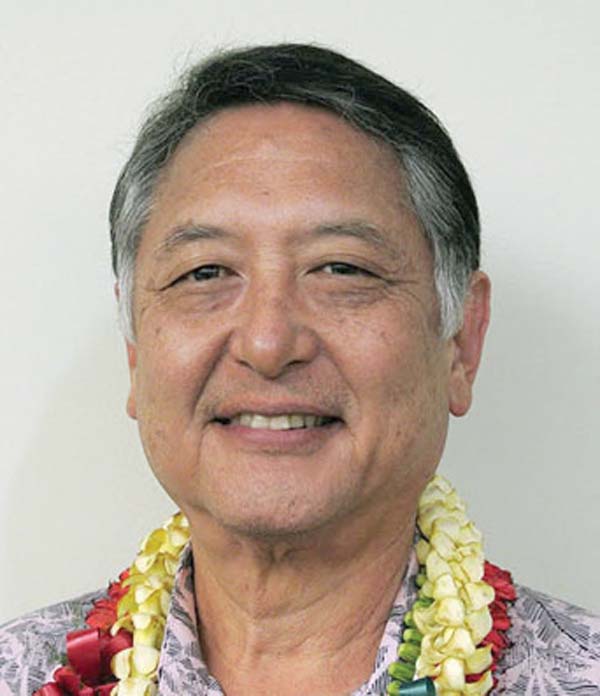
Hokama
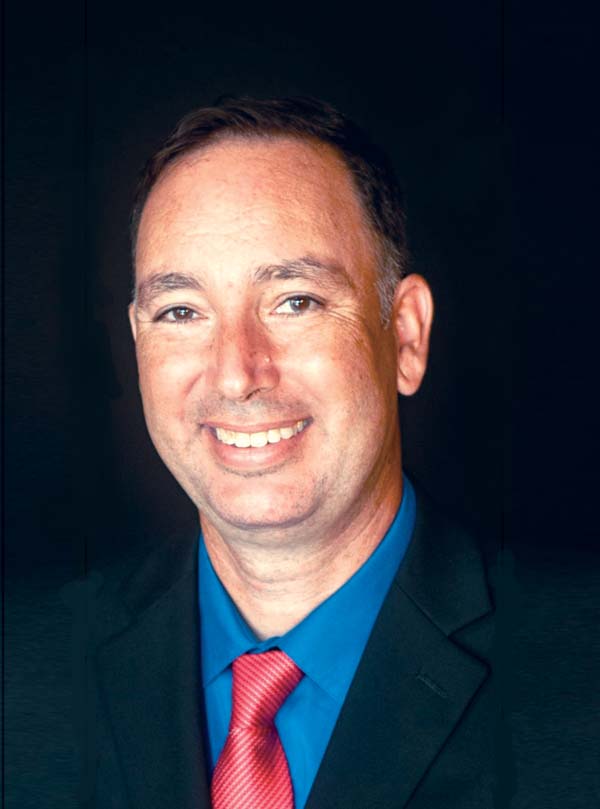
Johnson
Hokama
Johnson
Trending
In what is arguably one of the most closely watched races this election cycle, incumbent Maui County Council Member Gabe Johnson will defend his Lanai residency seat against former council member Riki Hokama, who held the seat from 1999 to 2008 and again from 2011 to 2020.
In 2020, Hokama relinquished his seat due to term limits. While a charter amendment approved in 2020 limits council members to only serving five two-year terms, the change did not take effect until Jan. 2, 2021, according to information on the county's website regarding the amendments. Therefore, candidates like Hokama are allowed to return to the council.
The longtime lawmaker, however, has faced questions over his residency on Lanai. Earlier this year, the county clerk denied four complaints challenging his residency, but at least one other complaint is still pending. County Clerk Kathy Kaohu had not responded to a Maui News request for an update as of Thursday.
This won't be the first time Johnson's and Hokama's names will appear on the same general election ballot. In 2016 and 2018, Johnson unsuccessfully ran against then-Council Member Hokama, but went on to claim the Lanai residency seat after defeating Alberta de Jetley in 2020. This year's election will be the third political rematch for Johnson and Hokama, but this time around, the two candidates have switched roles as challenger and incumbent.
GABE JOHNSON
When Gabe Johnson was sworn into office as a freshman council member in January of 2021, he wasted no time getting down to business. During his first council meeting, he proposed an amendment to a bill. It passed with a 5-4 vote.
It was the first legislative triumph for Johnson, who, just weeks prior, was working as a farmer on Lanai.
"I went from making lettuce to making amendments," he laughed.
In the nearly two years since, Johnson has had more victories, many of them centered around his signature issue: affordable housing. As the chair of the council's Affordable Housing Committee, he said he's made it his mission to craft legislation that will create truly affordable housing for Maui County residents.
Johnson says his passion for the issue stems from his lived experience: He knows firsthand the struggle to make ends meet. "I'm a former member of the working poor (and) I've lived in low-income housing as a single father," he explained.
To tackle the most significant barriers to housing affordability and availability, Johnson is using the policy priorities outlined in the county's Comprehensive Affordable Housing Plan, which was published six months after he took office.
"I said: 'Let's put it into action ... we are in a housing crisis and we need to act now,' " he said.
Johnson has since authored several consequential affordable housing-related bills. They include Bill 107, which was signed into law last month and sets forth new guidelines for the sales price of county-subsidized housing units; Bill 61, now Ordinance 5369, which took effect on Nov. 1 and expands the allowable uses of the county's Affordable Housing Fund; and Bill 111, now Ordinance 5315, an omnibus bill that, among other things, shifts the responsibility of managing an affordable housing project waitlist and its qualification process from developers to the county's Department of Housing and Human Concerns or a designated third party.
Johnson says the three pieces of legislation are among his proudest accomplishments thus far as a council member.
"This is where the rubber meets the road," he said. "All of the hard work over the past two years has come to fruition."
Johnson says there is more work to be done, which is why he says he will continue to remove barriers to affordable housing via the comprehensive plan in his next term. This includes legislation that would streamline the planning and permitting processes for affordable housing projects and create by-right affordable housing to accelerate the development of affordable units.
Other second-term priorities include diversifying the local economy through more county agricultural parks like the Kula Agricultural Park. Plans are already underway for an agricultural park on Lanai and Johnson said he will work to establish parks elsewhere in Maui County. Additionally, Johnson said he is committed to helping the county's houseless residents and will work on long-term solutions using the Housing First model. He recently traveled to Helsinki, Finland, where houselessness is on the decline due to its Housing First program. Johnson said Maui County could become a similar success story, but such an outcome would require more homes coupled with wraparound services.
Of the 13 proposed charter amendments that will appear on the general election ballot, Johnson says the proposal to bifurcate the Department of Housing and Human Concerns is one of the most important. Simply put, if the county wants to meet its goal to build 5,000 affordable homes in five years, he said, "We need the department to have the capacity to do that."
Johnson said he also wholeheartedly supports Amendment 12, which calls for the creation of community water authorities, and noted that water is a public trust and therefore it belongs in the hands of the people.
"This would be a huge step in the right direction," he said.
If he is reelected on Nov. 8, Johnson says he will carry on the good work he's done for his community and continue to fight for the working class.
"I'm willing to take bold steps -- not just talk about them," he said.
RIKI HOKAMA
Ever since he answered the call to public service more than 40 years ago, Riki Hokama says every decision he's made has been guided by the question: "What is good for the community?"
Hokama's public service career began in 1978 when he was elected as a delegate to the Hawaii State Constitutional Convention. In 1998, he ran for the Lanai residency seat on the Maui County Council and went on to serve five consecutive two-year terms. After a two-year break from the council, he ran again in 2010 and went on to serve another five consecutive terms. Of his accomplishments as a council member, Hokama said his work on the reconstruction of the Kaumalapau breakwater in the aftermath of Hurricane Iwa is one of his proudest. He is also proud of the role he played in the construction of the Lanai Community Health Center, the establishment of Lana'i Kina'ole -- a nonprofit home health care agency -- and the renovation of the Manele Small Boat Harbor.
Hokama said he started mulling over a potential run for his former seat after many community members asked him to do so. Ultimately, the decision to put his retirement on hold and declare his candidacy was inspired by "the size of the (county) budget, the amount of borrowing and the fiscal direction we are going in ... it made me uneasy," he said.
Over the course of his legislative career, Hokama said he's never wavered in his commitment to fiscally responsible government, and if he is reelected, he said he will once again deliver sound fiscal policy and "make wise, appropriate and strategic decisions."
Hokama says some have criticized his fiscal philosophy, but he points out that it has proven its merit, especially in times of crisis. For instance, following the Sept. 11, 2001, terrorist attacks, he said Maui County was the only county in the state that had sufficient financial resources to respond to the community's immediate needs. Additionally, Hokama said his fiscal philosophy has contributed to the county's high bond rating.
"A disciplined approach to finances has put Maui County in a position where we have more choices," he said. "I get a lot of satisfaction knowing that I helped the county improve its fiscal standing."
If he is elected on Nov. 8, Hokama said the county's land management program would be his top priority. He said he'd be laser-focused on getting climate change-related projects underway, specifically those targeting buildings and infrastructure vulnerable to sea level rise.
"We've talked about these projects for years -- we need to get moving on them," he said.
Other plans include expanding programs offered through the county Department of Parks and Recreation and extending park hours past sunset to provide more recreation options and health and wellness opportunities to residents countywide. On Lanai, Hokama said he would work to ensure a new community center with a commercial kitchen is built.
"This is a priority for the community," he said.
The former center's lease ended over the summer and the building was returned to Pulama Lanai; there are plans to build a bowling alley on the site. Additionally, Hokama said he would work closely with the Maui Economic Development Board to find ways to diversify Lanai's economy, noting the potential for small-scale farming and poultry, egg and pork production.
Of the 13 proposed charter amendments, Hokama said the proposal to create regional water authorities is the most consequential. Theoretically, it's a good idea, he said, "But we need more specific information about how it would work." This includes an operational audit, the potential rate adjustment and any potential legal obligations or contractual requirements, he said. Additionally, more input is needed from the county auditor, state hydrologists and the state Commission on Water Resource Management, he said. If the amendment fails to pass this time, Hokama said it could be revisited after the county fills in the critical blanks.
Hokama says he hopes to bring his experience, knowledge and perspective back to the council, as well as his high regard for civility and respectful discourse.
"It's okay if we disagree on issues ... but we need to maintain civility," he said.
If he is elected to serve once again, Hokama said, "I will be very open to all points of view ... and the community can trust me to make the right decisions."