
Resort reaches settlement with conservation groups who sued over lighting concerns
Grand Wailea puts in measures to protect endangered birds, also agrees to make donations to projects
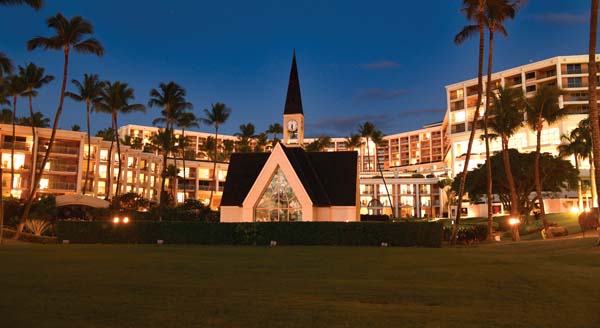
The lights come on Tuesday evening after sunset at the Grand Wailea Maui, A Waldorf Astoria Resort. The resort has put in a number of measures, including shielding or removing some lighting, to help protect native seabirds following a settlement with local conservation groups who had filed suit over the property’s bright lights. The Maui News / MATTHEW THAYER photos
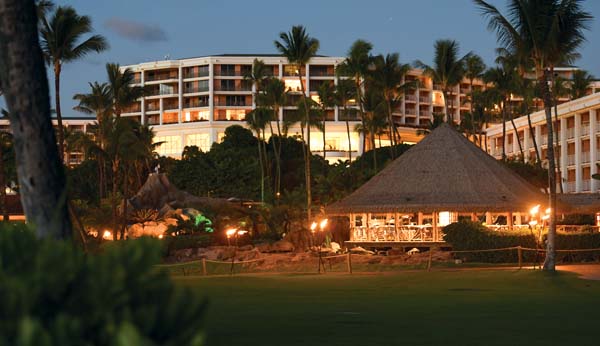
While there are multiple sources of bright light on Maui, the Grand Wailea’s 40-acre property stood out among all hotels on the island as being “particularly harmful” to Hawaiian petrels, conservation groups said in February while announcing their lawsuit against the resort. The two sides recently reached an agreement that includes removing, replacing, shielding and dimming lights across the property, which is seen here on Tuesday evening.
The lights come on Tuesday evening after sunset at the Grand Wailea Maui, A Waldorf Astoria Resort. The resort has put in a number of measures, including shielding or removing some lighting, to help protect native seabirds following a settlement with local conservation groups who had filed suit over the property’s bright lights. The Maui News / MATTHEW THAYER photos
While there are multiple sources of bright light on Maui, the Grand Wailea’s 40-acre property stood out among all hotels on the island as being “particularly harmful” to Hawaiian petrels, conservation groups said in February while announcing their lawsuit against the resort. The two sides recently reached an agreement that includes removing, replacing, shielding and dimming lights across the property, which is seen here on Tuesday evening.
Trending
In a recent settlement agreement with conservation groups, the Grand Wailea Resort has implemented safety measures to help protect the endangered Hawaiian petrel, such as shielding or removing lighting, monitoring for any downed birds and contributing to off-site projects.
The agreement was finalized on Oct. 21 between the resort and plaintiffs Conservation Council for Hawaii and the Center for Biological Diversity.
"The resort is taking meaningful steps to minimize the light attraction problem in this important Hawaiian petrel flyway," Conservation Council for Hawaii Board President Colleen Heyer said in a news release Tuesday. "If other hotels and other landowners took a similar approach to dimming their lights, it would go a long way towards ensuring these magnificent birds will be around for our children and grandchildren to enjoy."
Represented by Earthjustice, the conservation groups had filed a lawsuit in February against the Grand Wailea for its bright lights that the groups said attract native 'ua'u, which frequently lead to their grounding and death.
However, the resort has since taken protective measures, like removing, replacing, shielding and dimming lights across the property. According to a spokesperson at the Grand Wailea, the resort will also employ dedicated seabird searchers and train employees to spot downed birds, educate guests about how they can help preserve native species and has partnered with Hawaii Wildlife Center to ensure that any downed seabirds found at the resort are carefully handled and safely transported to a rehabilitation facility, the spokesperson said Tuesday.
Costs to make these changes were not available Tuesday.
The resort also agreed to make monetary donations to benefit Maui seabirds, such as to the National Fish and Wildlife Foundation and off-site mitigation projects.
"Grand Wailea's deep commitment to protecting endangered Hawaiian seabirds is reflected in the numerous new protective measures that we implemented ahead of the fledgling season, including removing, replacing, shielding, and dimming lights across the property," said J.P. Oliver, managing director of Grand Wailea, in a news release. "We will continue to monitor seabird activity on the property and are contributing to off-site projects to protect 'ua'u."
Fledgling 'ua'u leave their nests for their first flight to the sea from mid-September to mid-December, described by the Maui Nui Seabird Recovery Project and other conservation groups as "fallout season."
Some birds are attracted to and disoriented by artificial lights, causing the young birds to circle the lights until they fall to the ground from exhaustion or hit other structures. Once grounded, the seabirds are vulnerable to predators, dehydration and starvation.
Hawaii is the only place in the world where the 'ua'u breed. Adults return to nest at the same site where they fledged after spending the first six years of their lives at sea, according to the news release.
The largest surviving nesting colony is living in burrows on the slopes of Haleakala.
While there are multiple sources of bright light on Maui, the Grand Wailea's 40-acre property stood out among all hotels on the island as being "particularly harmful" to Hawaiian petrels, according to a Feb. 7 news release announcing the conservation groups' lawsuit.
The resort's willingness to make adjustments and work cooperatively to identify safety measures "gives the endangered birds a chance at survival," said Maxx Phillips, Hawaii director at the Center for Biological Diversity.
And, the dark skies benefit the community, too, by allowing people to view the stars, Phillips said.
Earthjustice attorney Leina'ala Ley of the Mid-Pacific Office told The Maui News that "Grand Wailea has implemented lighting minimization measures that can serve as a template for other hotels seeking to make seabird friendly lighting changes and comply with the Endangered Species Act."
"Any hotel that grounds Hawaiian petrels without an incidental take permit is violating the Endangered Species Act and could face legal action for those violations of the law," Ley added.
The case follows the approval of an outdoor lighting bill that was highly debated by county officials for months. Authored by Maui County Council Member Kelly King, the bill intends to protect native 'ua'u and turtles by restricting certain types of lighting and lighting fixtures.
Mayor Michael Victorino recently signed the bill into law. It takes effect July 1, and compliance will be required three years later.
* Dakota Grossman can be reached at dgrossman@mauinews.com.