
Water safety meeting set for today as EPA removes hazardous waste in Kula
Trending
The Maui News
Maui County Council Vice Chairperson Yuki Lei Sugimura will host a meeting on impacts to water safety and community resources for those impacted by the fires at 6:30 p.m. today at the Von Tempsky Community Center.
The meeting will include officials from the U.S. Environmental Protection Agency, the Maui County Department of Water Supply, the state Department of Health's Safe Drinking Water Branch and the American Red Cross.
"There are many families who have been affected by the fires and do not have access to safe and drinkable water," Sugimura, who holds the Upcountry residency seat, said in a news release Wednesday. "The goal of this meeting is to bring our community together and learn more about how we can remain proactive in maintaining the health and safety of our residents."
State Sen. Lynn DeCoite and state Rep. Kyle Yamashita, whose districts include Upcountry, as well as Maui County Council Member Nohelani U'u-Hodgins, who holds the Makawao-Haiku-Paia residency seat, will also participate in the meeting.
The Von Tempsky Community Center is located at 4355 Lower Kula Rd.
For more information on the meeting, email Sugimura at yukilei.sugimura@mauicounty.us.
As of Wednesday, the 1,081-acre fire in Olinda and the 202-acre fire in Kula both remained at 85 percent containment. A helicopter was deployed before sunset on Tuesday to help reach hot spots in the Olinda fire, according to the county. Hand crews and a helicopter have been working to extinguish hot spots in the Kula fire, with activity mostly in hard-to-reach gulches. The county said flareups and reports of smoke have been well within the burn area and have not posed any threat to public safety or fire expansion.
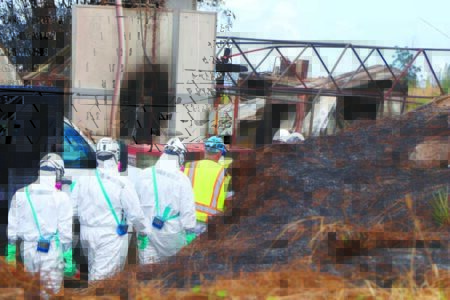
On Wednesday, the EPA began work to remove and dispose of hazardous waste from properties affected by the fires in Kula.
The agency will survey, remove and dispose of hazardous waste materials including paints, cleaners, solvents, oils, batteries and pesticides, according to a news release from the county. Fuel from pressurized cylinders and tanks will be removed, and the empty containers will be marked for removal during a future second phase. Workers will also remove items thought to contain asbestos if they are easy to identify, but the property will not be fully cleared of asbestos until the second phase of the process.
Hazardous materials require special handling and disposal after a fire, especially if their containers are damaged. This will reduce potential health and safety risks and allow other agencies to remove solid waste, debris and ash, the county said.
EPA will only be removing household hazardous waste; it will immediately stop work and contact the Maui Police Department if functional firearms or suspected remains are found.
The agency will also conduct air monitoring for particulate matter (dust-like material) and air sampling for heavy metals and asbestos.
After the first phase of work is complete, the EPA will apply an adhesive called "Soiltac" on any debris and ash to prevent dust from blowing off the property. The Soiltac the EPA will use is dyed pink and is nontoxic and biodegradable, the county said. According to Soilworks' website, Soiltac is a polymer product used to control dust; once sprayed over surfaces, the molecules coalesce and create a durable surface crust.
Hazardous waste removal efforts in the Lahaina disaster area will start after search and rescue responders allow EPA crews to enter the area.
EPA's work is authorized by a Federal Emergency Management Agency-issued federal disaster declaration mission assignment for wildfire recovery, the county said.
For more information on the EPA's response to the Maui wildfires, visit www.epa.gov/hawaii/maui-wildfires.