
EPA completes removal of hazardous materials from burned properties on Maui
Trending
The Maui News
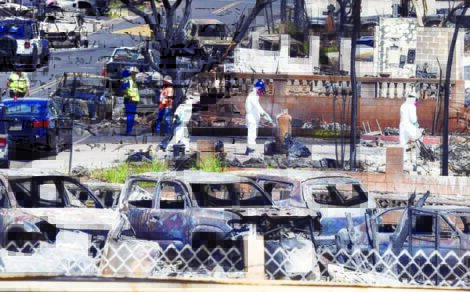
The U.S. Environmental Protection Agency has finished removing hazardous materials from burned properties in Lahaina and Upcountry, completing a crucial first phase of the cleanup following the Aug. 8 wildfires.
For over three months, the EPA has been working to clear hazardous materials from fire-impacted areas in Lahaina, Kula and Olinda, so that the next phase of removing larger debris can move forward. The EPA and its contractors, half of whom were hired locally, also worked with the U.S. Coast Guard, Maui County, the state Department of Health and the U.S. Army Corps of Engineers. Since Aug. 17, the agencies have:
• Completed hazardous materials removal from 1,374 residential and 74 commercial properties.
• Shipped 13 containers of hazardous materials off Maui for safe disposal.
• Removed batteries from 94 electric and hybrid vehicles and decommissioned 274 power walls in homes and businesses. The EPA said it developed cutting-edge procedures to deenergize and decommission the batteries for safe shipment and recycling off Maui. Two containers with more than 30 tons of decommissioned battery material were shipped off the island.
• Applied soil stabilizer to properties after hazardous materials were removed to prevent ash from mobilizing into the air or running off into streams and the ocean. This was done at the request of Maui County to increase the health and safety of residents, field crews and the environment, the EPA said. Care was taken to avoid applying soil stabilizer to cultural and historic resources and other sensitive areas.
• Set up five air monitoring stations in Lahaina at the request of the county and state to provide continuous data on fine particulate matter at the EPA's AirNow website at fire.airnow.gov. The state can monitor air quality and advise residents in the area.
During Phase 1 of the cleanup, the EPA deferred 73 residential and 100 commercial properties to the U.S. Army Corps of Engineers for hazardous materials removal because physical conditions prevented safe access to the properties.
"The deadly wildfires on Maui caused catastrophic damage and destruction to homes, businesses, and significant cultural and historic resources," EPA Incident Commander Chris Myers said in a news release Thursday. "EPA has been honored to join other federal agencies, the State of Hawaii, the County of Maui, local organizations, and Maui residents and elders to help begin the long road to recovery."
To observe and protect important cultural resources and practices on Maui, the EPA also developed and implemented a cultural monitoring program, which included hiring more than 20 cultural monitors to oversee work in the field; mandatory cultural awareness training for all EPA staff, contractors and U.S. Coast Guard support personnel; and cultural advising to inform EPA's community involvement program. Each day, before and after work in the burn zones, a pule was held with field crews. The EPA said that cultural monitoring will continue during the next phase of the cleanup.
The U.S. Army Corps of Engineers and its contractors will oversee the next phase, which includes removing debris from burned properties.
While the EPA has finished its work of removing household hazardous materials, lithium-ion batteries and power walls, it will still continue to work with the county on infrastructure repair and restoration and planning for sustainable recovery in Lahaina, the agency said.
One of its tasks is to help the county Departments of Water Supply and Environmental Management to address water infrastructure. The fires damaged or destroyed underground drinking water and wastewater pipelines and above-ground pumping stations. The EPA plans to continue to provide expertise throughout drinking water and wastewater recovery efforts.