
Trending
By JON WOODHOUSE
For The Maui News
When Native Hawaiian playwright Alani Apio completed his play "Kāmau," in 1994, he had no idea how it would be received or that it would be the beginning a journey of discovery that would see him craft two more plays exploring contemporary issues of identity, land sovereignty, mental health, kuleana and family, in what became known as the "Kāmau Trilogy."
"I wrote my truth," Apio explains. "I wrote it largely as a way for me to understand my own life and the lives of those around me. I wrote it as a cathartic exploration for myself. It was a huge hit, sold out, just transformative, and I decided to continue."
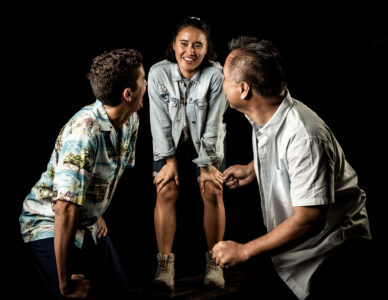
His most recent play "Ua Pau," the last in the trilogy, will be presented at the Maui Arts & Cultural Center on July 27 and 28.
Directed by Harry Wong III, "Ua Pau" is produced by the Kumu Kahua Theatre, which was founded in 1971 with the mission of presenting plays about life in Hawaii by Hawaii playwrights. Some of their most famous productions include James Grant Benton's Shakespeare adaptation "Twelf Night O Wateva!," Edward Sakamoto's "Aloha Las Vegas," and Lee Cataluna's "Folks You Meet in Longs."
Apio became acclaimed for being the "first to explore in a modern context Native
Hawaiian life and trauma. So what I ended up doing unknowingly is a really deep and brutal exploration of our Native Hawaiian individual and collective generational trauma. Those words weren't used at the time, trauma, generational trauma. I was just writing about our lives as we had lived them."
While studying at the University of Hawaii at Manoa, Apio's path to depicting life in the islands began when he took a playwriting class with Professor Dennis Carroll. "He was pretty much the acknowledged major impetus behind the founding and leading of Kumu Kahua Theatre for quite a few years," Apio explains.
Attending mythology and Hawaiian history classes with Professor Haunani-Kay Trask was another pivotal influence. "That really changed my perspective of my world," he says. "For the first time in my life I was able to put understanding into what had happened and what continued to happen to us as Kānaka 'Ōiwi, as Native Hawaiians and reflect upon how all of the effects of colonialism and capitalism, and being a part of the United States and the overthrow and everything else, had affected my life and the lives of those around me.
"By the time I was in my junior year of college, I had already had several cousins kill themselves and I had been there myself. It started to click all these reasons on why, especially Hawaiian males, are so self-destructive. So I finally found an outlet to my struggles in playwriting."
In the playwright notes that accompany "Ua Pau," Apio wrote how we are "experiencing the largest rates of outmigration from the islands, by locals and Kānaka 'Ōiwi alike, in modern times. I feel and experience the collective draining of aloha from public life. It feels like we're more and more losing the Hawaii, the aloha, that I love. And that is crushing."
We talked about the loss of aloha, and as a resident of Maui for 44 years, it left me feeling teary and sad. He suggests, "it is the inevitable conclusion of late stage capitalism and our connection to the United States in my opinion."
The "Kāmau Trilogy" focuses on various members of the Mahekona family, and in "Ua Pau," past and present collide as Stevie Mahekona returns home from college and uncovers hidden truths about her family.
Asked what he hopes people get from his latest play, he says, "What I try to do in my writing is to be as honest and transparent about our experience as humans and ultimately there's nothing in these plays of meaning that is not ultimately the human condition. So what I hope people come away with is an emotional experience of understanding what some of us here in the islands have gone through and how that might relate to their own lives. I think there's a lot that people can relate to, whether they're Hawaiian or not."
"Ua Pau" is presented at the MACC's McCoy Studio Theater on July 27 at 7:30 p.m. and July 28 at 2 p.m. This show is not suitable for all ages. Tickets are $30, plus applicable fees, available at mauiarts.org.