After stopping at Mā‘alaea, the Hōkūle‘a voyaging canoe is headed to Kaho‘olawe
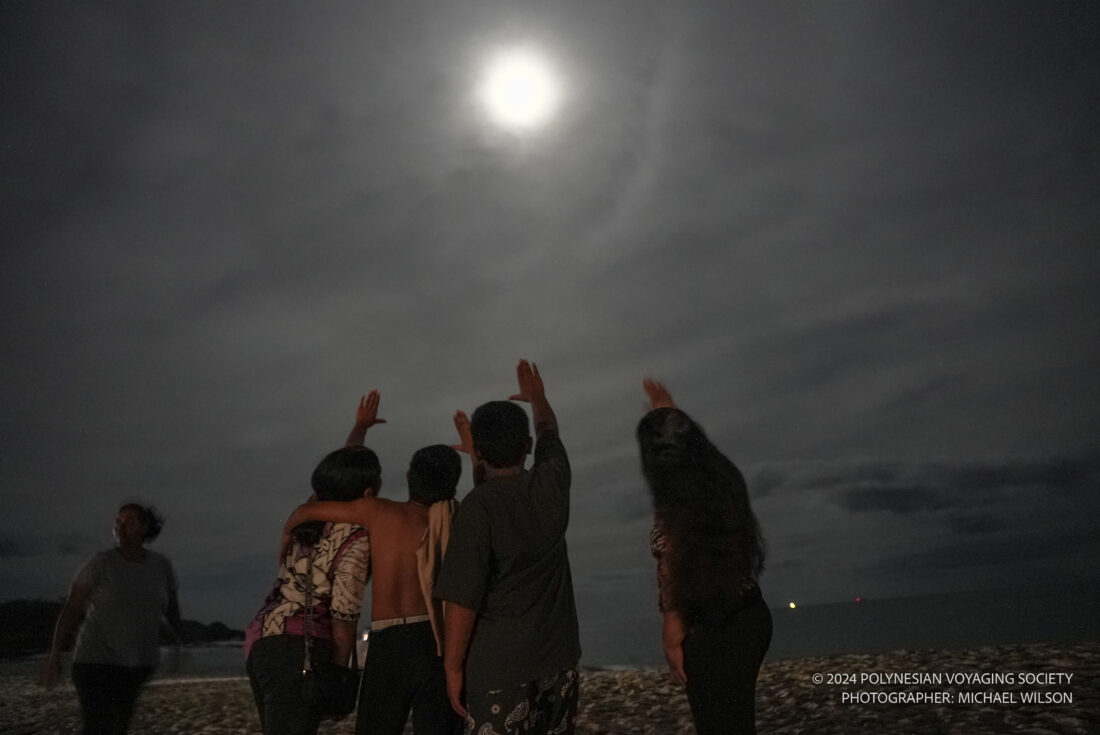
Crew members on the Hōkūle‘a canoe have been sharing the Hōkūle‘a’s history and mission with students and community members through dockside canoe tours, stargazing activities and crew presentations. Courtesy photo
For the last two weeks, Hōkūleʻa has been docked at Māʻalaea where the crew has been hosting students and members of the community for tours and presentations as part of the Pae ʻĀina Statewide Sail.
The Pae ʻĀina sail is part of the double-hulled voyaging canoe’s larger mission to sail around the Hawaiian Islands, engaging communities in cultural and educational experiences and exchanges focused on mālama honua (caring for our island Earth).
The seven-month voyage around the Hawaiian Islands will cover 3,000 miles, stopping at 31 ports and reaching 34 communities, before Hōkūleʻa and Hikianalia resume the Moananuiākea Circumnavigation of the Pacific in March.
The last crew engagement on Maui featured a presentation by Pwo Navigator Bruce Blankenfeld and the crew at the Hawaiian Islands Humpback Whale Sanctuary.
Hōkūleʻa departed Māʻalaea for Kahoʻolawe early Friday morning and will be welcomed to Honokanaiʻa by the Protect Kahoʻolawe ʻOhana and Kahoʻolawe Island Reserve Commission, which have a long-standing history and connection with the canoe.
In the 1970s, the stopping of the bombing of Kahoʻolawe and the birth of Hōkūleʻa to revive ancient Hawaiian voyaging were simultaneously part of the movement of what would become the Native Hawaiian Cultural Renaissance. Twenty years ago, the “Early Warriors” of Kahoʻolawe and the “Early Voyagers” of Hōkūleʻa came together to reconnect and reaffirm their common history and goals, and at that time they rededicated Kahoʻolawe as a sacred navigational center.
“Next year, Hōkūleʻa celebrates 50 years, and the following year, the Protect Kahoʻolawe ʻOhana celebrates its 50 years of Aloha ʻAina. We are honored to sail to Kahoʻolawe. We do so with deep respect and gratitude for this special place and all who have worked to reclaim, restore and heal the island,” said Polynesian Voyaging Society CEO Nainoa Thompson in a news release.
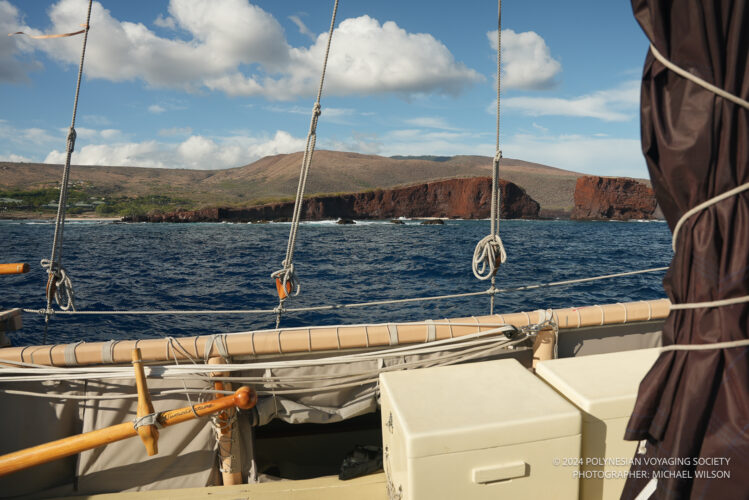
After spending two weeks docked at Mā’alaea, the Hōkūleʻa voyaging canoe is headed to Kaho’olawe, the next stop on Polynesian Voyaging Society’s Pae ʻĀina Statewide Sail. Courtesy photo
Hōkūleʻa will be in Honokanaiʻa, Kahoʻolawe for about two days, and then may possibly sail to southwest Maui’s Keoneʻōʻio Bay, also known as La Perouse, which voyagers call “the gate” to one of the most dangerous channels in the world, the Alenuihāhā channel between Maui and Hawaiʻi island.
Thompson says that, when you cross the channel, you must “pay attention to nature, be humble and pay respect,” as it is known for strong winds and large, steep waves. Keoneʻōʻio Bay allows a safe place for Hōkūleʻa to tuck in before peeking out to see the conditions of the Alenuihāhā.
After La Perouse, Hōkūleʻa will sail to Hawaiʻi island for a more than two-week engagement.
Each stop allows students and the general public alike to connect with the legacy of exploration, environmental stewardship, and aloha ʻāina that Hōkūleʻa embodies.
For the latest updates on the Pae ʻĀina Statewide Sail, visit hokulea.com and @hokuleacrew on Facebook and Instagram.
20241024_Maʻalaea_Engagement_VNR
Local News
Crowned at his home break: Pineres-Schooley wins shortboard title at first-ever HHSAA Surfing Championships
Photo of the Day: Sunset over Lana‘i

How a weaker dollar is quietly making life more expensive
Photo of the Day: Old Wailuku Heights
Lahaina Restoration Foundation Benefit Luau sold out