
A peaceful oasis at a Japanese Buddhist lodge
Trending
Editor's note: Jon Woodhouse, who writes regular arts and entertainment articles for The Maui News, is currently traveling in Japan and writing about his journey along the way.
Dining at Kakurinbo near Mt. Fuji, you look out at the splendor of a magnificent garden and koi pond designed by Zen master Muso Kokushi. The most famous monk of his time, who died in 1351, his spectacular garden designs include Tenryū-ji and the moss garden at Saihō-ji in Kyoto, both ranked among Japan’s finest.
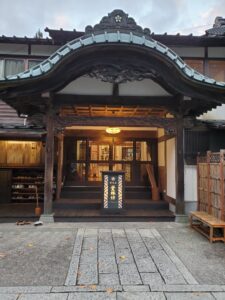
Such scenic wonder adds to the enchantment of staying at this extraordinary gem, a historic Buddhist temple lodge, or shukubo, where time seems to stand still.
A satellite of the massive Kuonji temple complex, the spiritual center of the Nichiren Shu sect of Japanese Buddhism, Kakurinbo was founded more than 550 years ago to accommodate visiting priests and monks. One of the oldest shukubo in the Minobusan area, it's within walking distance of one of Japan's most sacred mountains.
Founded in 1274 by Nichiren Shonin, Kuonji can be reached by climbing 287 steep steps, known as "the steps of enlightenment."
Accommodating up to 45 guests the serene sanctuary of Kakurinbo provides a unique opportunity to enjoy a stay in a traditional Japanese setting. Among the wonders, the food is incredible, every meal an elaborate fusion of gourmet Kaiseki haute cuisine and Shojin-ryori (Buddhist vegetarian). The area is famous for yuba tofu, and a 10-course dinner includes yuba sashimi, tempura vegetables and 16 types of grain. One Japanese writer enthused: "Eating shojin-ryori is not only delightful but also seems to cleanse the soul."
Dinner entertainment may include a performance of ancient court music by student monks, followed by a traditional sacred purification ritual with guest drumming accompaniment.
To aid relaxation Kakurinbo has two large baths infused with wine bath salts produced locally in the Koshu Wine Valley.
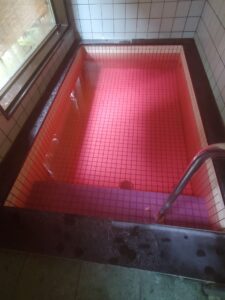
A wine bath salts infused bath. For The Maui News/Jon Woodhouse photo
Accommodation includes a spacious Garden Guest Room for $320 per night for two, including breakfast and dinner, with a garden view. At the higher end, the magnificent Villa Ebisuya provides a unique cultural experience akin to staying in an art museum. A restored country house with the ambience of 1930s Japan, it features an outside bath overlooking a stream fed by Minobusan's only hot spring source, and rents for $640 per night for two, including meals. I stayed in a small private room for $130 a night with two meals daily.
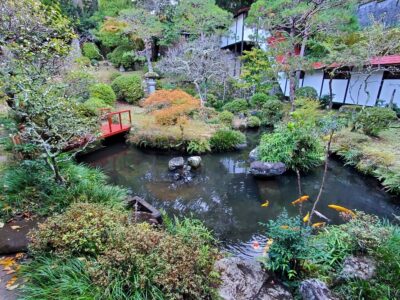
The dining room garden view. For The Maui News/Jon Woodhouse photo
Extra activities include a tea ceremony, sutra writing, calligraphy and yoga. A three-night package is also available, which includes various guide-led activities including a tour of Kuonji with a priest and a trip to Okunoin Shishinkaku Temple on top of the mountain with a private prayer for long life ceremony.
To explore the Kuonji and the Fuji River, you can rent an electric bike for about $5.50 an hour, and a ropeway cable car to the mountain top ascends on a sky-high "pilgrimage" between temples. On a clear day you can see Mt. Fuji from the top of Minobu mountain, and you might even encounter wild macaque monkeys in the forest.
Some visitors to Kakurinbo have described it as one of their favorite experiences in Japan, and for me it was most definitely a highlight. Westerners are welcome. Located in Yamanashi Prefecture, Kakurinbo is about four hours away from Tokyo by train and bus, and two and a half by car. Prices reflect the current exchange rate.