
Jamaican reggae pioneers Israel Vibration at Da Playground
Trending
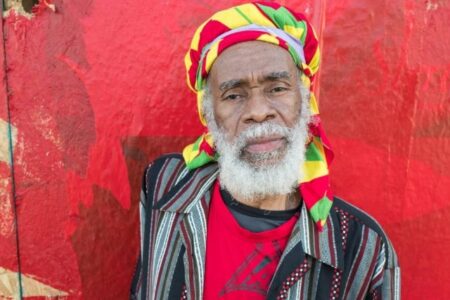
Jamaican reggae legends Israel Vibration appropriately titled one of their recent albums "Stamina." Creating classic roots music for more than 40 years, the revered vocal group is often acclaimed as heirs to the legacy of Rastafarian roots legends like Bob Marley, Bunny Wailer and Burning Spear.
"'Stamina' means you have the energy or the potential to carry through on a mission and accomplish your part of the works," said Israel Vibration's Lacelle "Wiss" Bulgin. "Every individual has a part to play. Some have tall duties and some have short duties. Jah determines the fulfillment, the destiny of each and everyone's duties. We just go ahead and do this until Jah says."
Adopting a name derived from a Bible concept about the Twelve Tribes of Israel, the group originally comprised Cecil "Skelly" Spence, Albert "Apple" Craig and Bulgin. All three were afflicted with polio at an early age.
Jamaica experienced a polio epidemic in the 1950s, likely triggered by a shipment of tainted used clothing from England. As many of the island's poor could not afford to raise these children, Bulgin, Spence and Craig were sent to a rehabilitation center.
Singing together and learning how to play instruments at the clinic, the trio were later attracted to the teachings of Rastafari. This led to conflict with administrators, who kicked them out.
"It wasn't really because of the music. It was more like the way we appeared with the dreadlocks," Bulgin explained. "It was a different style of life that they couldn't really understand. They interpreted it as something bad. We weren't being bad, we were just trying a different experience."
The trio found inspiration in the spiritually themed reggae music of the time. "Bob's music was there, Peter's (Tosh) music was there, Burning Spear's music was there -- all those cultural songs were there," he recalled. "We grew up listening to all those different artists, and it kind of helped in a way, their insights, their understanding and teaching."
Assisted by a Rastafarian organization known as the Twelve Tribes of Israel, the trio recorded their first single in 1976. Four years later they entered Bob Marley's recording studio Tuff Gong and, backed by the Wailers band, recorded the legendary album "Unconquered People," including such anthems as "We A Da Rasta," "Give I Grace" and "Mr. Taxman." The group's strident messages and inspirational lyrics would soon attract reggae fans around the world.
Frustration with corruption in Jamaica's recording industry led them to relocate to New York City, but they soon broke up, and eventually re-teamed in 1988.
This was a time when dancehall rose to prominence and the appeal of roots had diminished.
"I could say it was challenging, but it's more like another step inside of the music like a branch from a tree," Bulgin said philosophically. "Each tree has a lot of different branches. Musicians and singers started to explore. It's not bad to do that. It gives a different flavor and texture, a different insight and look. It's good to do that, but sometimes some of the dancehall singers have lyrics that are not quite acceptable for young and old."
Throughout the '90s and into the 21st century, the group continued to release potent albums, even after the exit of Craig in 1997. Spence died in 2022.
Headlining reggae festivals around the world, Israel Vibration routinely uplift audiences with their crucial roots music.
"We hope people get strength and guidance and encouragement, love and happiness, and prosperity," he said. "Those are the things we hope the music carries, and fulfills the last step of life. The music is like a vehicle, like a transport for the people -- like you find food within the earth, you find spiritual food within the music. The good word is for all."
Israel Vibration with the Roots Radics will perform at 8 p.m. May 31 at Da Playground. Tickets are $40 for standing and $90 for general admission with VIP lounge access.