Barry Wurst: Hugh Jackman, Kate Hudson power Neil Diamond music drama ‘Song Sung Blue’
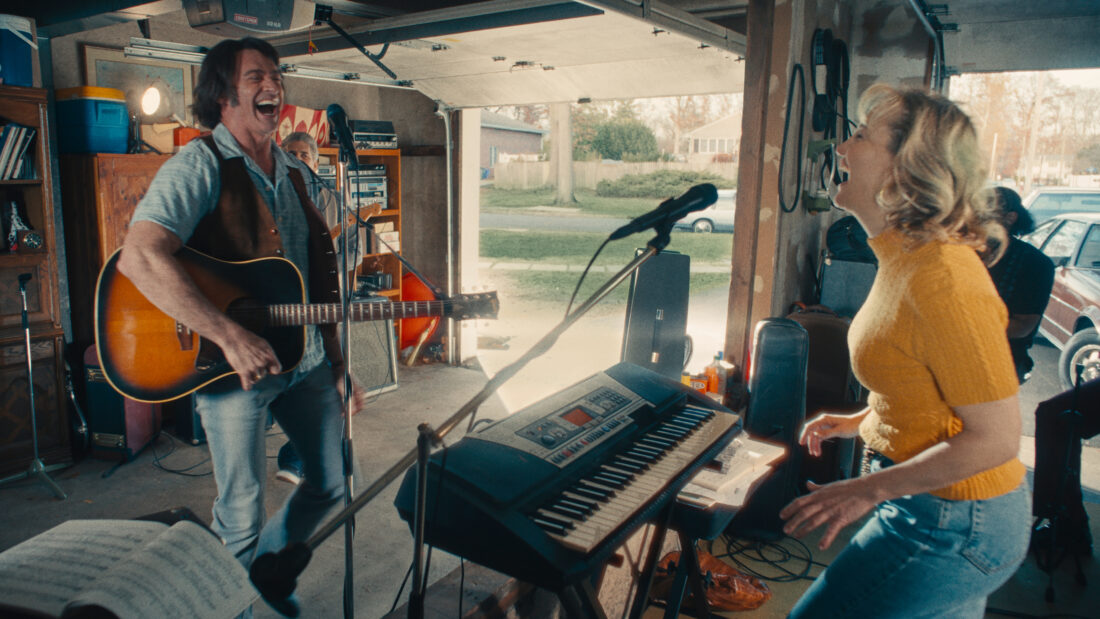
This image released by Focus Features shows Hugh Jackman and Kate Hudson, right, in a scene from "Song Sung Blue." (Focus Features via AP)
Writer and director Craig Brewer’s eccentric musical drama, “Song Sung Blue,” is tougher and more downbeat than advertised. The story is so odd and surprising, the reveal that it’s based on real people is a relief. If this were a work of fiction, I’d never have believed it.
When we meet Mike Sardina (played by Hugh Jackman), it’s 1987, he’s serenading his AA group and he’s off to perform in a variety show with a collection of celebrity impersonators. Mike is instantly smitten with Claire (played by Kate Hudson), a single mother who performs as Patsy Cline onstage. Mike doesn’t just declare his attraction to Claire — he suggests they start a Neil Diamond cover band and go by “Lightning and Thunder.” This leads to lots of scenes with the actors, who impressively do their own singing, covering each Diamond radio hit and building a family of musicians along the way.
Brewer is dipping into the underdog musician narrative once again, as he did in his 2005 breakout and Maui Film Festival premiere title, “Hustle and Flow.” Brewer knows how to milk the formula but, even as the first act covers the expected setups, it doesn’t go where anyone would predict, which is one of the best things about it.
It took a while for Jackman’s character to grow on me, as Mike is a lot to take for Claire and the audience. Jackman’s singing voice and strong persona serve him well in the role. The real story here is Hudson — I grew accustomed to her Marge Gunderson accent and loved her multifaceted take on a tough character to pull off. This is one of Hudson’s best turns.
The best scene includes a surprise collaboration with Pearl Jam (John Beckwith is a perfect Eddie Vedder). Following that wonderful sequence, there’s an unexpected twist that keeps this grounded and gritty until the end.
There’s lots of colorful supporting characters who remain in the background, though James Belushi comes closest to stealing some scenes from Jackman and Hudson. Otherwise, it’s basically a two-hander for the dynamic leads, who don’t play it safe here.
Brewer adds some odd touches, like a nightmare sequence that doesn’t work. When the leads are on their feet and performing, the film is at full throttle. The contrast is the scenes of Mike being insufferable around the house and putting his passion for Neil Diamond first. As much as I didn’t like the character, it’s a reminder that Jackman, who is often likable onscreen, is at his best when he plays self-absorbed and obsessive men. (His best work is still the 2006 double feature of “The Prestige” and “The Fountain.”)
Brewer refreshingly avoids most of the cliches of the modern jukebox musical. It goes through the Neil Diamond songbook via rehearsals and stage performances, not musical number dream sequences (this isn’t “The Greatest Showman”). As much as I liked “Song Sung Blue” and am recommending it, not everything works and it never comes close to matching the movie it clearly wants to be — John Carney’s 2007 film “Once.” Nevertheless, I wouldn’t be surprised if sing-along screenings of this film become the norm. Some of the stage numbers really cook, particularly “Holly Holy” and Hudson’s climactic “I’ve Been This Way Before.”
“Song Sung Blue” is always compelling and the musical numbers are wonderful but, to put it mildly, you have to be a Neil Diamond fan to really dig this.
To put it another way, if you know the lyrics to “Brother Love’s Traveling Salvation Show” and once owned the vinyl LP of “The Jazz Singer” — like everyone else at the end of the 20th century — you’ll like this more than most.
On the other hand, if you’re as sick of hearing “Sweet Caroline” as I am (particularly with the audience participation of “…So good! So good! So good”) and don’t want to hear monologues that wax poetic about all things Neil Diamond, then this will test your patience. For the non-Neil Diamond fans, lower my rating by one star.
(2.5 out of 4 stars)
Barry Wurst II is the founder of the Hawaii Film Critics Society and teaches film classes at University of Hawai’i Maui College.
Local News

Pet of the Week: Marzipan

Barry Wurst: Hugh Jackman, Kate Hudson power Neil Diamond music drama ‘Song Sung Blue’

17 firefighters graduate from 42nd Recruit Training Class
Haiku burglary suspect faces federal drug charges
The man arrested in a string of burglaries that targeted women in the Haiku community is now facing federal drug ...

Man accused of killing Maui police officer seeks to block recorded jail calls