Commission fines Maui Land & Pineapple $140K for West Maui water violations
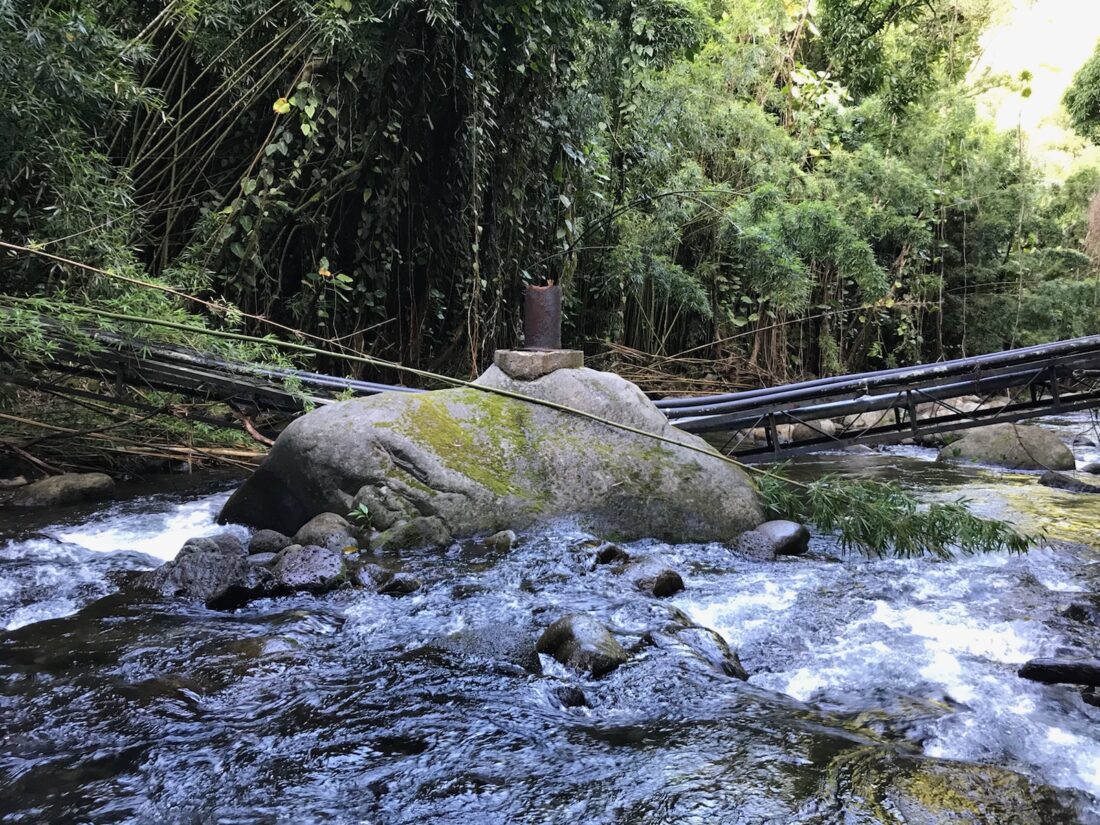
A fallen bridge in the Honokohau ditch system has been left in this stream since 2018 without proper maintenance. Courtesy photo
A number of people who depend on water from the Honokohau ditch system under the control of Maui Land & Pineapple Co. blasted the company on Tuesday, saying that long-standing issues have led to dried up fields, worsened droughts and caused the cancellation of the PGA TOUR’s Sentry golf tournament.
Following their testimony, the state Commission on Water Resource Management decided to fine Maui Land & Pineapple $140,000 for violating stream flow regulations in the Honokohau ditch, but the company may be able to offset the penalty by applying the funds to pay for system improvements.
The commissioners issued the ruling during a meeting in Honolulu, where a number of farmers who depend on the Honokohau ditch system for water asked them to impose the maximum fines.
For Karyn Kanekoa, the amount didn’t seem like it was nearly enough.
“This fine feels pretty manini (small) when you look at the effects upon Honokohau — negative impacts for generations,” Kanekoa said.
Residents who are familiar with the ditch system said maintenance has been substandard for years.
“There’s been a long history of the lack of accountability of the maintenance of the ditch system,” said Gretchen Losano, whose family lives in Honokohau.
The commissioners agreed the company failed to maintain the required instream flows on 28 days from Jan. 1 through Aug. 14, and the commission gave Maui Land & Pineapple until Feb. 24 to hold discussions with the community to come up with a list of improvements worth at least $140,000.
During Tuesday’s hearing, company representatives said Maui Land & Pineapple was not contesting the state’s findings, although the company disagreed with the number of days it was in violation. Maui Land & Pineapple also suggested a proposed list of improvement projects, including $100,000 for quarterly helicopter tours of its ditch system for five years.
For residents, the company’s offer to pay for helicopter rides for quarterly visits was ridiculous. They said the company should not only clean up the stream, but also maintain the trail used by workers to keep up the diversion ditch system and streams.
“I think $100,000 for helicopter tour rides to the top is pretty outrageous,” Kanekoa said.
Willie Wood, a taro farmer, said that going by foot on the trail, maintenance workers can easily see the stream and whether there are logs blocking it. He said trail maintenance should be a regular part of the ditch maintenance work.
“It would be much better to go by foot,” Wood said.
In addition to the taro farmers and residents, representatives of Kapalua Golf and TY Management Corporation also addressed the commission and produced a series of photographs showing issues with the ditch system, including a reservoir liner that had come loose allowing water to seep out.
Kapalua Golf has filed a lawsuit against Maui Land & Pineapple alleging the company’s mismanagement led to the cancellation of the PGA TOUR’s season-opening event, The Sentry. Maui Land & Pineapple has filed a countersuit.
Interviewed after the hearing, Earthjustice senior attorney Mahesh Cleveland said he supports the fine and Maui Land & Pineapple being ordered to talk with the community to determine how the funds can be directed toward improvements, including taro farmers in Honokohau.
“If you don’t take care of people like that first, there is no Hawaii,” Cleveland said.
He said early this year, Earthjustice and the community in Honokohau asked for the water commission to also develop a water shortage plan in times of drought.
Kapule Eubank, a kalo farmer who lives at the top of Honokohau Valley, said his family is the last house upstream.
Eubank described himself as a “grateful steward of Honokohau Stream,” as he said the place he lives puts him in a unique position as an upstream user.
“I closely monitor the streamflow as it passes my property and supports my loʻi,” he said. “I see the stream daily. I know when flows are healthy, and I know when they are not.”
According to Eubank, enforcement of stream flow standards has largely fallen on the community.
“We are the ones monitoring flows, documenting low-water conditions, and raising concerns when Interim Instream Flow Standards are not being met — often without timely intervention,” he said.
He said Maui Land & Pineapple’s low streamflow is not entirely due to a lack of rainfall, but because the company’s diversions exceed the required flow standards.
“Low flows directly impact our ability to grow kalo, a crop that depends on consistent, clean, flowing water,” he said. “Reduced flow affects the health of the stream, the surrounding ecosystem, and the cultural practices that depend on it. When IFSS are not met, the burden is felt immediately by the community.”
He said the lack of proper maintenance on the Honokōhau ditch system has been “a major contributing factor” and is also presenting public safety issues. In one example, he showed a photo of a bridge that had fallen in the stream and was just left there.
“I also respectfully urge the commission to hold Maui Land & Pineapple accountable — not only through compliance on paper, but through real, measurable improvements on the ground,” Eubank said. “Accountability is essential if conditions in Honokohau Stream are going to improve.”
Local News
Commission fines Maui Land & Pineapple $140K for West Maui water violations
Kihei letter carrier welcomes the busy holiday season

Jake Shimabukuro to bring ‘Holidays in Hawaii’ to the MACC

Broadway stars headline the free Kama‘aina Holiday Spectacular

‘You hurt my family’: Maui police chief scolds ‘those who sensationalized lawsuit’s lies’