
Kaheawa Wind Farm seeks new lease amid concerns over endangered species
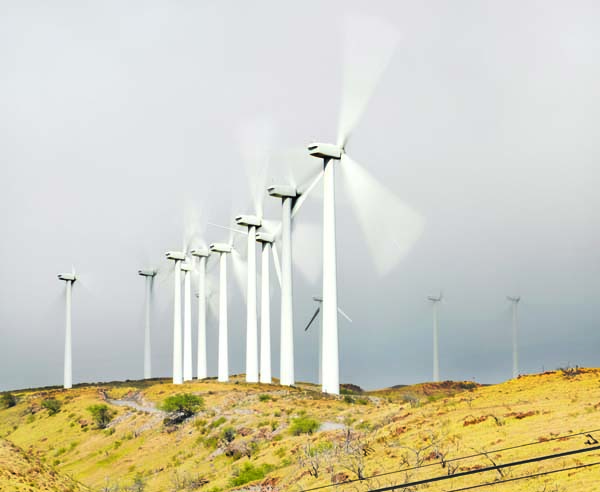
Kaheawa Wind Farm I on the mountain slopes near Maalaea wants to continue operation under a new lease with the state. Matthew Thayer/Maui News archive photo
Kaheawa Wind Farm I near the mountain slopes of Maalaea is seeking a new lease to continue its operation on state land providing 30 megawatts of renewable energy for Maui.
The wind farm includes 20 wind power generators, each 296 feet tall at the blade tip, as well as an office.
No new construction of physical modifications beyond the proposed maintenance activities are required as part of the proposed action. The wind farm application is separate from the adjacent Kaheawa Wind Farm II, which was completed in 2012.
Operating since 2006, Kaheawa Wind Farm I is seeking multiple government permits, including a Habitat Conservation Plan that includes a review of measures taken to reduce the take of endangered bird species.
The state Public Utilities Commission also has to approve a new power purchase agreement.
In a Nov. 25 letter, the Division of Forestry and Wildlife noted Kaheawa Wind Farm has proposed curtailing the turbines’ speed to 6.5 mph in September and October, in light of endangered Hawaiian hoary bat strikes.
The division noted that there has been no fully developed habitat plan for the bat, but one is expected to be presented in the future.
The division’s position was supported by the department’s Endangered Species Recovery Committee, which also called for limiting a wind generator’s speed to 6.5 mph year-round.
The committee, which included scientists, also recommended Kaheawa Wind Farm conduct an annual survey of yellow-faced bees.
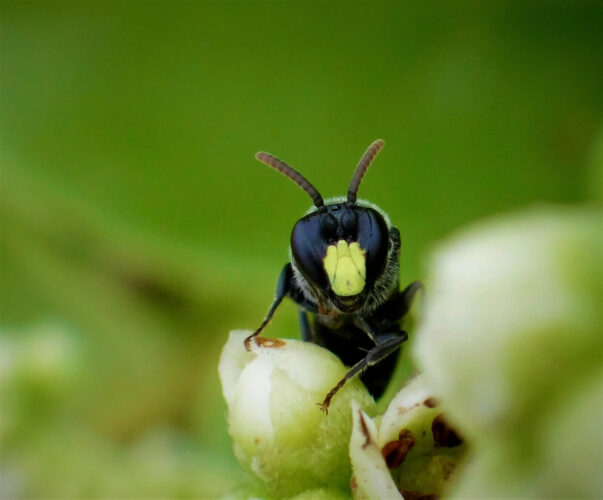
The yellow-faced bee is an important pollinator for many native Hawaiian plants. Sheldon Plentovich/U.S. Fish and Wildlife Service
Division administrator David G. Smith said estimating the impact of a reduced habitat for the yellow-faced bee is difficult, and the actual impact may be underestimated because of the species’ size and the challenge of recovering carcasses.
“The full extent of impacts on the species, including possible collisions with turbines, could also be significantly underestimated,” he said. “Currently, understanding the complete range of impacts is hard because no survey has been one to count the nests at the site.”
Officials at the division want the Kaheawa Wind Farm to produce a more detailed habitat conservation plan for yellow-faced bees, including their nesting and foraging.
Local News
Akakū to feature Haleakala Creamery and Maui Nord Farm Co. on Jan. 6
Akakū Maui Community Media will host itʻs second Maui Business Tuesdays salon from the series, themed “Maui ...
Kaheawa Wind Farm seeks new lease amid concerns over endangered species

Photo of the Day: Not on New Year’s Eve

Photo of the Day: Before Sunrise
Maui Humane Society offers tips to help keep pets safe on New Year’s Eve
Recognizing New Year’s fireworks can be stressful for many pets, Maui Humane Society is suggesting owners take a ...
DLNR Chair Dawn Chang on medical leave
Deputy Director Ryan Kanaka‘ole is serving as acting chair and director of the Department of Land and Natural ...