
Barry Wurst: Viewer beware of ’28 Years Later: The Bone Temple’
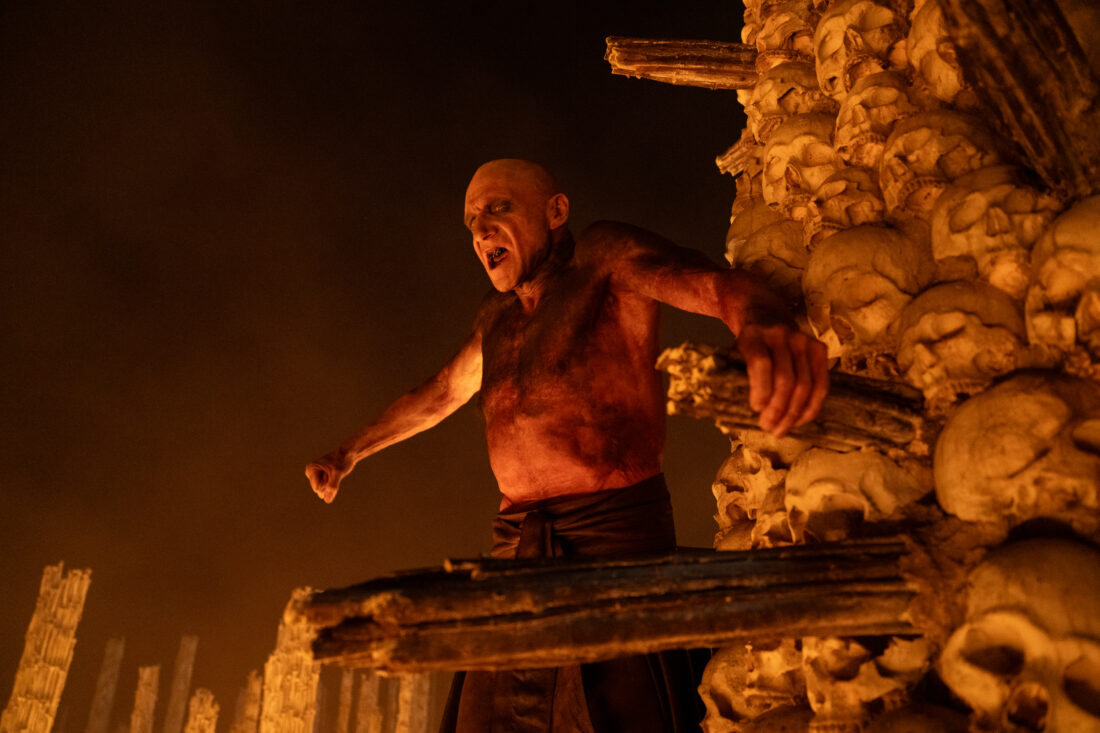
This image released by Sony Pictures shows Ralph Fiennes in a scene from "28 Years Later: The Bone Temple." (Columbia Pictures/Sony Pictures via AP)
Nia DaCosta’s “28 Years Later: The Bone Temple” is a direct sequel to last year’s “28 Years Later” and to the original “28 Days Later” (2003), both of which originated with filmmaker Danny Boyle.
The connective thread this time around is original writer Alex Garland, whose storytelling remains involving and savage. The problem isn’t that this is the fourth film in the series, as the narrative is accommodating to newcomers. The issue is the level of barbarity, which reaches a new high for this franchise. Aside from hardcore horror fans, this post-apocalyptic zombie thriller is impossible to recommend.
It begins with a murder ritual in which a gang of kids led by a proud Satan worshipper named “Sir Lord” Jimmy Crystal (played by Jack O’Connell) is commanded to murder a newcomer who proves to be a weak link in the group. Even for a horror film, the level of savagery, similar to “A Clockwork Orange,” is hard to take.
Meanwhile, in addition to the new murder cult roaming the landscape, the traumatized but still sharp Dr. Ian Kelson (played by Ralph Fiennes) is living in isolation and keeping busy as he experiments with a zombie he calls Samson (played by a remarkable Chi Lewis-Parry) in an attempt to cure the virus that created the apocalypse.
The B-plot — Fiennes’ fascinating character remaining calm and determined in a world gone completely off the rails — holds a rich fascination. When the two plots finally diverge, the film turns into a sort of Dr. Moreau meets Charles Manson, as Fiennes’ compassionate atheist and Connell’s satanic bully play a battle of wits that shakes the conviction of Crystal’s deranged followers.
The third act is full of wild spectacle, but unlike last year’s “28 Years Later,” the new installment left me cold. While the prior film was far more engrossing — as father-son tales tend to be — this one has subtext and on-the-nose political commentary that could make it more of a talking point than any of the episodes that came before it. Considering how the core threat is a charismatic, unapologetically cruel cult leader far scarier than any of the zombies, the message here is less about surviving the undead than allowing ourselves to lose empathy and understanding when the world goes daffy.
O’Connell, an intense actor, shapes a vivid and memorable villain, though I’m unsure where Crystal is getting the wigs and matching track suits for his devotees in a landscape where there are no supplies. It’s an implausible touch, though it adds to the subtext that the antagonist is pulling in followers by offering them a new look in exchange for their barbarity.
Fiennes is excellent here, though I can’t think of a time when that wasn’t the case — not even in duds like the “The Avengers” (1998). DaCosta once again demonstrates her strength in the horror genre, though her haunting “Candyman” (2021) was far more successful.
As a portrayal of how fascism spreads by pulling in the weak and appealing to their insecurities, this aspect will stay with audiences and resonate with anyone who hasn’t read William Golding’s 1954 novel “Lord of the Flies.”
Garland has become the new Andrew Kevin Walker, which is to say he crafts clever, vicious thrillers that are popular, despite how uncompromising they are. A novelist-turned-screenwriter-turned-director, Garland also helmed “Civil War,” my favorite film of 2024. Whereas Walker is most famous for writing “Seven” (1995) and a handful of other shocking thrillers, Garland is now a reliable craftsman of challenging morality tales.
None of the “28 Days Later” sequels have been disasters, but this is the first installment that eliminated my desire for another one.
The performances and story are always compelling, but the film is cruel and gross. Clearly, admiring the accomplishments of this film is not the same as stating I liked it, which I didn’t.
(2.5 out of 4 stars)
Barry Wurst II is the founder of the Hawaii Film Critics Society and teaches film classes at University of Hawai’i Maui College.
Local News
Barry Wurst: Viewer beware of ’28 Years Later: The Bone Temple’
State board approves Maui wind farm
A wind farm received a couple of major approvals Friday in its effort to continue operating along the Maalaea ...

Pet of the Week: Bonnie
Maui County seeks nominations for 2026 Outstanding Older Americans
Nominations are being sought for the 57th annual Outstanding Older American Male and Female of Maui County. The ...

Photo of the Day: Wa‘a ma Ka‘anapali
Na Hoku ‘Opio “Young Stars” competition is open
Youth musicians are invited to apply for spots in the annual Nā Hōkū ‘Ōpio “Young Stars” competition ...