
World Whale Film Festival returns to Iao Theater
Trending
In partnership with the Maui County Film Office and Wailuku Film Festival, the Pacific Whale Foundation's ninth annual World Whale Film Festival will return to the Historic Iao Theater on Feb. 11.
From its inception, the festival was designed to help elevate ocean conservation storytelling and bring together filmmakers from around the world, especially students, first-time filmmakers and local artists whose work raises awareness and inspires meaningful change.
"The festival was inspired by the vision of Pacific Whale Foundation founder Greg Kaufman and his decades of ocean advocacy," explained Silkat Kaufman, who directed the "A Voice for Whales" documentary that honored him. "The 2026 festival is centered on whales, ocean conservation and environmental responsibility."
Among the films screening, "Counting Orca" is a tribute to the endangered Southern Resident killer whales and the work of Kenneth C. Balcomb III, the scientist who began a census to protect them. The film chronicles decades of research, community action and enduring hope for the whales' survival.
According to directors Natalie Taylor and Jessica Huser, from the moment they learned about the deep family bonds of the Southern Resident killer whales, they felt an immediate connection to them. They said the goal of their film is to uplift the voices of people whose work is making the world a better place.
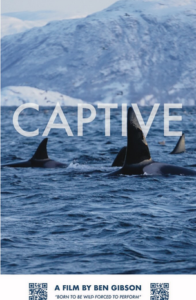
"Captive: The Story of Orcas in Captivity," one of the docs screening at the whale festival. Courtesy photo
The documentary, "Captive: The Story of Orcas in Captivity," examines the physical and psychological impacts of captivity on orcas. Through interviews and archival footage, the film confronts the ethics of removing these intelligent animals from the wild.
Directed by Ben Gibson, a marine and natural history filmmaker based in the United Kingdom, the film focuses on the orcas Wikie and her son Keijo, who are imprisoned in concrete tanks at Marineland, France.
In December, the French government announced that Wikie and Keijo should be transferred to the Whale Sanctuary Project's proposed sanctuary in Nova Scotia, Canada, hopefully by summer 20026. Marineland was closed to the public in January 2025 after protests, petitions, and collaborations with high-profile celebrities such as actress Pamela Anderson.
Set in Belize, "Wealth Untold" follows a network of Belizean women -- scientists, artists and community leaders -- working to protect the Mesoamerican Barrier Reef.
Directed by Eladio Arvelo and produced over four years by a team of filmmakers and ocean advocates, the film focuses on the longest barrier reef in the Western Hemisphere, a UNESCO World Heritage Site that sustains over half the country's population. Despite its protected status, the reef faces mounting threats from overfishing, oil exploration, invasive species, coastal development and climate change.
"Stone Biter: Saving the Arctic Sea Forests" is a documentary by Italian photographer Ismaele Tortella highlighting the collapse of Northern Norway's kelp forests because of sea urchin overpopulation and climate change. Tortella's dream was to explore the icy Arctic waters and film the iconic wolffish among lush kelp forests, but overfishing of natural predators since the 1970s has led to an explosion of green sea urchins.
The film documents restoration efforts such as removing urchins and building artificial reefs to restore biodiversity. Two of Tortella's documentaries have won awards at several international film festivals.
From California to New Zealand, along coasts around the world, overfishing of natural predators has led to an abundance of urchins decimating kelp forests.
"Ripple & Rocket" is a hand-illustrated animated short directed by the Perlorian Brothers, inspired by the true story of a wild dolphin mother and calf in Adelaide, South Australia.
Local films include "Saving Koholā" directed by Nick Zachar, a National Marine Sanctuary Foundation story with Ed Lyman, who helps coordinate community-based whale rescue efforts.
Filmmakers attending include Gibson and the makers of "Ripple & Rocket" from Australia.
Along with the screenings in Wailuku, a number of films will be available to watch free online, "especially the longer ones," said Kaufman. "The longer ones have to be on the web because there's not enough time for them."
They include "Battle of the Blues," "The Snake and the Whale," "Sei, the Unknown Whale" and "Change Makers."
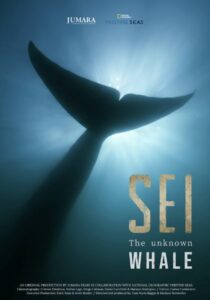
From Argentina, "Sei, the Unknown Whale," highlights the surprising return of endangered sei whales to Argentina's Patagonian San Jorge Gulf, after a 100-year absence due to commercial whaling. Led by researcher Mariano Coscarella, the project, supported by National Geographic Pristine Seas, documents the recovery of this fast, elusive and largely unstudied species, with sightings growing from 20 to over 2,800 in the region.
"Change Makers" highlights the work of young Greek activist Lefteris Arapakis, who started his nation's first-ever fishing school training fishermen to remove plastic garbage from local waters to protect the Mediterranean Sea and beyond. Overfishing and pollution have dramatically impacted Greece's fisheries. Arapakis' Enaleia organization has been removing over 1.6 tons of marine plastic weekly and 11 tons of discarded fishing gear per year.
"I like working with students and first-time filmmakers, but a lot of these issues are global," said Kaufman. "So getting everybody to tell their story from their part of the world is important too."
The World Whale Film Festival will be from 6 to 9 p.m. Feb. 11. Tickets are $20 for adults, $15 for seniors and $10 for children at tinyurl.com/48rnc6zu.