Healthwise Maui: Experts answer your health-related questions
EDITOR’S NOTE: Physicians, providers, and administrative staff who practice at Maui Health hospitals and clinics answer questions from the public in “Healthwise Maui,” which appears in The Maui News. Maui Health operates Maui Memorial Medical Center, Maui Memorial Medical Center Outpatient Clinic, Kula Hospital & Clinic and Lana’i Community Hospital and accepts all patients. To submit a question, go to the website at mauihealth.org/healthwise.
Q: How will palliative care help manage my pain?
Dr. Chad Farmer, Maui Memorial Medical Center Palliative Care Program Director and Hospice Maui Medical Director: Palliative care is treatment that’s focused on relieving symptoms and improving quality of life for people living with serious medical conditions. For many people, that means managing pain. Your palliative care team will work with you to identify the pain management strategies that best suit your specific situation.
Palliative care typically begins with a pain assessment, during which your provider will ask you some simple questions to better understand your pain levels and concerns.
From there, pain management often involves treating pain with one or more medications, usually starting with milder pain medicines like NSAIDs or acetaminophen, and progressing to more powerful drugs, like opioids, if needed. Your palliative care provider will work with you to make sure these drugs are being prescribed responsibly and that you are using them safely. Talk with your care team if you have any concerns about taking opioids or addiction issues.
Along with pain medications, your provider may also prescribe adjuvant, or “helper,” drugs that can help relieve pain symptoms in other ways. These can include:
• Steroids
• Antidepressants
• Muscle relaxants
• Anticonvulsants
• Anti-anxiety drugs
• Local anesthetics
But palliative care isn’t limited to medication alone. Your team can coordinate other pain management strategies to help provide relief, such as physical therapy, massage, or relaxation exercises, to ease your symptoms. In some cases, surgery might be recommended to correct an underlying problem that is causing ongoing pain.
Remember that palliative care isn’t the same as hospice or end-of-life care. You can start palliative care at any point during your illness, even on the first day you’re diagnosed. Along with pain, it can help manage other symptoms, like fatigue, nausea, shortness of breath, depression, and more. Starting early can often mean better results.
If you’ve been diagnosed with a serious health issue, talk with your doctor about options for palliative care.
Q: What is a cardiac CT scan, and how can it help detect heart disease?
Kelly Combs, RT(R) MBA, LSSGB, Director Imaging Services, Maui Health: A cardiac CT scan is a kind of advanced imaging technology that can be used to create a detailed image of your heart. Doctors may use a cardiac CT scan to help diagnose heart conditions or problems when other tests don’t provide enough information.
During a cardiac CT scan, the scanner will use multiple X-ray beams to capture images of your heart and major blood vessels from different angles. A computer then combines these images to create a three-dimensional picture of the structures in and around your heart, including the heart’s chambers, major blood vessels, valves, and the sac that surrounds the heart, called the pericardium.
This 3D image can help identify issues in the heart, such as plaque buildup in the coronary arteries, narrowing or blockages, calcium deposits, and scarring from previous heart attacks. Sometimes, a contrast dye is used during the scan to help visualize blood flow through the heart.
Doctors may use a cardiac CT scan to help determine the cause of angina (chest pain) and shortness of breath, to assess your heart valves, to check for plaque buildup, or to evaluate other issues with your heart and coronary arteries. They may also use it to plan for heart surgery or other procedures.
While a cardiac CT scan doesn’t replace a coronary angiogram, it can provide additional information that gives doctors more information about your heart.
Catching problems early through cardiac CT scan and other tests can improve outcomes in managing heart disease. Talk with your healthcare provider if you have symptoms such as chest pain or shortness of breath.
Maui Memorial Medical Center’s Imaging Department offers a full range of services with advanced imaging technology, including cardiac CT scanning. For a closer look at our imaging services, visit mauihealth.org/imaging.
Local News

Grammy-nominated pianist Erika Nickrenz and cellist Sara Sant’Ambrogio return to Maui

Hawaiian legends Henry Kapono, Keola Beamer to share stage at MACC
Healthwise Maui: Experts answer your health-related questions
EDITOR'S NOTE: Physicians, providers, and administrative staff who practice at Maui Health hospitals and clinics ...
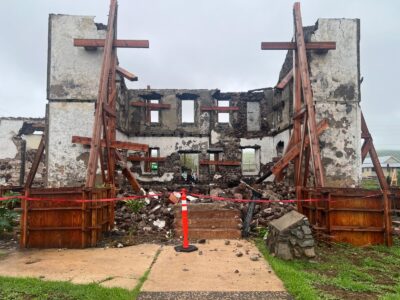
Storm causes partial collapse at historic Baldwin Home

Call for help comes from East Maui