
Author explores Japanese-American internment and the future of healthy food
Trending
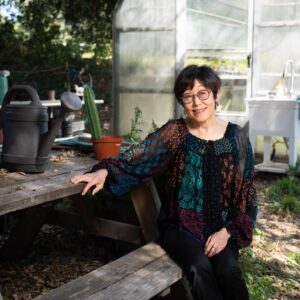
A James Beard award-winning writer, Nancy Matsumoto spoke on Maui on Monday at the Nisei Veterans Memorial Center, discussing her book "Unforgotten Voices from Heart Mountain," co-authored with Joanne Oppenheim, about the imprisonment of Japanese-Americans in World War II.
The Heart Mountain Relocation Center in Wyoming, was one of 10 camps that imprisoned around 120,000 Japanese-Americans between 1942 and 1945. At its peak, Heart Mountain held over 10,000 internees, mainly from California, surviving in harsh, dusty or frozen conditions, where the temperature once dropped to minus 28 degrees Fahrenheit.
Matsumoto was drawn to the book project while investigating her family's concentration camp experience. All four of her grandparents, her parents, and their siblings had been imprisoned. In the book, she wrote, "No one talked about it; there was too much repressed shame and anger."
"This is a very shameful and painful, and traumatic experience in so many ways, but it was very repressed so people of my generation often really did not know much about it until many years later," Matsumoto explained in an interview.
An acclaimed author, she has written other books about internment including "Displaced Manzanar," which she described as "a collection of beautiful photographs from the Manzanar prison camp in California."
"And I have a book of poetry that was originally published in Japanese by my mother's parents, the ones who were in Heart Mountain," she said. "Half the poems take place there, and half took place in the years immediately after, where they had to relocate to the Midwest, which was supposedly less racist."
The poetry book, "By the Shore of Lake Michigan," was released in English in 2024. "It won an American Book Award in 2025," she said. "The reception has been amazing. Part of it is because of the politics, what's happening today, and how much history is repeating itself in some ways. I'm coming to Hawaii because my two translator colleagues and another colleague who wrote the introductory essay to the book are speaking at the Asian American Scholars Conference in Honolulu (today through Saturday)."
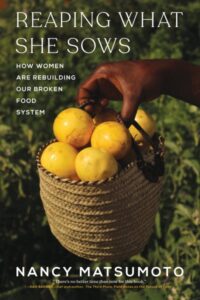
Published in 2025, Matsumoto's latest book, "Reaping What She Sows: How Women Are Rebuilding Our Broken Food System," honors women fighting against the industrial food system and celebrates the power of community-based alternatives.
Courtesy photo
"I've been writing about agroecology and food justice, and food sovereignty for many years," she explained. "With 'Reaping What She Sows,' I wanted to return to the agroecological aspect of how we need to change the way we farm, because it's really poisoning our water, our land, our animals, and it's really hurting human health as well."
Cognizant of encroaching climate change, "Hawaii is really bearing the brunt of a lot of that," she noted. "It's more and more urgent for people to think about why are we farming in this way that is so environmentally destructive and extractive, when really we need to be building climate resilience, local and regional resilience. It's such a powerful message for Hawaii, because these islands were self-sufficient at one time and could be again."
Through her research, she found that "women are leading this movement, often because they're community leaders, and they're thinking long-term, not just about short-term profits. They're thinking about the health of the community, not just how much wealth can we extract from the land or the ocean. There's a real reawakened interest, and it's so important on so many levels when we talk about decolonizing, self-sufficiency, really bringing health back, and local community resilience and economic well-being."
She said women are building what she calls "the alt-food system," working outside the Big Ag industrial food system, with chapters in the book focusing on a specific food group, such as grains, produce, and meat and poultry.
"There are very passionate, very committed people all over the place," she said. "I've been traveling a lot, talking about the book and meeting them, and they're all very excited that their work is getting recognized. But it's incredibly hard work because they have none of the support, the money, the lobbying, the subsidies, the crop loans that big agriculture has. It is completely outside the federal USDA system."
Suggesting that the key to success is cooperation and mutual aid, she cited what happened during the Japanese incarceration with inmate-run co-ops.
"You had huge cooperative enterprises in these camps that were doing about $136 million in today's dollars annually in business. These were run by inmates. Sourcing, managing, everything was done by the prisoners themselves."
Matsumoto has the Substack site "Reaping," where she covers equitable food supply chains and the pioneering people who are building them.
Hopeful of lasting change towards a healthier planet, encouraging shopping at local farmer's markets, she noted, "It is extremely hard, but it's also incredibly joyful. When you get together a bunch of people who share this belief that this is really the way we have to go, it's very powerful."