
Ahi labeling law takes effect July 1
Trending
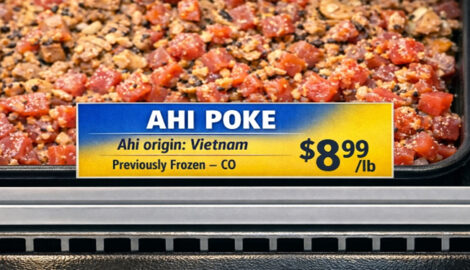
A new state law requiring country-of-origin labeling for raw processed ahi sold at certain retail establishments will take effect July 1.
Act 238 requires covered retailers to label raw processed ahi with the country where the ahi was landed, according to the state Department of Agriculture and Biosecurity.
"Consumers deserve clear and accurate information about the food they buy," department Chairperson Sharon Hurd said in a news release. "This law provides shoppers with country-of-origin information at the point of sale while recognizing the value of Hawaii's commercial fishing industry."
The law applies to retailers licensed under the federal Perishable Agricultural Commodities Act of 1930, which includes establishments that purchase more than $230,000 of fresh or frozen produce, according to the department.
Beginning July 1, covered retail establishments may not keep, offer, display, expose for sale or solicit the sale of raw processed ahi without a label stating the country in which the ahi was landed.
The department's Quality Assurance Division, through its Measurement Standards Branch, will support enforcement through education and outreach. Retailers found to be out of compliance may receive warnings and be subject to enforcement action under state law.
For labeling questions, email dab.ms.labeling@hawaii.gov.