
Dead coconut rhinoceros beetles found in Waikapu traps
Trending
State agriculture officials have confirmed the discovery of dead coconut rhinoceros beetles in Waikapu, prompting additional surveys and monitoring efforts as Maui continues to guard against the destructive invasive pest.
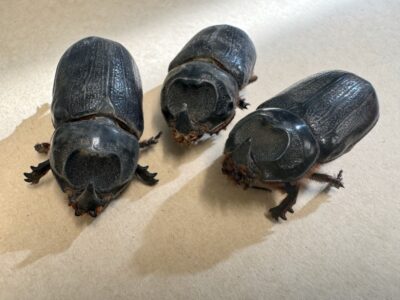
According to the Hawaii Department of Agriculture and Biosecurity, staff collected three beetles from two detection traps in Waikapu on June 4. The specimens were sent to Honolulu for identification and were confirmed to be three dead female coconut rhinoceros beetles.
The department said the Waikapu traps had been checked on May 15 and no beetles were detected at that time.
Following the June 4 discovery, department personnel surveyed the surrounding area for potential beetle breeding sites, including green waste piles, compost and decaying coconut material. Surveys also began to look for feeding damage on nearby palm trees.
On June 8, officials recovered two additional dead beetles from detection traps.
In April, state officials reported finding a dead coconut rhinoceros beetle in a trap at Kahului Airport. Around the same time, beetles also were detected in traps on Molokai, leading state officials to expand monitoring efforts in Maui County.
Despite the recent detections, the department said no live adult beetles or larvae have been found on Maui since the initial detection at Kahului Airport in early April.
The coconut rhinoceros beetle presents a major threat to Hawaii’s agriculture, landscapes and ecosystems. Adult beetles bore into the crowns of palm trees to feed, damaging fronds and potentially killing trees.
In addition to coconut palms, the beetle can damage hala, taro, banana, pineapple and sugarcane, raising concerns about agriculture, food security and Native Hawaiian cultural practices.
Residents, businesses and landowners are being asked to inspect coconut palms and other large palm species for signs of feeding damage and to watch for green waste, compost or decaying coconut material that could harbor beetles. Officials also are urging residents to limit the movement of green waste and carefully inspect mulch and compost products, which can serve as breeding sites for the pest.
Signs of infestation include round boreholes in the crowns of palm trees, V-shaped cuts or holes in palm fronds and a general decline in tree health. Because damage may not become visible for months after feeding occurs, early detection is considered critical.
Anyone who finds suspected beetle larvae should collect them in a sealed hard-sided container with host material and keep them until identification can be confirmed. Officials note that larvae of the common Oriental flower beetle can resemble coconut rhinoceros beetle larvae.
Suspected feeding damage or beetle sightings can be reported online at 643PEST.org or by calling the state’s Pest Hotline at (808) 643-7378. For information about identifying coconut rhinoceros beetles and signs of damage, visit crbhawaii.org.