
Planning commission approves Makena State Park expansion
Trending
The Maui Planning Commission has approved a revised plan to add comfort facilities and expand designated parking at Makena State Park in South Maui.
The 6-1 vote approving a Special Management Area permit allows the Department of Land and Natural Resources’ Division of State Parks to build two restrooms with shower facilities and expand parking at the 164.4-acre park.
In response to concerns raised by residents, Division of State Parks administrator Alan Carpenter submitted a revised proposal July 14 that limits nighttime lighting to reduce disturbances to nesting turtles and revises the parking plan.
Carpenter said the updated proposal calls for more parking on pervious surfaces to reduce rain runoff while adding a limited number of paved stalls to comply with the Americans with Disabilities Act. The state had previously proposed increasing paved parking from 97 to 235 stalls.
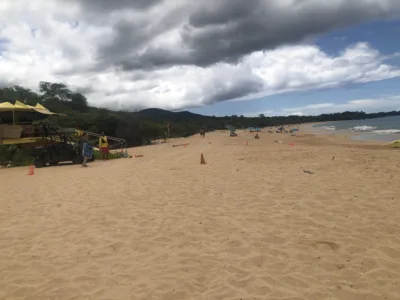
The park stretches 1.5 miles along the coastline and includes Oneloa, also known as Big Beach, One'uli, or Black Sand Beach, and the Pu'u Olai cinder cone, also known as Little Beach.
The commission also directed the state to submit a carrying-capacity study by July 31, 2028, examining the ecological, environmental and physical impacts of park activities.
Commissioner Mark Deakos, who cast the lone dissenting vote, said he saw no need for the comfort stations or shower facilities, particularly after representatives of the Hawaii Wildlife Fund testified about the effects artificial lighting can have on nesting hawksbill turtles.
"I can't see how this is beneficial to those public trust resources. It just seems unnecessary," Deakos said. "This is the last beach that still has dark skies. I wouldn't go and put a comfort station in some remote beach in Lanai or Molokai because that's just cracking the door open for more impact, and I think that's what we're doing here with this."
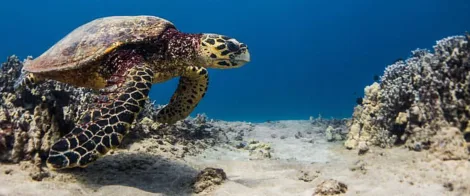
Some residents and conservationists fear Hawksbill turtles could be harmed by the Department of Land and Natural Resources' Division of State Parks building new showers and comfort facilities at Makena State Park. Curtis Geary/Hawaii Wildlife Fund
In a July 2 letter outlining the revised plan, the Division of State Parks said it recognizes the importance of preserving natural nighttime conditions and limiting lighting to a minimum for safety and security.
The division said it consulted with the U.S. Fish and Wildlife Service and reduced the number of exterior lights at each comfort station from six to one shielded, downward-facing fixture recessed beneath the roofline on the side of the building facing away from the shoreline. All interior and exterior lights will be on timers and shut off at 8 p.m., allowing park staff about an hour to clean the facilities after the park closes.
"With implementation of these measures, USFWS anticipates that project-related impacts to Hawaiian sea turtles, Hawaiian seabirds, Hawaiian waterbirds and other federally-listed species will be insignificant," the division said.
The division added that the remaining lighting could be reduced further or eliminated if it proves unnecessary for park operations.
Hawaii Wildlife Fund Executive Director Hannah Bernard said she was encouraged that the state consulted with the U.S. Fish and Wildlife Service.
"I would have preferred no lighting, but at least lights will be turned off after 8 p.m.," Bernard said. "Nesting can occur right at sunset and hatchlings may come out anytime day or night."
She said the organization will continue monitoring the project.
Maui Tomorrow Executive Director Albert Perez said he was pleased the state revised its parking plan to include more pervious surfaces.
"That's a victory," Perez said.
However, he said he still opposes the comfort stations and showers because he believes the state failed to consider the added burden increased visitation could place on lifeguards.
A state study identified Makena State Park as Hawaii’s leading beach for spinal injuries from 2009 to 2017.
"I don't see any way that the number of spinal injuries is not going to increase," Perez said. "So that's disappointing."
He said the new facilities also would attract more people to what was intended to remain a wilderness beach.
Former Makena lifeguard Jasen Kaimikaua, who also opposed the expansion, said additional facilities would likely bring more visitors unfamiliar with ocean conditions, increasing the risk of injury.
"Watching 100 visitors requires more responsibility than watching 500 local residents," he said. "It's a different level, way more hazardous. All of that stuff goes up the more tourists you gather."