
Study finds human activity is weakening Maui corals
Trending
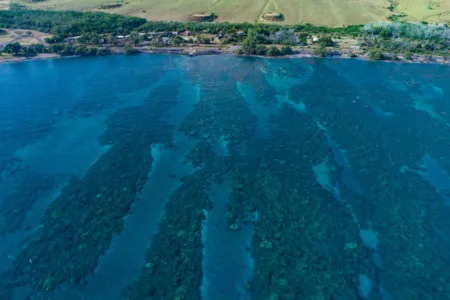
Human activities are changing the chemistry of coral reefs off Maui and making them less resilient to warming oceans and other environmental stressors, according to a new study led by researchers at the University of Hawaii at Manoa.
The study, published in Nature Communications, found 25 contaminants from agricultural, industrial and pharmaceutical sources in the soft tissues of corals collected from waters off West and South Maui. Researchers also found corals exposed to greater human impacts had lower energy and nutrient reserves, making them more vulnerable to stress from warming or increasingly acidic ocean conditions.
Researchers from the Hawaii Institute of Marine Biology analyzed 380 lobe corals (Porites lobata) and rice corals (Montipora capitata) collected from 16 reef sites.
“Our findings suggest that monitoring the pool of chemicals within the coral tissues, called metabolomes, can serve as a powerful tool for tracking the hidden impacts of anthropogenic disturbance on marine life,” lead author Zach Quinlan, a research biologist at the institute, said in a news release.
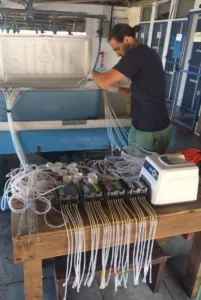
First author Zachary Quinlan takes water samples for metabolomics. HIMB/ SOEST/ UH Manoa
The team found similar chemical changes in both coral species despite their different biological characteristics. Areas with greater human disturbance showed higher levels of contaminants and reduced stores of nitrogen and energy within coral tissues.
Researchers also compared the findings with reef conditions following Maui's 2016 coral bleaching event. Sites that suffered the greatest declines in coral cover after the bleaching event also showed the most heavily altered metabolomes, suggesting that human-caused stress may reduce corals' ability to recover from major environmental events.
The study proposes that contaminants such as pharmaceuticals and industrial byproducts, combined with the energy corals expend responding to human-related stressors, contribute to declining coral health.
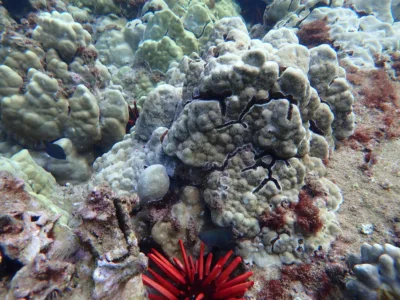
Coral reef is shown in this image. Tiara Stark/The Nature Conservancy
Senior author Megan Donahue, director of the Hawaii Institute of Marine Biology, said the findings also highlight the broader problem of contaminants entering marine ecosystems.
“Beyond the implications for coral health and resilience, this study demonstrates how many anthropogenic contaminants are escaping into marine ecosystems,” Donahue said. “We see increasing evidence that anthropogenic contaminants have broad cumulative impacts that can undermine the resilience of coastal ecosystems.”
Researchers said they plan controlled experiments to determine whether increasing nitrogen and energy reserves in coral tissues can improve the animals’ resilience to environmental stress.