
Study finds ‘staggering’ amount of plastic in Hawaii’s pilot whales
Trending
Removing plastic waste from shorelines before it washes into the ocean is one way people can help protect whales, according to University of Hawaii researchers who found pounds of marine debris in 13 stranded short-finned pilot whales.
According to the university, researchers found that nearly 23% of short-finned pilot whales that were stranded over a 13-year period in the main Hawaiian Islands ingested several pounds of plastic ropes, netting, fishing gear and plastic bags.
"Every time we go to the beach, we can bring a bag with us and remove some of that plastic waste we see along the shoreline before the next high tide when it may end up back in the ocean and potentially in the stomach of a whale," said Kristi West, director of the UH Health and Stranding Lab and corresponding author on the study.
Published in Marine Pollution Bulletin, the study was led by the UH Health and Stranding Lab within the College of Tropical Agriculture and Human Resilience.
Researchers examined the stomachs and digestive tracts of 13 stranded short-finned pilot whales. Necropsies of three adult males revealed large masses of tangled plastic debris inside their stomachs.
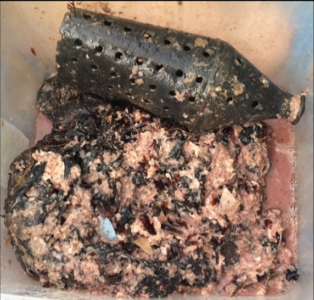
A large amount of plastic debris was found inside the stomachs of three stranded short-finned pilot whales. Photo courtesy University of Hawaii
The research team described the amount of plastic found in the whales -- estimated at 4 to 12 pounds per animal -- as "staggering." That volume equates to roughly 6,283 to 35,543 distinct plastic pieces larger than 5 millimeters in each whale.
"The presence of human-made materials in the stomachs of these ocean sentinels serves as a stark reminder of the impact of global plastic pollution," West said. "It is a clear message of the importance of keeping these materials out of our ocean."
The researchers said the debris was primarily abandoned, lost or otherwise discarded fishing gear, such as monofilament lines, ropes and netting.
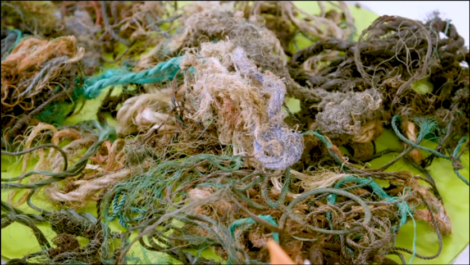
Tangled ropes, netting and other discarded fishing gear were among the debris recovered from the stomachs of stranded short-finned pilot whales. Photo courtesy University of Hawaii
Sheet plastics, including garbage or carrier bags, were the next most common items. Plastic longer than 200 millimeters -- or about 8 inches, about the length of an iPad -- contributed more than 70% of the overall debris weight across all three whales.
Short-finned pilot whales live in the deep waters offshore of the Hawaiian Islands, with an estimated population that could be as high as 19,000 animals, according to the National Oceanic and Atmospheric Administration.
The whales were found to be highly vulnerable to ingesting marine debris. Researchers theorized that the whales' squid diet and the proximity of the Hawaiian Islands to the Great Pacific Garbage Patch, located northeast of the archipelago, may increase their risk.
Although the whales demonstrated normal body conditions and the debris was not identified as the direct cause of death, researchers warned that plastics cause nutritional stress and have toxic chemicals that accumulate in whale and dolphin tissues.
Data collection was supported by 25 lab members and funding from the Commander, United States Pacific Fleet, Environmental Readiness Division, and the NOAA Fisheries Prescott Grant program.