
Study finds little fire ants prefer beef, sunflower seeds
Trending
Cooked beef and raw sunflower seeds may be more effective than tuna for attracting little fire ants, according to a University of Hawaii at Manoa study.
The new information could help improve surveillance and baiting methods, according to researchers from the College of Tropical Agriculture and Human Resilience.
The researchers tested worker ants' responses to 24 foods containing protein, carbohydrates or fatty lipids. In the laboratory experiments, cooked beef and raw sunflower seeds were the ants' clear favorites. Honey attracted the most ants in the carbohydrate category, while water-packed tuna and peanut butter with the oil removed performed the worst.
The findings suggest that fats are an important part of the invasive ants' food preferences, researchers said. The study was published in the "Journal of Applied Entomology."
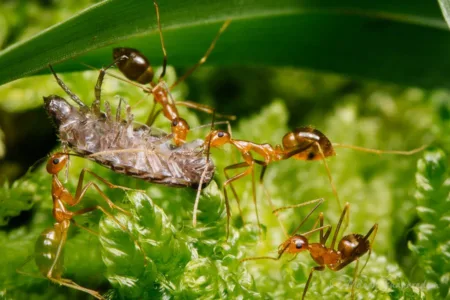
Little fire ants gather around an insect. The invasive ants are established on Maui, Oahu, Hawaii Island and Kauai. Photo courtesy Hawaii Ant Lab
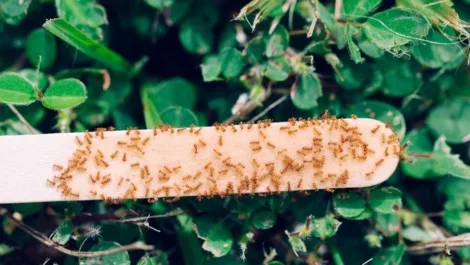
Community members often test for infestations by placing chopsticks dabbed with peanut butter or tuna around their yards. Researchers said less appealing lures could attract fewer ants and cause residents to underestimate the size of an infestation.
"These findings build on and expand the food-lure approaches currently used in Hawaii," said Jia-Wei Tay, an associate professor of urban entomology.
Little fire ants are established on Maui, Oahu, Hawaii Island and Kauai. The invasive ants can sting people, damage food crops and cause painful eye injuries in pets.
The research was led by master's student Aradhana Shrestha and Tay. It was funded in part by the Hawaiʻi Invasive Species Council and the U.S. Department of Agriculture's National Institute of Food and Agriculture.