
Barry Wurst: ‘Goodbye Paradise’ still shines as the first local indie
Trending
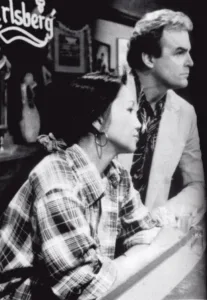
Dennis Christianson and Tim Savage's "Goodbye Paradise" (1991) begins with Joe Martin (played by KHON2 news anchor Joe Moore) turning on the lights and opening up the Paradise Inn, the club he manages.
Martin is prepping the floor for its final night, as his favorite coworker (Elissa Dulce), the long-term cook (James Hong) and a slew of his treasured customers will be joining them for a final night of business.
Also on hand are the soon-to-be new owners, who brag of the "progress" they're bringing to the establishment, a 60-year-old staple of Chinatown in Honolulu. Whereas the new owners want to turn it into a glossy nod to progress, the character of the place as a beloved spot in the heart of the community will unquestionably be lost.
In addition to the colorful patrons, there's also Ben (Noriyuki "Pat" Morita), a homeless man who comes to the back door of the diner daily and depends on the kindness of Joe and the staff for his supper.
"Goodbye Paradise" is a landmark made-in-Hawaii independent feature filmed in 1991 on Oahu using local actors.
While Kayo Hatta's "Picture Bride" (1995) is often cited as the first Hawaii-based indie, "Goodbye Paradise" came first, though both films premiered at the Hawaii International Film Festival and had splashy showings at the Cannes Film Festival. A major distinction between the two films, in addition to telling very different stories, is that "Picture Bride" was distributed worldwide by Miramax, whereas "Goodbye Paradise" only played interisland.
While Christianson and Savage's film is noted for its humble story and low-key presentation, it shares the humanity, emphasis on character and community found in films like "Marty" (1955) and "Big Night" (1996).
It begins slowly and seems like it may have originated as a stage play, but the film creates momentum with character building and winds up an effective ensemble drama, celebrating its mixed-plate community, the legacy of a favorite local eatery and the value of friendships.
While imperfect -- the pacing lags at times -- and certainly a "small" film, it's still a pivotal work of locally made independent cinema. Recent films like "Wailuku" (2020), "Water Like Fire" (2020), "Kuleana" (2017) and "I Was A Simple Man" (2021) show how far locally made Hawaii indies have come since the 90s.
In "Goodbye Paradise," Moore is in every scene, and I enjoyed his laid-back turn. The comparison to Rick in "Casablanca" is warranted, as Moore is the center of the ensemble but generous in the way he allows his co-stars to shine.
Dulce is a major charmer, and Hong, who is now an Oscar nominee and veteran character actor, steals every single moment he's on camera, playing the seen-it-all-before, fed-up cook.
Then there's Morita in a jewel of a performance as a homeless man who depends on the kindness of the cafe staff for survival. Morita's big scene with Moore, where a lengthy monologue reveals just how fragile his days are, is the most moving piece of acting I've seen him deliver. Fans of Morita who still cherish his Oscar-nominated turn in "The Karate Kid" films (1984-1994) need to see how good he is in this.
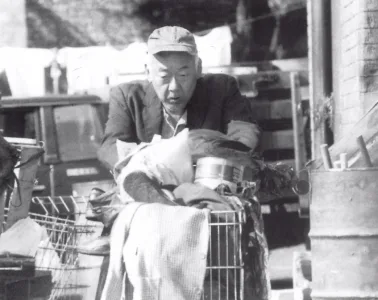
Noriyuki "Pat" Morita plays the homeless man Ben in "Goodbye Paradise." Morita, known for his role in "The Karate Kid," delivers a moving performance in the first Hawaii-based indie. Photo from “Made in Paradise: Hollywood's Films of Hawai'i and the South Seas"
Longtime Hawaii residents who grew up watching TV and films in the late 20th century will relish seeing Danny Kanekoa in a supporting role, as well as Michael W. Perry in a character turn and "Encino Man" star Megan Ward in a key role.
There's also Ben and Gloria Tamashiro, who played "Harry and Myra" in those Bank of Hawaii commercials and the late Ray Bumatai (older brother of Andy and a celebrated Waikiki comedian and actor) playing a disreputable character.
"Goodbye Paradise" is a time capsule, both in design and legacy, a collection of great actors and, in short, a gem. It will be shown at 6 p.m. Oct. 16 at the Makawao Public Library. Admission and one bag of popcorn are free.
(3.5 out of 4 stars)
Barry Wurst II is the founder of the Hawaii Film Critics Society and teaches film classes at University of Hawaii Maui College.