
Molokai expands restrictions to keep invasive beetle out
Trending
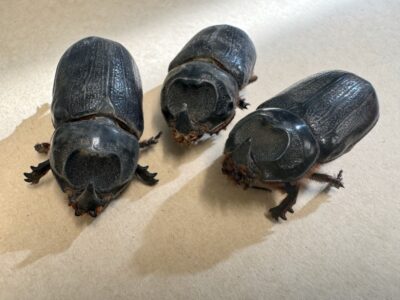
State agriculture board chair Sharon Hurd has approved interim rules that restrict the importation of materials that might bring the coconut rhinoceros beetle to Molokai.
The rules include Niu Now Molokai's request to extend the restrictions to coconut fruit and continue restrictions on gravel. Similar to prior restrictions set in 2025, the ban is scheduled to last no longer than a year, ending Oct. 1, 2027.
State Plant Quarantine Branch manager Jonathan Ho had recommended lifting the restrictions on gravel, saying he believed it posed no threat if treated properly.
Niu Now Molokai's recommendation to extend the ban was supported by the Sierra Club of Hawaii, Office of Hawaiian Affairs and CRB Action Kauai founder Merlyn Ruddell.
Ruddell said CRB eggs and larvae can travel with gravel, making permit requirements and inspections important.
She said she hopes Molokai can learn from what happened on Kauai, where the coconut rhinoceros beetle has caused extensive damage.
The new ban comes at a time when state agricultural officials have shifted from eradication to a containment strategy on Oahu.
Infestations have also occurred on Kauai and parts of the Big Island. The beetle was first detected in 2013 on Oahu.
From September to November 2023, a single dead adult beetle was found in a commercial compost bag in Kahului. In Kihei, agricultural officials found 17 larvae in a dead coconut palm.
From April 7-13, 2026, three dead adult beetles were retrieved from strategic traps at Kaunakakai Harbor, Molokai Airport and along Maunaloa Highway.
Niu Now Molokai leader Kunani Nihipali said he was relieved by the decision, but also worries that Molokai lacks the kind of on-island support needed to deal with invasive species.
This year, the state House Committee on Agriculture and Biosecurity noted Molokai does not have a plant quarantine or inspection facility and has no dedicated staff on the island, making the island "highly vulnerable to invasive species."
A bill to establish a plant quarantine facility and staff on Molokai died at the state Legislature this year.
Niu Now Molokai said a wide variety of Hawaiian coconuts grow on Molokai and the island has become a seed bank for other islands.
The historic Kapuaiwa Coconut Grove, planted in the 1860s by King Kamehameha V with 1,000 coconut trees, is located less than two miles outside Molokai's main town, Kaunakakai.
The grove is listed as endangered by Historic Hawaii Foundation.