
Barry Wurst: ‘Godzilla Minus Zero’ roars with power, purpose
Trending
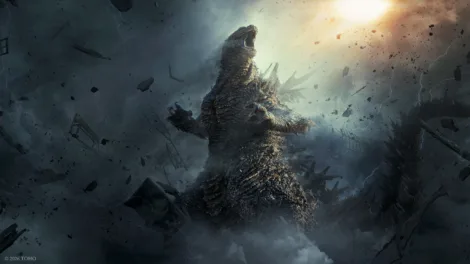
Godzilla's return to the big screen presents the ongoing question of just how much more damage can Japan withstand from this gigantic green monster? Another pressing concern is whether the latest installment can possibly be as good as "Godzilla Minus One" (2023), which was one of the best films of 2023.
Thankfully, the news is mostly great all around. "Godzilla Minus Zero" is a towering, intense experience that stands as further proof writer, director and special effects artist Takashi Yamazaki, who also made the prior film, is a kaiju franchise MVP.
Set in 1949, we return to the silver-haired survivor Kenji Noda (played by Hidetaka Yoshioka) and the reunited lovers Koichi (Ryunosuke Kamiki) and his wife Noriko (Minami Hamabe). The trio try to adapt to life after defeating the King of the Monsters, but discover the big fella isn't as dead as they all believed. The wonderful final shot of the prior film set up the big reveal here, though you still won't get any spoilers from me.
Once again, we're drawn in by compelling characters, making this one of the few Godzilla entries with human beings worth caring about. Large patches of the film fly by without monsters, yet the story maintains its grip by getting the audience invested in the people, not just the eventual monster mash.
This time the first act is overly drawn out, and there's more melodrama than necessary. Yet, there are also far more surreal touches, like the reason a key figure wears an eye patch and the visualization of gravity turning on Japanese citizens.
"Godzilla Minus Zero" is also the first film in the franchise to explicitly address Hiroshima, the horrors of World War II and the lessons learned from weaponizing technology. I won't describe it, but one scene in the film is likely to become one of the most discussed of the year. Audience reaction to it will vary, but I heard the loudest gasps during this sequence. Expect praise and controversy to follow what is the film's most provocative and riskiest touch.
Not every bold stroke pays off -- such as one character's needless psychic connection to Godzilla -- but the best scenes are as powerful as Naoki Satō's extraordinary score, which incorporates the classic theme by Akira Ifukube with knockout orchestration worthy of John Williams.
Earlier in his career, Yoshioka starred in "Rhapsody in August" (1991), one of Akira Kurosawa's final films, which depicted generations of Japanese citizens dealing with life after the nuclear bomb was dropped on Nagasaki; Kurosawa's poetic film is a lot like this one, minus the monster. Yoshioka's acting career has truly come full circle.
The recent Godzilla films have succeeded in a way that matches how the Daniel Craig era lifted the James Bond series to its creative and narrative peaks. This new film, alongside "Godzilla Minus One" and my all-time favorite "Shin Godzilla" (2016), represents a radical yet fitting pivot for the 72-year-old series.
There's clearly lots of life left in these movies, and that also extends to the far sillier and wildly entertaining mainstream American Monsterverse entries.
Another serious issue "Godzilla Minus Zero" presents is whether audiences should take their kids to see this because it is the first Godzilla movie to carry an R rating (violent content and bloody images). The WWII flashbacks, particularly those dealing with survivors of the atomic bomb, are disturbing. I'd suggest parents willing to take their kids to this discuss the topic with them and have them also watch the extraordinary animated film "In This Corner of the World" (2016), which portrays life in Hiroshima before and after the bombing in 1945. That film and "Godzilla Minus Zero" don't exploit the topic but take the opportunity to address a difficult subject in engrossing, richly entertaining vehicles that honor the weight of the subject matter.
(3.5 out of 4 stars)
Barry Wurst II is the founder of the Hawaii Film Critics Society and teaches film classes at University of Hawaii Maui College.