
Maui residents warned of scam targeting water permit applicants
Trending
The state Department of Land and Natural Resources is warning Maui residents and businesses about fraudulent emails seeking payments for groundwater and surface water use permit applications.
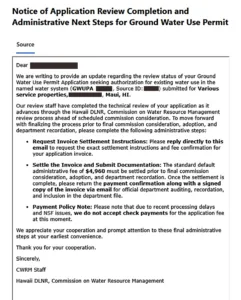
The department’s Commission on Water Resource Management issued the warning Friday after receiving reports of fraudulent emails targeting applicants for water use permits in Lahaina.
The department said the emails are being sent from dlnr_hawaii@usa.com, which is not an official DLNR email address.
The sender claims to be a commission staff member and instructs recipients to reply to the email for payment instructions, stating that checks are not accepted.
However, the commission only accepts payments by check and does not accept online payments, electronic transfers or payments through digital payment services.
Officials warned applicants not to respond to suspicious emails, click on payment links, send electronic payments or provide financial information.
All official communications regarding water use permit applications are mailed through the U.S. Postal Service on official DLNR letterhead and bear the signature of the commission’s deputy director.
The commission may also send an electronic PDF copy by email, but never by text message. All official DLNR email addresses end in “hawaii.gov.”
The department emphasized that it will never request Social Security numbers, bank account information, credit card numbers or payments through gift cards, wire transfers, payment apps or cryptocurrency.
Anyone uncertain whether a communication is legitimate can contact the Commission on Water Resource Management at 808-587-0214 or reach out directly to commission branch staff.
Officials advise residents to avoid using contact information provided in suspicious messages and instead contact agencies through their official websites.
Anyone who has provided personal information or sent money to a suspected scammer is encouraged to report the incident to local police, the FBI’s Internet Crime Complaint Center at ic3.gov or the Federal Trade Commission at reportfraud.ftc.gov/?orgcode=HISCT.