
UH researchers developing AI tool to predict invasive beetle spread
Trending
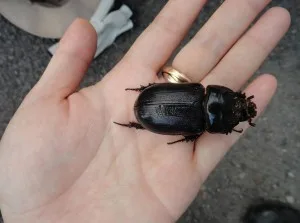
Researchers at the University of Hawaii at Manoa are developing an artificial intelligence tool to predict where the invasive coconut rhinoceros beetle is most likely to spread on Kauai, Maui and Hawaii Island.
The $300,000 project, led by researchers at the university’s College of Tropical Agriculture and Human Resilience, aims to help field crews identify high-risk areas, determine where to place traps and detect new infestations before they spread.
Pascal Aigbedion-Atalor, an assistant professor in the college’s Department of Plant and Environmental Protection Sciences, is leading the project.
"Knowing where the coconut rhinoceros beetle is likely to spread gives farmers and response teams a major advantage," Aigbedion-Atalor said. "Our technology aims to help farmers and agriculture officials act early, target high-risk areas and protect valuable crops and landscapes."
Funding comes from the Foundation for Food & Agriculture Research through its Rapid Outcomes from Agricultural Research program, with matching support from the college.
The research team will use machine learning to analyze local conditions that help the beetle survive and develop maps identifying areas where the invasive pest is most likely to spread. Researchers plan to test their predictions against field observations.
The maps could help crews determine where to place pheromone-baited traps and focus their efforts to contain the beetle. Researchers also hope to adapt the technology to help protect Hawaii crops from other invasive pests.
"Stopping invasive pests before they spread is one of the best ways to protect American agriculture," said Kathy Munkvold, scientific program director at the Foundation for Food & Agriculture Research. "This research gives farmers a head start against a devastating introduced pest, helping to protect crops, livelihoods, and the future of Hawaiʻi's agriculture."
University researchers are working with state agencies, federal partners, private organizations and residents to help limit the beetle’s spread.
"Mitigating the CRB crisis cannot be accomplished by a single organization," said CTAHR Dean Parwinder Grewal. "It takes a combined effort, from state agricultural inspectors and federal biosecurity officials to private funders and everyday community members checking their backyards."