Jeff Robbins: No low too low — a president gloats about a patriot’s passing
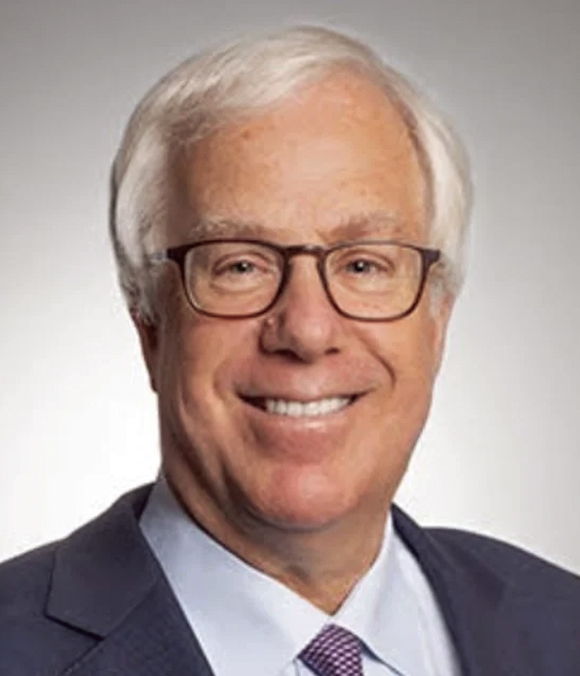
Jeff Robbins
In 1968, Robert Mueller, poised to graduate from Princeton University, enlisted in the U.S. Marine Corps, hoping to serve his country in the Vietnam War, which was then raging. It was the year that American troops would sustain their peak number of combat deaths, nearly 17,000.
A son of privilege, a star athlete, Mueller was inspired by a fellow student who had died for his country. “We lost a very good friend of mine, a Marine in Vietnam, who was a year ahead of me at Princeton,” Mueller recalled decades later, asking about how he came to enlist in Vietnam. “There were a number of us who felt that we should follow his example and at least go into the service. And it all flowed from there.”
Mueller would go on to become a decorated war hero. In command of a rifle platoon, he rescued a wounded fellow Marine under fire during an ambush in which half of his men sustained casualties. Wounded himself, he received the Bronze Star for Valor, the Purple Heart, the Navy Commendation Medal and the South Vietnam Gallantry Cross.
In 1968, the year Mueller volunteered for duty, President Donald Trump procured his fifth deferment, exempting him from military service. This one was for supposed “bone spurs,” a claim arranged by Trump’s father. These bone spurs appear to have been a one-time affair, never presenting themselves again. Trump’s former lawyer, Michael Cohen, testified to Congress about his discussion with Trump about The Case of the Miraculously Disappearing Bone Spurs. “You think I’m stupid?” Cohen recalled Trump asking him. “I wasn’t going to Vietnam.”
Bob Mueller died last Friday night of Parkinson’s disease after a lifetime that qualifies as the Gold Standard of public service. An Assistant U.S. Attorney, a U.S. Attorney, a Deputy Attorney General, he was appointed by former President George W. Bush as FBI Director in 2001, taking office a week before 9/11. Such was the respect accorded him that he was confirmed by the Senate 98-0. In 2011, after his 10-year term expired, former President Obama asked him to stay on. The Senate confirmed him 100-0.
Straight as an arrow and fastidious about doing things by the book, he was a model for those who, like me, were privileged to work for him. And for everyone else. When Trump’s Acting Attorney General appointed Mueller as Special Counsel to investigate evidence of Russia’s interference in the 2016 election to benefit Trump, Newt Gingrich tweeted, “Robert Mueller is a superb choice to be special counsel. His reputation is impeccable for honesty and integrity.”
Here is what Donald Trump posted after Bob Mueller died on Friday: “Robert Mueller just died. I’m glad he died. He can no longer hurt innocent people.”
Mueller’s investigation resulted in eight guilty pleas and a major conviction of Trump’s former campaign manager. Who the “innocent people” are to whom Trump referred is entirely unclear. What’s clear is that a less scrupulously conscientious Special Counsel than Mueller might well have published a final report significantly less restrained about Trump’s attempts to capitalize on Russia’s assistance to him than Mueller did. Ditto for Mueller’s decision not to reach conclusions about the substantial evidence that Trump actively sought to obstruct the investigation into him. Someone who revered old-fashioned prosecutorial standards less than Mueller might have found a way to indict him in the court of public opinion even if they didn’t indict him legally. Someone else might have found a way to say: “The guy’s a dishonest blight on the Oval Office who shouldn’t be allowed anywhere near it.”
Trump got lucky. That wasn’t Bob Mueller’s style.
It’s J.D. Vance of all people who reminds us of the appropriate word to describe Trump. “If you celebrate Charlie Kirk’s death,” Vance said last year when the conservative activist was killed, “you should not be protected from being fired for being a disgusting person.”
Which says it all.
Except, perhaps, what was posted by Maryland Governor Wes Moore, himself a U.S. Army veteran, who used the historic nickname for Marines in writing about Mueller. “Rest in eternal glory, Devil Dog,” Moore wrote. “The entire veteran community stands with your family in this difficult time. Semper fi.”
Jeff Robbins’ latest book, “Notes From the Brink: A Collection of Columns about Policy at Home and Abroad,” is available now on Amazon, Barnes & Noble, Apple Books and Google Play. Robbins, a former assistant United States attorney and United States delegate to the United Nations Human Rights Council in Geneva, was chief counsel for the minority of the United States Senate Permanent Subcommittee on Investigations. An attorney specializing in the First Amendment and a longtime columnist, he writes on politics, national security, human rights and the Middle East.
Columns
Robert B. Reich: Why Trump will surrender soon, but he’ll call it a great victory

Rich Lowry: The Israel hoax
Clarence Page: Pentagon’s press panic threatens august Stars and Stripes
Jeff Robbins: No low too low — a president gloats about a patriot’s passing

Mona Charen: Trump’s war psychology