
Wa‘a Kiakahi
13th annual celebration shares history and culture of the sailing canoe in Kaanapali
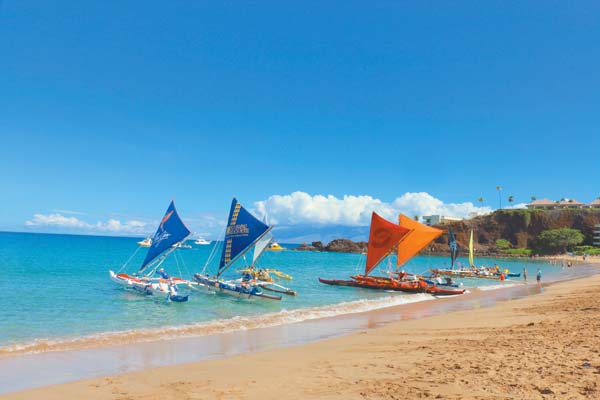
With Pu‘u Keka‘a and Molokai in the distance, Kaanapali Beach is the perfect setting for this celebration sponsored by Kaanapali Beach Resort Association. -- Photo courtesy Kaanapali Beach Resort Association
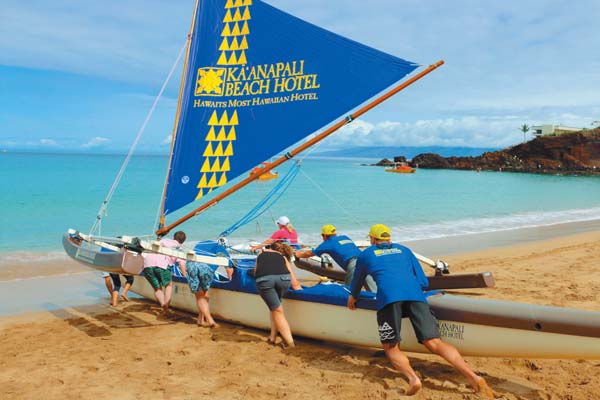
Ray Glauser (right), race boat owner, and members of Aukai O Maui give free sailing canoe rides. -- Photo courtesy Kaanapali Beach Resort Association
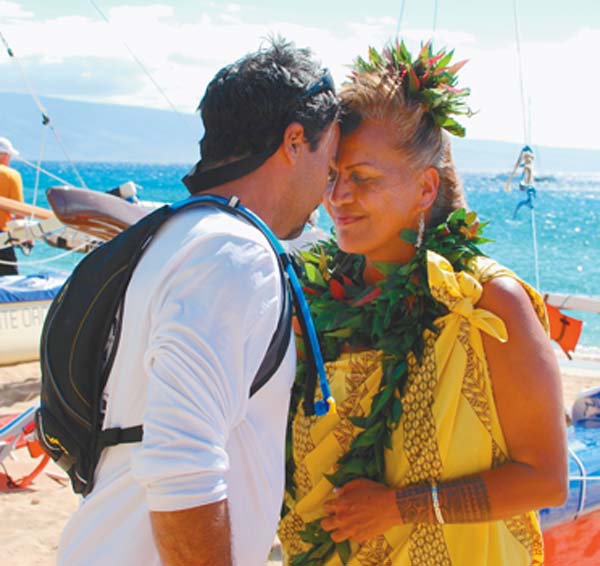
Makalapua Kanuha (right) and friend greet each other by sharing ha or their breaths. -- Photo courtesy Kaanapali Beach Resort Association
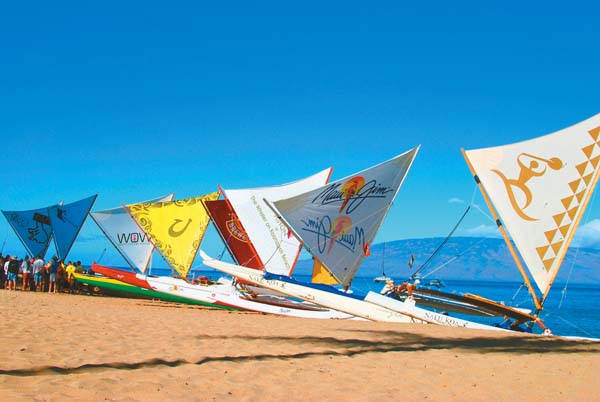
Nine teams from the islands of Maui, Oahu, Hawaii, Kauai and Molokai will race 27 miles from Kaanapali to Molokai. -- Photo courtesy Kaanapali Beach Resort Association
With Pu‘u Keka‘a and Molokai in the distance, Kaanapali Beach is the perfect setting for this celebration sponsored by Kaanapali Beach Resort Association. -- Photo courtesy Kaanapali Beach Resort Association
Ray Glauser (right), race boat owner, and members of Aukai O Maui give free sailing canoe rides. -- Photo courtesy Kaanapali Beach Resort Association
Makalapua Kanuha (right) and friend greet each other by sharing ha or their breaths. -- Photo courtesy Kaanapali Beach Resort Association
Nine teams from the islands of Maui, Oahu, Hawaii, Kauai and Molokai will race 27 miles from Kaanapali to Molokai. -- Photo courtesy Kaanapali Beach Resort Association
Trending
When one thinks of outrigger canoes, most people's first thought is of Hawaii and with good reason. Here in the Aloha State, the outrigger canoe is our official team sport and rich with historical significance. One need only look around at each beach to witness the multitude of canoe clubs present.
To honor this history, Ka'anapali Beach Resort Association, in partnership with the Hawaiian Sailing Canoe Association, will sponsor the 13th annual Wa'a Kiakahi, a three-day event taking place on the beach in front of the Ka'anapali Beach Hotel beginning June 2, in order to share the history of traditional Hawaiian sailing canoes, or wa'a, with visitors and locals alike.
Created by the HSCA as a way to give back to the community and share Hawaiian culture, the event features traditional ceremonies, sailing canoe rides and educational talks about celestial navigation and water skills. HSCA racers do not make crew changes and they travel every channel connecting the islands, just as ancient Hawaiians did.
The public will get a chance to meet the sailors, get a cultural lesson and take a free 15 to 20 minute ride in a sailing canoe on June 3 after signing a waiver at the designated booth on the beach. There is no age requirement to go out and life jackets will be provided for non-swimmers.
According to Nakoa Prejean, former vice president and family member of the founders of the HSCA, this event was originally dreamed up by Loren Shin, the Aston Whaler general manager, Shelley Kekuna, executive director of KBRA, Uncle Mike Kincaid, president of the HSCA, Terry Galpin, former president of the HSCA and Prejean.
"It would be an opportunity to piggyback a cultural event on this popular race," explained Prejean. "It allowed hotel guests, VIPs and residents an opportunity to participate with the canoes and the sailors. It was a way to perpetuate the Hawaiian culture and teach people about outrigger canoes and what they mean to Hawaiians."
Large outrigger canoes were used by the ancient voyaging Polynesians over 2,000 years ago. Many were large enough to hold up to 80 people, edible plants, water and animals for the long voyages that were taken as they searched for land. Once they discovered what are now known as the Hawaiian Islands, these explorers realized the easiest way to transport items and people across the land was to go via the ocean. The jagged volcanic rock shores and land, steep cliffs, strong winds and waves made land transport difficult and slow, so they refashioned the outrigger canoes to work for their daily needs, including fishing.
Even though Hawaiian outrigger canoes have gone through many changes over the years, they are still specifically built to withstand open ocean conditions and have retained their basic shape.
Everything that was needed to construct the canoe was found amongst Hawaiian plants, according to the Hokule'a's archive website -- paint, dyes and lashings came from numerous shrubs and ground cover; water-sealant and cordage was made from the coconut, or niu, tree; sails were made from Pandanus, or hala, leaves; water bailers were fashioned from gourds, or ipu.
The beautiful koa tree provided for the main hull, seats, gunnels, spar, mast and paddles of the canoes; the breadfruit, or ulu, tree could also be used for hulls, gunnels, seats and caulking. The kukui tree and its nuts provided wood for hulls and oil for varnish; the hau tree, or mahoe or sea hibiscus, provided the outrigger boom and float.
Building a canoe involved the work and cooperation of many people and followed very specific cultural practices. To begin, a kahuna, or Hawaiian priest, would search for the perfect tree by following the 'elepaio, or Hawaiian forest bird. The bird was attracted to rotting Koa wood, so if the kahuna saw the bird pecking at a tree, he knew that wood was not good to use. Once the perfect tree was found, the kahuna stayed during the building process offering prayers and blessings along the way.
The selected tree would then be transported to shore, requiring the effort of many men, taking them several days in the process. The canoe hull, or ka'ele, would be crafted in a special canoe house, or halau wa'a. The Hawaiian canoe carver was a highly honored member of society. Using a stone adz, stone chisels and hammers, and other rocks the canoe would be carved and shaped from the trunk of koa wood, taking several months of effort. Coral was used to polish and sand the finished canoe.
At the completion of the canoe building, the owner of the canoe and the kahuna would join in prayer. More ceremony would follow leading up to a luau, provided by the canoe owner, which included all his neighbors. The following day, the canoe would be launched. Canoe building still follows many of these ceremonies and cultural practices in Hawaii.
The actual HSCA canoe race takes place over a four month period. This community event in Kaanapali is during the second leg of the race.
Ten six-member crews from all the Hawaiian islands will participate. This year the teams are: Olukai -- Kauai; Ka'anapali Beach Hotel -- Maui; Maui Jim -- Kauai; Aston Whaler -- Oahu; Kona Brew -- Oahu; La'amaomao -- Oahu; Bioastin -- Hawaii; Hui Nalu Canoe Club -- Oahu; Moloka'i Canoe Club -- Molokai; Kahiau -- Oahu.
"This event is by far the most special of the HSCA race series because of visitor involvement," said Galpin. "This is the only stop where they include the resort guests for a day of sailing."
The race started Friday and began in Keokea Beach Park on the island of Hawaii. Canoes will race into Hana Bay, then move on to Kahului Harbor where the boats will be kept until June 2, when this leg of the race will begin (see page D1 for schedule).
For more information visit www.kaanapaliresort.com or https://hsca.info/.
_______________
Wa'a Kiakahi Schedule of Events
Friday, June 2
8:30 a.m.
Rigging of canoes at Kahului Harbor canoe club.
11:30 a.m.
Race begins at Kahului. Crews race approximately 27 miles to Kaanapali.
3 p.m.
Race ends at Kaanapali Beach. Arrival of sailing canoes with a traditional Hawaiian welcome ceremony.
Saturday, June 3
9 a.m. to 1 p.m.
Free sailing canoe rides for all ages; talk story opportunities with race team members; and sailing demonstrations between Ka'anapali Beach Hotel and Sheraton Maui Resort & Spa.
Sunday, June 4
8 a.m.
Race ceremony.
8:45 to 9 a.m.
Race start from Kaanapali Beach. Sailing canoe send-off and traditional Hawaiian farewell ceremony for Mel Paoa Pailolo Race -- six-man crews race approximately 27 miles from Kaanapali to Kaunakakai Harbor on Molokai.