
9th Life Hawaii: Quietly caring for Maui cats since 1999
Nonprofit cat sanctuary committed to keeping island felines healthy, safe and adoptable — whenever possible
Trending
Phyllis Tavares has always loved animals--she was born that way, she admits. "There was never an awakening," she says. "It was always there."
It was there when, as a New York City-dwelling toddler visiting the country for the first time, she eagerly tottered toward a massive bull with arms outstretched gushing, "Nice doggy!"
And it was there in 1999 when the exploding feline population on Maui compelled her to found the nonprofit 9th Life Sanctuary along with her daughter and another cat rescuer.
"My daughter moved here first and noticed the immense number of homeless cats," Tavares recalls. "An animal lover (like her mother), she set about trapping them, having them sterilized and bringing them home if it was not safe to return them to their colonies. That's how the sanctuary was born."
Situated on two-and-a-half acres in a secluded area Upcountry, 9th Life Hawaii employs special fencing that allows cats to roam safely within the enclosures where they can climb trees, chase butterflies, stretch out in the grass and fully enjoy a cat's life. There is also a separate area for true ferals that affords greater privacy and fewer interactions with humans.
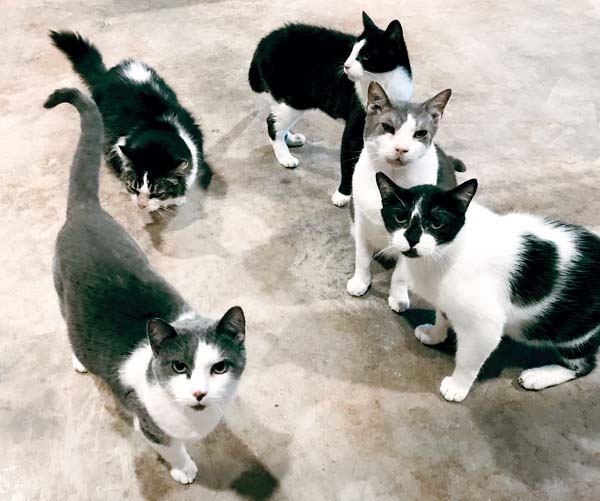
On any give day, there are approximately 300 cats roaming the property, most of which are adoptable and waiting for their forever family. As a no-kill facility, 9th Life Hawaii spends considerable funds on medical care, from treatable illnesses to senior health issues and special needs maintenance.
"At 9th Life, we spare no expense in making the cats comfortable, and we do our best to maintain both their health and the quality of their lives," states the organization's website.
Entirely dependent on volunteers with no salaried employees, 9th Life Hawaii depends on private donations to keep the sanctuary operating.
Working with other rescue organizations, such as Maui Humane Society, the sanctuary has been known to assist in helping other island animals in need, but the primary focus is providing a safe space for cats -- adoptable and unadoptable.
"We have changed our direction a little over the years," Tavares explains. "We are now taking in cats that are at great risk of never being adopted."
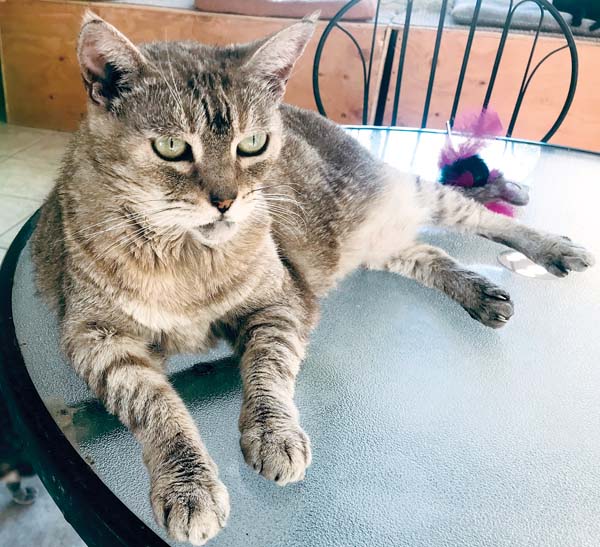
In general, the unadoptable cats who have found a home at 9th Life Hawaii include older felines with chronic health issues associated with age and cats that are inherently mistrustful of humans.
"Some are too frightened -- true scaredy cats -- who don't approach people easily until they really get to know you," Tavares says. "Some may even hiss or growl at people they do not know even though they are not wild in the feral sense."
9th Life Hawaii's expansive property allows the sanctuary to provide a protected environment for these unadoptable animals where they can live out their natural lives in comfort and safety.
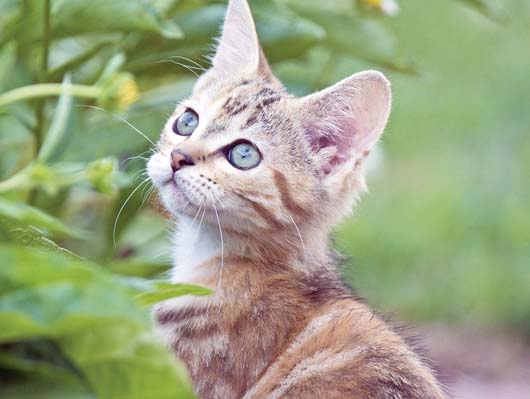
Not surprisingly, kittens under six months of age are most likely to be adopted through 9th Life Hawaii. And during kitten season, the sanctuary takes in a lot of infant cats.
"Many are orphans that are bottle-fed and hand-raised," Tavares identifies on the 9th Life Hawaii website. "These precious souls are especially bonded to and react lovingly towards people."
The sanctuary provides free carriers for adopters wishing to take a "Remembrance of Maui" home with them to the Mainland. The more kittens and cats that are adopted through 9th Life Hawaii, the more cats in need the sanctuary is able to take in. The public is invited to tour the sanctuary and visit with the cats by appointment.
Unfortunately, Tavares stresses, as a cat ages it becomes less desirable for potential adopters.
"It's a sad fact," she muses. "My sweetest love was 12 years old when I adopted her. Did she learn to love me like a kitten? You betcha! She passed at 17, and I still miss her."
Cats with the appropriate temperament are available for adoption through the sanctuary, which takes great care in ensuring proper placement with the right person or family.
"We do a full screening to make sure it's a good match for whatever cat they choose," Tavares explains. "We know the temperaments of our individual cats. Our policies can be stretched if the person is the 'right' fit. We work with people. But, for example, if someone calls up and wants a kitten immediately because their kitten crawled through the fence and a neighbor's dog killed it, I will ask if the next kitten will be kept indoors. If the person responds that it will be an indoor/outdoor kitten, we would not adopt a kitten to him or her. And this actually has happened."
One of 9th Life Hawaii's primary objectives, in addition to caring for hundreds of felines on property, is educating the community and deconstructing harmful misconceptions about Maui's cat population.
Among the greatest falsehoods, says Tavares, is that island cats are responsible for the decline in certain bird populations.
"I believe the biggest reason for the decline in shore-nesting birds is human encroachment," she professes. "Homes are built as close to the ocean as possible; hotels, condos and businesses do the same. The natural vegetation and trees are cut back, and birds lose their habitat."
Tavares sees no end in sight to this practice, adding, "Everyone wants that ocean view."
As with most nonprofit animal rescue organizations that rely on private donations, the greatest challenge is funding, she acknowledges.
"There are many cats on Maui, and most of the free-roaming, community cats need better food, flea protection and shelter (our recent storm is a good example of shelter need)," she continues. "The most important need is sterilization."
Tavares says she has personally witnessed female cats getting pregnant at four months of age, having kittens at six months, and coming back into heat again at eight months of age while still nursing her young.
"The kindest method of population control is sterilization," she says. "We have worked with vets, including Dr. Jeff Young from Denver, Colorado -- who has appeared frequently on the Animal Planet cable network -- who can sterilize cats at six weeks of age. Pediatric spay/neuter is being taught in the United States and should be a requirement for all vets."
Tavares adamantly opposes euthanasia as a method for controlling free-roaming cat populations.
"It doesn't work," she says. "A huge part of the solution is ongoing spay/neuter clinics. More funding would allow 9th Life Hawaii to sterilize many more cats. Over the years, 9th Life Hawaii has sterilized more than 7,300 cats in its surgery facility.
"Most spay/neuters were free or low cost to the owner or colony caretaker," Tavares reveals. "That equates to hundreds of thousands of cats that won't be born unwanted, abandoned or homeless on Maui."
She also credits Maui Humane Society's aggressive movement in this direction under the leadership of CEO Jerleen Bryant.
"She's done a remarkable job in making low-cost feline spay/neuter available," Tavares says.
One of 9th Life Hawaii's urgent goals is to provide the community with a spay/neuter clinic overseen by a full-time veterinarian, but that requires a significant uptick in donations. Of course, more funding equals more clinics, she observes.
On Feb. 26, countries around the globe will recognize World Spay Day. But for Tavaras and the volunteers who work tirelessly to continue 9th Life Hawaii's mission and advocate for humane population control, every day is spay day.
"We believe free or by-donation early sterilization is the answer to humanely and non-lethally controlling Maui's cat population," Tavares espouses, "because every life is precious."
_______________
HOW YOU CAN SUPPORT 9TH LIFE HAWAII
Furry Feline Fundraiser
1 to 4 p.m. today • Cafe O Lei Banquet Room at the Dunes in Maui Lani
Enjoy a light luncheon buffet, silent auction and prizes including a chance to win a week at a one-bedroom condo on Kauai, which sleeps four. Tickets are $25 and may be purchased by calling 572-3499 or mailing requests to 9th Life Hawaii, P.O. Box 476, Makawao, 96768
Volunteer needs
• Help cleaning litter boxes and adoption areas
• Administrative assistant
Current needs
• Funding for removable sheets of hard plastic secure screened-in adoption areas during inclement weather
• Funding/assistance in walling in special needs and senior cat area
572-3499 • www.9thlifehawaii.org