
Artful conservation yields a bounty
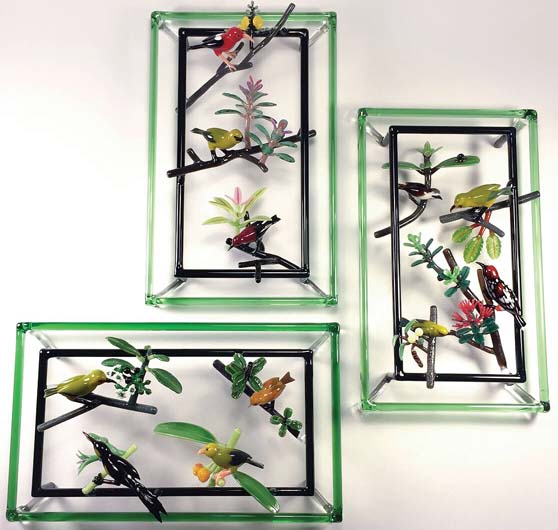
“Maui Manu Triptych” by Jupiter Nielson -- Photo courtesy the artist
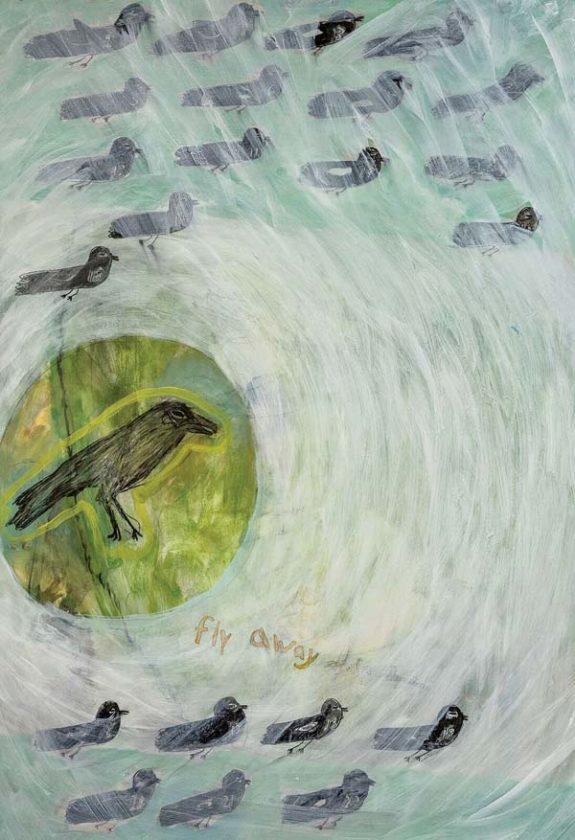
“When There Were Only 22” by Gabriella Anderman
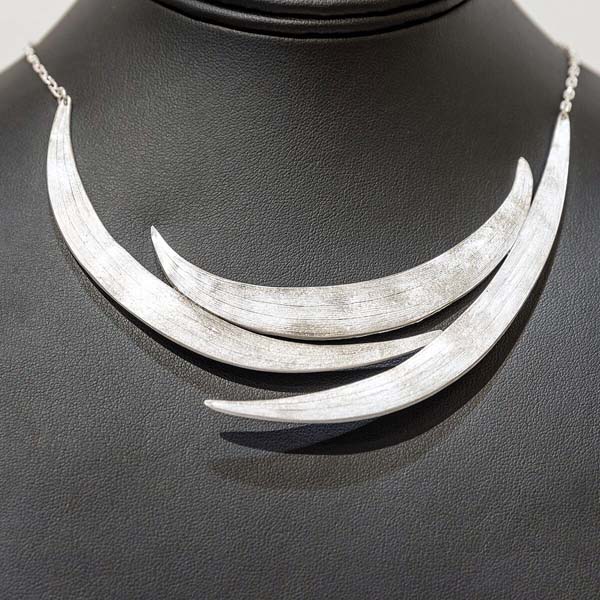
Koa Leaf Necklace by Christine Cafferata
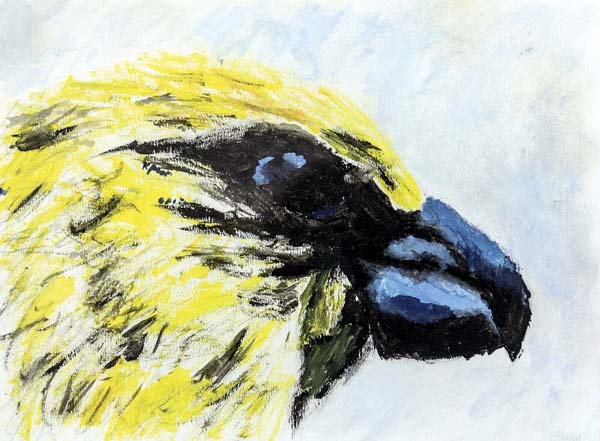
“Parrotbill” by Kaden Ortiz
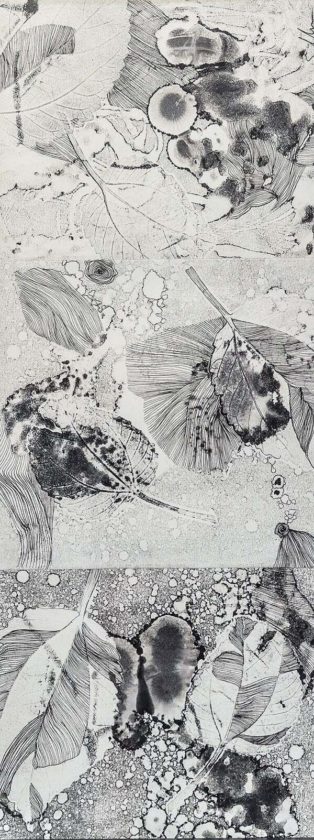
“Flora for Fauna” by Sarah Nassar -- BRYON BERKOWITZ photo
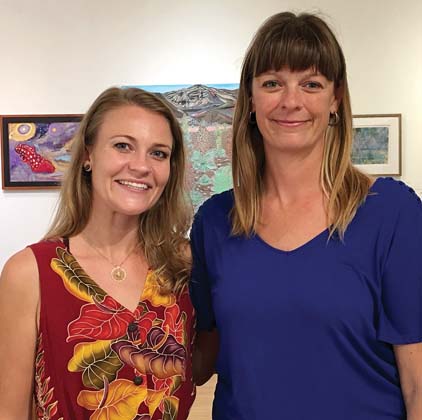
Katie Peterson (left) and Allison Borell are the organizers of the 2017 Malama Wao Akua exhibition at the Hui No‘eau Visual Arts Center. -- The Maui News / CATHERINE KENAR photo
“Maui Manu Triptych” by Jupiter Nielson -- Photo courtesy the artist
“When There Were Only 22” by Gabriella Anderman
Koa Leaf Necklace by Christine Cafferata
“Parrotbill” by Kaden Ortiz
“Flora for Fauna” by Sarah Nassar -- BRYON BERKOWITZ photo
Katie Peterson (left) and Allison Borell are the organizers of the 2017 Malama Wao Akua exhibition at the Hui No‘eau Visual Arts Center. -- The Maui News / CATHERINE KENAR photo
Trending
Many people do not give a lot of thought to their water supply -- where it comes from or who takes care of it, if anyone. All that is of concern is that fresh, clean water is available when it's required.
Luckily, some conservation-minded people came together to create the East Maui Watershed Partnership in 1991 in order to gather together the necessary resources to protect what has become a 100,000-acre watershed on Maui's east side. As part of the Pacific Cooperative Studies Unit of the Research Corporation of the University of Hawaii, EMWP works towards protecting Hawaii's water supply, culture and biodiversity.
EMWP was created during a time when the conservation movement really started to take hold of people's consciousness worldwide and especially here on Maui as it was recognized that it is a rather small island in the middle of a giant ocean and, perhaps, people should start to pay attention to the care of our land, water and air.
Fast-forward 13 years to 2004, when former EMWP employee Kat Lui took a class at the Hui No'eau Visual Arts Center in Makawao with the late celebrated artist Connie Adams. Lui and Adams developed the idea to combine two of their loves -- art and science -- into an art contest that would highlight the native, indigenous flora and fauna of Maui Nui (Maui, Lanai, Molokai and Kahoolawe). Greeted with enthusiasm by the artists and galleries of Upcountry Maui, the Malama Wao Akua (Realm of the Gods) juried art contest was born.
Celebrating its 13th year, and its third year hosted at the Hui No'eau, Malama Wao Akua hopes to raise awareness about native species on Maui Nui -- that is, only species that arrived here via wind, water or wings, without human help.
Since this has been taking place, artists eagerly plan on entering this show which includes Juror's Awards for adult, high school, middle school and elementary school artists.
"I grew up in the art world and I've never seen a juried art exhibit that combined children's with adult artists' work -- which is really neat," said Katie Peterson, the Hui's exhibitions and membership coordinator and teaching artist.
This show is not just about creating art for art's sake; the artists who enter have very specific guidelines that must be met, namely that their subject matter must depict a native plant, animal, insect or landscape of Maui Nui. In order to accomplish this, the artists research in books and on the internet, as well as go on guided hikes into the forests with EMWP personnel as they search for their inspiration.
"A lot of times the species that are represented, that are native to here, only exist at upper elevations of 2,500 feet or higher," explained Allison Borell, community outreach and education liaison of the EMWP. "Most of what we see around our homes are things that were introduced, not native forest plant dominant. More than 75 percent of Maui's native habitat has been lost in that area below 2,500 feet.
"People don't see the things we are trying to protect," Borell continued. "This (art exhibition) was a way of bringing that out of the mountains, or out of the oceans, which people don't normally see and make it more approachable."
"People often picture Hawaiian species as banana, hibiscus or plumeria and those are not native species," smiled Peterson.
There were 257 pieces of art submitted by188 artists, and 89 pieces by 88 artists (one high school student had two pieces selected) were selected by the two jurors -- Tamara Sherrill, executive director of Maui Nui Botanical Gardens in Kahului, and Mike Takemoto, printmaker and instructor at UH Maui College.
The selection process is taken very seriously. Four additional "receiving" jurors were present during receiving day, which was held on Aug. 30, and they were a mix of marine and wildlife biology experts whose purpose was to make certain that the art submitted met the strict guidelines.
The receiving jurors checked reference materials and this year were surprised by a few of the entries -- they hadn't seen the specimens portrayed themselves or hadn't seen the specimens in a very long time.
The selection of art that made it into the show is extremely varied and reflected 83 different species. There are woodworking items (a koa bowl and table), jewelry, paintings, flame-worked glass, mosaics, sculptures, printed kapa cloth and photography examples.
"In some instances, the native species is not the subject matter but the material used," explained Peterson. "For example the koa bowl and table, as well as the kapa dyes were made from native species."
Both the Hui and the EMWP hope this exhibition helps to educate the public about native species through artwork.
"We don't normally print out artist's statements to go with their pieces, but this is such an important part of the show," added Peterson. "For the artists to explain where they got their inspiration from is really enlightening. One high school girl explained her piece was based on a photograph by Mike Neal that she saw and she explained how the photograph brought her closer to a monk seal than she could go in real life."
During the exhibition, the Hui offers additional events to supplement the artists' work. On "Talk Story Tuesdays" those interested can listen to some of the artists talk about their art, and then Maui's leading conservationists will discuss the species displayed in the exhibit, as well as the conservation work being done on Maui.
Scheduled for "Talk Tuesdays" are:
• Sept. 21 – Dr. Fern Duvall II, Maui Nui program manager, Department of Land and Natural Resources/Division of Forestry and Wildlife Native Ecosystems Protection and Management.
• Oct. 5 – Dan Eisenberg, EMWP program manager, Pacific Cooperative Studies Unit
• Oct. 19 – Pat Bily, science specialist II for The Nature Conservancy – Maui Office.
• Nov. 2 – Dr. Art Medeiros, Auwahi Forest Restoration Project, PCSU.
"What many people don't know is that 90 percent of our native flowering plants are found here and nowhere else in the world," marveled Borell. "Because we are so isolated, and because these things were here for millions of years, those (plants, animals and insects) evolved and one became many different things. One bird evolved and became 50 different birds; one plant evolved and became over 120 different plants. And they are found here (on Maui) and no- where else."
For art collectors, make note that most of the art is for sale. To view the selected pieces, go to www.eastmauiwatershed.org/malama-wao-akua-2017/.
The Malama Wao Akua exhibit can be visited from 9 a.m. to 4 p.m. daily at the Hui No'eau Visual Arts Center at 2841 Baldwin Ave. in Makawao. For more information about the exhibition, visit www.huinoeau.com or call 572-6560.
For information about the watershed and conservation efforts, visit www.eastmauiwatershed.org or call 573-6999.
_______________
2017 Malama Wao Akua award winners & honorable mentions
Juror's Choice Adult
Gabrielle Anderman "When There Were Only 22"
Joanne Hopper "Summer Silversword"
Juror's Choice High School
Sarah Nassar "Flora for Fauna"
Juror's Choice Middle School
Chaz Kaneakua " 'Io lana"
Kaden Ortiz "Profile in Wisdom"
Juror's Choice Elem. School
Olena Rodeau "Jewel of the Forest"
Honorable Mention Adult
Christine Cafferata Koa Leaf Necklace
Jennifer Valenzuela " 'Alala Within Us"
Rarest Find
Jupiter Nielsen "Maui Manu" Triptych
Conservation at Work
Bryan Berkowitz "Higashino Hands"