
UH-Manoa professor: ‘The time to act is now’
Climate change the first topic of 4-part series to include cancer, coral reefs, Hawaiian literacy
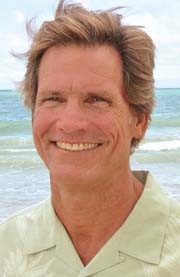
Chip Fletcher
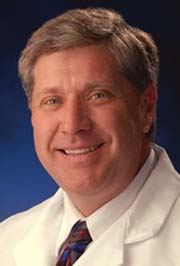
Randy Holcombe
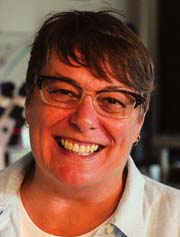
Ruth Gates
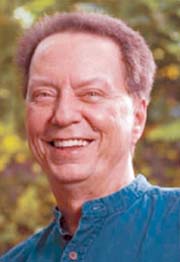
Puakea Nogelmeier
Chip Fletcher
Randy Holcombe
Ruth Gates
Puakea Nogelmeier
Trending
If climate change goes unchecked, Hawaii may have to adapt to an altered coastline sooner rather than later, warns Chip Fletcher, a professor of geology and geophysics at University of Hawaii at Manoa's School of Ocean and Earth Science and Technology.
"We are already seeing extreme forms of weather -- record-setting rainfall, record-setting heat waves and record-setting snowstorms," he said. "The time to act is now."
Fletcher offered these words of caution during a presentation titled "Will Your Property Be Beachfront in the Future? A Discussion of Climate Impacts in Hawaii" at the University of Hawaii Maui College on Monday. His talk was part of the University of Hawaii Foundation's President's Series, a four-part lecture series featuring UH faculty members.
Climate change has the potential to significantly impact our quality of life, Fletcher warned.
"Climate change is happening," he said. "And we've only just begun."
Fletcher pointed out that the Earth has been sending out distress signals in various forms including, but not limited to, an increase in atmospheric carbon dioxide, rising air and ocean temperatures, rising sea levels, altered wind and wave patterns and increased ocean acidity.
The cost of inaction is high, he said, but there are ways to tackle climate change head-on.
Fletcher advised using a two-pronged approach: climate change mitigation, or efforts to reduce or prevent the emission of greenhouse gases; and climate change adaptation, which includes actions to build resilience to the impacts of climate change.
In Hawaii, he said, climate change adaptation is imperative, as rising sea levels pose a significant threat to some of the state's coastal communities. Storm surges and seasonal high waves could punch into some low-lying coastal areas, while erosion and groundwater inundation could affect shoreline communities like Kihei and Lahaina, Fletcher said.
He said that one way to minimize the unavoidable impacts of climate change is to yield to sea level rise and elevate communities by building homes off the ground and rolling back communities from coastal land. He also underscored the importance of increasing local food production, as the impending effects of climate change will impact food and agriculture systems worldwide.
"We need to be ahead of the curve," he said.
If we act now, cataclysmic changes could be prevented, Fletcher said.
"We know these changes are coming," he said. "We can either sit on our hands -- or do something about it."
Fletcher's talk was the first of the President's Series, which was conceived last summer by the UH Foundation, the fundraising arm of the UH system.
"The idea of a speaker series to share the outstanding work of the UH faculty has been percolating for several years," said UH Foundation Vice President of Development Rebecca Smith. "The host of the program is the UH President's Office and the UH Foundation and we are partnering with UH-Maui College and Hawaii Community College to offer the series on Maui and on the west side of Hawaii island."
The President's Series was inspired by UH alumni and community members who expressed an interest in learning more about research efforts occurring on UH campuses, Smith explained.
"They told us they thought there was a special need to reach out to the Neighbor Islands," she said. "We talked to UH President David Lassner about this, and he agreed it was a good thing to do. That's the reason why this is called the 'President's Series.' "
The purpose of the lecture series is to connect members of the community to the academic richness of UH, to share useful information about important topics and to engage alumni as lifelong learners, Smith said.
"The University of Hawaii is doing such interesting and compelling work on each of its 10 campuses and wants to serve as a resource to the people in our state," she said. "The President's Series is a new way of doing that."
The speaker series runs through April and all presentations will take place in the Ike Lea building on the UH-Maui College campus in Kahului. The next lecture is scheduled for Feb. 16 and will feature Dr. Randy Holcombe, the director of the National Cancer Institute-designated University of Hawaii Cancer Center. He will present a talk titled "Improving Cancer Care in Hawaii: Solutions Through Healthcare Delivery Science."
On March 16, Ruth Gates, director of UH-Manoa's Hawaii Institute of Marine Biology and president of the International Society for Reef Studies, will deliver a presentation titled "Hope for the Coral Reefs? Harnessing Basic Science to Build Resilience."
The fourth and final talk, "The Legacy of Hawaiian Literacy--Today: Illuminating Hawaiian Knowledge," will take place on April 6, and will feature Puakea Nogelmeier, a professor of Hawaiian language at UH-Manoa and the director of the UH Institute of Hawaiian Language Research and Translation.
To learn more about the President's Series, visit www.uhfoundation.org/maui or contact Marilyn Fornwall at (808) 984-3261 or fornwall@hawaii.edu.