
Rent control bill fails to gain traction in House committee
‘Local people are . . . being squeezed out’
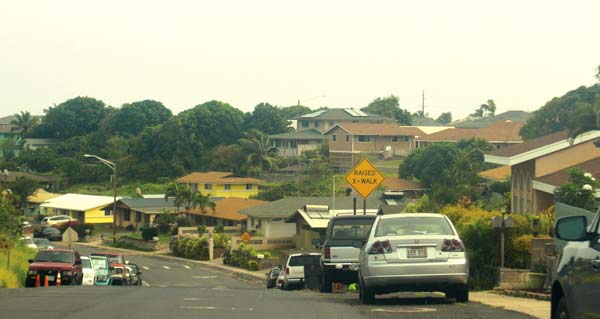
Cars line a residential street on a voggy day Friday in Kahului. Of Kahului’s 7,016 occupied homes in 2014, 3,148, or 44.9 percent, were renter-occupied, according to the 2015 Maui County Data Book. The state House Housing Committee deferred action Thursday on a rent-control bill proposed by South Maui Rep. Kaniela Ing. The Maui News / MELISSA TANJI photo

Kaniela Ing
Cars line a residential street on a voggy day Friday in Kahului. Of Kahului’s 7,016 occupied homes in 2014, 3,148, or 44.9 percent, were renter-occupied, according to the 2015 Maui County Data Book. The state House Housing Committee deferred action Thursday on a rent-control bill proposed by South Maui Rep. Kaniela Ing. The Maui News / MELISSA TANJI photo
Kaniela Ing
Trending
A rent control pilot project bill drafted by South Maui Rep. Kaniela Ing ran into opposition this week at the Capitol from, among others, the state agency that would be tasked to carry out the measure.
House Bill 1267 would direct the state Housing Finance and Development Corp. to initiate a rent-controlled housing project to encourage construction of new rental housing affordable to low-income tenants. The measure also calls on the agency to evaluate the impact of rent control on the state's housing market.
"Simply put, the rent is too damn high," Ing said in announcing his bill. "Local people are struggling to make ends meet. They are being squeezed out. Rent control is proven to allow young folks to save up to buy homes and prevent kupuna on fixed income from becoming homeless."
The state House Committee on Housing took up Ing's measure Thursday and recommended deferring it.
In written testimony, HFDC Executive Director Craig Hirai opposed the bill, saying that studies have shown "rent control is an ineffective and often counterproductive housing policy."
Ing maintained that Mainland jurisdictions with similar costs of living have enacted rent control and that his measure "encompasses the best practices of modern rent control developed through compromises between renters and landlords over the course of decades."
According to landlord.com, there's rent control in parts of California, Maryland, New Jersey, New York and the District of Columbia.
Hirai said rents serve two functions: compensating landlords and developers for the cost of housing; and providing an economic incentive sufficient to attract new investment in rental housing and preservation of existing rental housing stock.
"When rents are artificially constrained through rent control laws, it removes an important incentive for rental housing development and preservation," Hirai said. "In the long run, rent control has been found to reduce, rather than expand, the supply of rental housing."
He maintained that the measure is unnecessary because rents are regulated through other state affordable housing programs, including Hula Mae multifamily bonds, low-income housing tax credits and the rental housing revolving fund. Maximum rents are computed based on very low income limits established by the U.S. Department of Housing and Urban Development for different household sizes. Rent increases are tied to renters' income.
Opposition also came from Myong Oh, director of government affairs for the Hawaii Association of Realtors.
"Rent control does nothing to increase the supply of rental housing and, ultimately, increasing supply is the true long-term solution to Hawaii's rental housing shortage," Oh said.
Reaction was mixed from others who submitted written testimony.
"The amount of rent people are charging here in Maui and on Oahu is out of control," said Alana D'Andrea, who was born and raised in Haiku. "I have been looking to move out of my parents' property for a while, but I can't due to the fact that everything is way too overpriced."
Aiea, Oahu, resident Stephen Wood opposed the bill, saying it would be unfair to property owners to lock them into a 30 percent cap for the median income of tenants.
That would "put an inordinate amount of burden on the homeowner," he said. "I am not sure if state Rep. Kaniela Ing considered that homeowners who rent have mortgages that need to be paid. With the price of purchasing a home in Hawaii at all-time highs, this could cause some serious problems."
Haiku resident and recent Maui County Council candidate Trinette Furtado supported Ing's measure.
"Too many families across the islands can barely afford to purchase a home let alone rent one on the close-to-minimum wages they earn," she said. "Our government must do more to either curb rampant illegal vacation rentals, build more truly affordable housing and offer assistance to those homebuyers."
People should be protected against having their rents "arbitrarily or steadily increasing," she said.
Daisy Mae Park, an assistant property manager at a 200-unit complex in Kihei, said that she sees island families "forced to move out of their homes due to raised rent very frequently.
"Although current rental prices are already sky high, rent control would give tenants a chance to protect their homes," she said.
According to the 2015 Maui County Data Book, 23,372 units, or 43 percent of Maui County's 71,469 homes, were renter-occupied. The median gross rent was $1,238, the data book reports, citing information from the U.S. Census Bureau's 2014 American Community Survey.
Rent cost 35 percent or more of a tenant's income in 8,816, or 37.7 percent, of renter-occupied units, according to the report.
Ing's proposed rent control bill would require each county in the state to establish rent control by ordinance for new housing developed in five representative districts statewide covered by the pilot project and in housing constructed in those areas before 1990. There would be two representative districts on Oahu and one each in the counties of Maui, Kauai and Hawaii.
Rent for housing in pilot project areas would not exceed 30 percent of the area median income for various family sizes. Rents would increase no more than an undetermined percent of the median market rent increase for an undetermined number of years of occupancy by the tenant or tenants leasing housing.
Also, the HFDC would be directed to provide grants to each county for construction of new rental housing under the pilot project. The measure would sunset at the end of 2023.
* Brian Perry can be reached at bperry@mauinews.com.